Jan. 6 riot ‘does not happen’ without Trump, Jack Smith told Congress : NPR


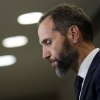
In this image taken from video released by the House Judiciary Committee, former Special Counsel Jack Smith speaks during a deposition December 17, 2025 at the U.S. Capitol in Washington.
House Judiciary Committee/AP
hide caption
toggle caption
House Judiciary Committee/AP
WASHINGTON — The Jan. 6, 2021, riot at the U.S. Capitol “would not be happening” without Donald Trump, former special counsel Jack Smith told lawmakers earlier this month, calling the Republican president “the most culpable and responsible person” in the criminal plot to overturn the results of the 2020 election.

The Republican-led House Judiciary Committee on Wednesday released a transcript and video of a closed-door interview Smith gave about two investigations into Trump. The document shows how Smith, during a daylong deposition, repeatedly defended the basis of the indictments against Trump and vigorously rejected Republican suggestions that his investigations were politically motivated.
“The evidence presented here has made clear that President Trump was, to a large extent, the most culpable and responsible person in this conspiracy. These crimes were committed for his benefit. The attack that took place at the Capitol, which is part of this case, did not happen without him. The other co-conspirators did it for his benefit,” Smith said, bristling at questions about whether his investigations were aimed at stopping Trump from winning the presidency again in 2024.
“So as to why we would take action against him, I completely disagree with any assertion that our work was in any way intended to embarrass him in the presidential election,” he added.
The Dec. 17 deposition was conducted in private despite Smith’s request to testify publicly. The release of the transcript and video of the interview, Smith’s only appearance on Capitol Hill since leaving his post as special counsel last January, contributes to public understanding of the decision-making behind two of the most significant Justice Department investigations in recent history.
Trump was charged with plotting to overturn the 2020 election that he lost to Democrat Joe Biden and deliberately keeping classified documents at his Mar-a-Lago estate in Florida. Both cases were dropped after Trump won the 2024 election, with Smith citing Justice Department policy against indicting a sitting president.
Smith has repeatedly made clear his belief that the evidence collected against Trump was strong enough to warrant a conviction. Part of the strength of the Jan. 6 case, Smith said, is the extent to which it relies on testimony from Trump allies and supporters who cooperated in the investigation.
“We had a constituent in Pennsylvania who is a former member of Congress, who was going to be President Trump’s elector, who said that what they were trying to do was an attempt to overthrow the government and was illegal,” Smith said. “Our cause rests, frankly, on Republicans who put their allegiance to country before party.”
Testimony from Republicans willing to challenge the lie that the election was stolen “even though it might get them in trouble” created what Smith described as the “most powerful” evidence against Trump.
As for the Capitol riot itself, Smith said, the evidence showed that Trump “provoked it, he exploited it and it was predictable for him.”
Asked if there was evidence that Trump ordered his supporters to riot at the Capitol, Smith said that Trump, in the weeks leading up to the insurrection, led “people to believe allegations of fraud that weren’t true.”
“He made false statements to state legislatures and his supporters in all kinds of settings and was aware in the days leading up to January 6 that his supporters were angry when he invited them, and then he directed them to the Capitol,” Smith said.
“Now, once they were at the Capitol and once the attack on the Capitol occurred, he refused to stop it. Instead, he posted a tweet that, in my mind, undoubtedly endangered the life of his own vice president,” he added. “And when the violence broke out, members of his team had to repeatedly push him to do everything to suppress it.”
Part of the deposition focused on Republican anger over revelations that the Smith team obtained and analyzed phone records of Republican lawmakers who were in contact with Trump on January 6. Smith defended the maneuver as legal and within the rules, and suggested that outrage over the tactic should be directed at Trump and not his team of prosecutors.

“Well, I think the one who should be responsible for this is Donald Trump. These files are people. In the case of the senators, Donald Trump ordered his co-conspirators to call these people to further delay the proceedings. He chose to do that,” Smith said. If Donald Trump had chosen to call a certain number of Democratic senators, we would have gotten record tolls for Democratic senators. »
Communications between Trump and Republican supporters in Congress are an important part of the case, Smith said. He cited an interview his office did with Mark Meadows in which the former Trump chief of staff indicated that Rep. Jim Jordan, Republican of Ohio and current chairman of the House Judiciary Committee, had been in contact with the White House on the afternoon of the riot.
“And what I remember is Meadows saying, ‘I’ve never seen Jim Jordan be afraid of anything,’ and the fact that we were in this different situation now where people were afraid really made it clear that what was happening at the Capitol couldn’t be mistaken for anything other than what it was,” Smith said.
Smith was also asked whether his team had evaluated former White House aide Cassidy Hutchinson’s explosive claim that Trump grabbed the wheel of the presidential SUV when the Secret Service refused to let him drive to the Capitol after a rally at the Ellipse on January 6, 2021.
Smith told lawmakers that investigators interviewed the officer in the car, “who stated that President Trump was very angry and wanted to go to the Capitol,” but the officer’s version of events “was not the same as what Cassidy Hutchinson said she heard from someone second-hand.”


