January ‘Wolf Supermoon’: How to see the full moon rise with Jupiter this weekend


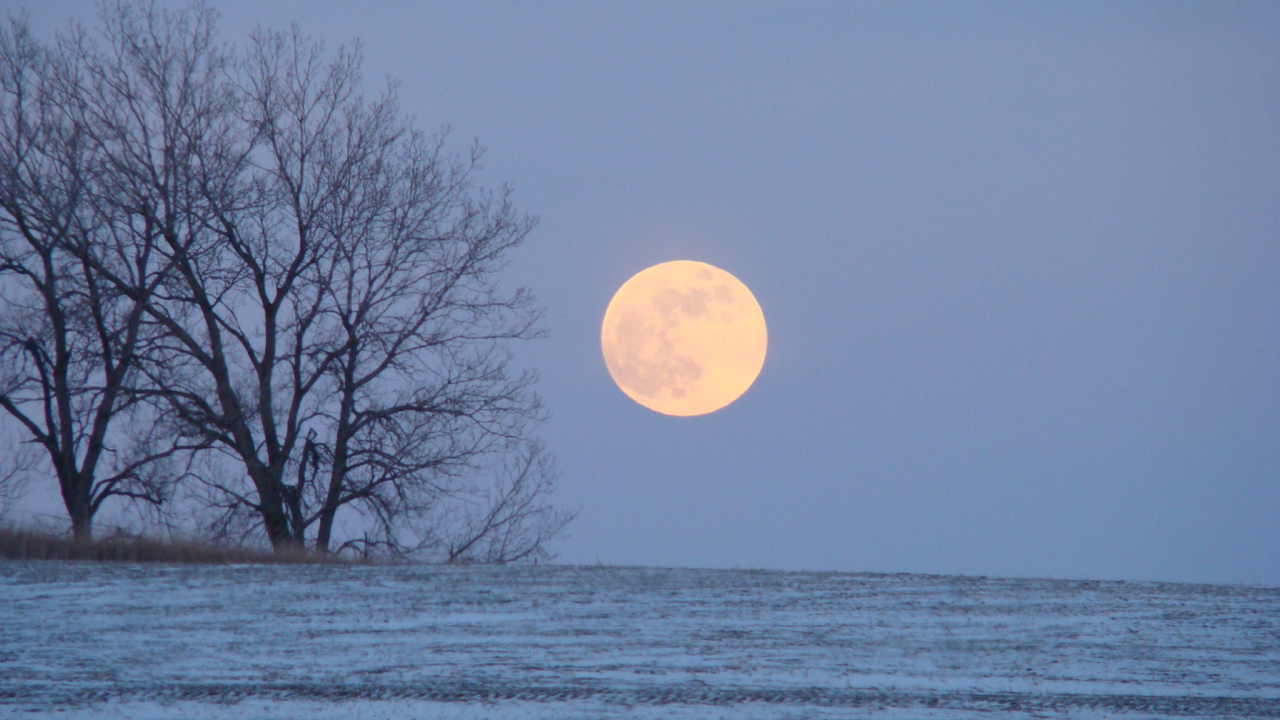
Saturday, January 3, will mark the first full moon of 2026. Known as the Wolf Moon, it will be at its peak at 5:02 a.m. EST and will be best seen rising in the east at dusk later today. It will also be a “supermoon,” meaning it will appear brighter and larger than usual.
According to the Old Farmer’s AlmanacThe January full moon got its name because wolves were more likely to be heard howling at this time of year. Other Native American names for this full moon include the Cold Moon, the Blast Frost Moon, the Frozen Moon, the Severe Moon, the Harsh Moon, the Central Moon, and the Canada Goose Moon. In Europe, it is often called the Moon after Christmas, named after the ancient holiday which extends from winter solstice on December 21 until January 1st.
The best time to see the Wolf Moon will be at moonrise on January 3, when it appears at dusk between a star and a very bright planet. To its left will be Pollux, a bright star in the constellation Gemini, and Jupiter to its right. The “king of planets” will be just a week away from its bright opposition – the brightest it will get from our perspective in 2026.
Because it’s full moon Closest to the winter solstice on December 21, the Wolf Moon will also make the highest arc in the night sky of all full moons, as seen from the Northern Hemisphere. This happens because the full moon is always opposite the sun, so the winter sun mimics the summer sun. sun.
The Wolf Moon is also the fourth supermoon in a row, although it won’t be particularly large. It’s also the last until November. It is called a supermoon because it rotates completely near perigee, the closer the moon gets to Earth. When it becomes full on January 3, the full moon will be 225,130 miles (362,312 kilometers) from our planet.
Luckily, this will happen when Earth reaches perihelion – its closest point to the sun – when it is 91.4 million miles (147.1 million km) from our star, compared to an average distance of 93 million miles (150 million km).
After the Wolf Moon, the next full moon will be the Snow Moon on February 1st.