Watch Rocket Lab launch Europe’s 1st 2 ‘Celeste’ navigation satellites early March 25

When you purchase through links on our articles, Future and its syndication partners may earn a commission.

Credit: Rocket Lab
Rocket Lab will launch two pioneering navigation satellites early Wednesday morning (March 25), and you can watch the action live.
A Electron rocket carrying the first two satellites of the European Space AgencyESA’s Celeste navigation constellation (ESA) is expected to take off from Rocket LabThe New Zealand site Wednesday at 5:14 a.m. EDT (0914 GMT; 10:14 p.m. New Zealand local time).
You can watch it live here on Space.com, courtesy of ESA, or directly via the space agency. Coverage will begin approximately 20 minutes before launch.

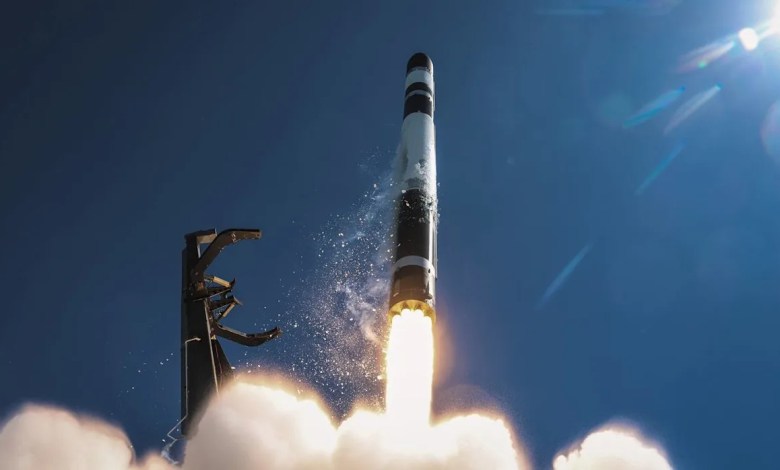
A Rocket Lab Electron rocket launches on the “Insight at Speed is a Friend Indeed” mission from New Zealand on March 5, 2026. | Credit: Rocket Lab
Celeste is the first European satellite navigation effort in low earth orbit (LION).
The initiative “will demonstrate how an additional layer flying closer to Earth can improve Europe’s current situation.” Galileo System in Medium Earth Orbit (MEO), strengthening global resilience, improving its performance and opening opportunities for new service capabilities directly from LEO,” ESA officials wrote in a statement. description of Wednesday’s launch.
The first phase of the Celeste program will launch a demonstration constellation of 11 satellites. The satellites that will rise on Wednesday are the first two in this group.
If all goes as planned at Wednesday’s launch, which Rocket Lab calls “Daughter from the Stars,” Electron will deliver both satellites in a circular orbit 510 kilometers (317 miles) above Earth. The first spacecraft will deploy 20 minutes after liftoff, and the second will follow four minutes later.
“Star Daughter” will be the 78th launch to date for the 18-meter-tall Electron. Rocket Lab also flew seven missions with a suborbital version of the vehicle called HASTEwhich customers mainly use to test hypersonic technologies.