Trump threatens NATO allies over Strait of Hormuz help : NPR

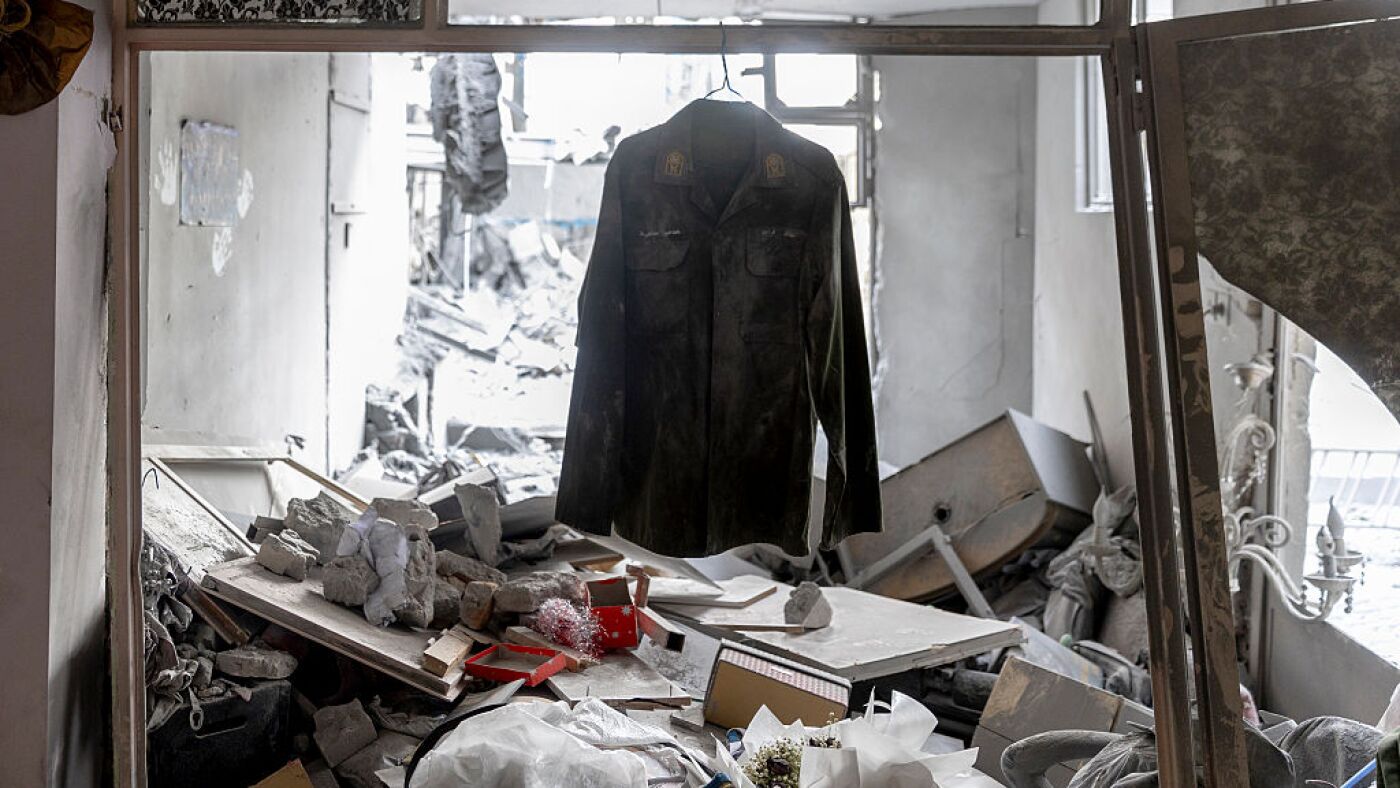

A shirt was seen hanging amid rubble in Tehran, Iran’s Beryanak district on Sunday after being damaged by missile attacks two days earlier.
Majid Saeedi/Getty Images
hide caption
toggle caption
Majid Saeedi/Getty Images
As the war in Iran enters its third week and oil prices reach nearly $105 a barrel on Monday, President Trump once again urged NATO countries and China to help the United States secure the vital Strait of Hormuz.
On Saturday, Trump had called on China, France, Japan, South Korea, the United Kingdom and other countries to send warships to the main shipping route, which Iran has blocked since the war and through which about a fifth of the world’s oil supplies typically pass.
No country has publicly committed to meeting Trump’s request, and the president raised the bar in an interview with The Financial Times Sunday evening, saying failure to do so would be “very bad for the future of NATO.”
Here are further updates on the situation in the Middle East.
To jump to a specific coverage topic, click the links below:
Response of nations | Strikes in the Middle East
US allies and China react cautiously
Trump said he had asked seven countries to help escort the ships through the Strait of Hormuz and said some had agreed, although he did not name them.
He said it was in the interest of those countries to help, including China, which relies heavily on the Strait of Hormuz for its oil supplies. He also said the United States would “remember this” if its NATO counterparts did not help.
But foreign countries reacted cautiously to Trump’s request. During his first term and since returning to the presidency, Trump has rattled NATO allies by expressing skepticism about the value of the postwar alliance, blaming them for what he says is poor defense spending and threatening U.S. withdrawal.
EU foreign policy chief Kaja Kallas said on Monday she had spoken to UN Secretary-General António Guterres about how to unblock the strait.
“It is in our interest to keep the Strait of Hormuz open and that is why we are also discussing what we can do in this regard on the European side,” she said.
British Prime Minister Keir Starmer rejected Trump’s demands, telling reporters Monday that he was working with allies on a plan to reopen the Strait of Hormuz, but that it would not be a NATO mission.
He said the UK “will not allow itself to be drawn into a wider war”.
Starmer has given the United States only limited access to British military bases, only for what he calls defensive operations. Most British people are opposed to the war.
Trump responded with personal insults against Starmer, who however said that “At every step, I have remained true to my principles.”
China has only said keeping the strait open is important for international trade, with the Foreign Ministry calling for an end to hostilities.
The Chinese Ministry of Foreign Affairs said it communicates with all warring parties, but it has not specified how this would help facilitate trade in the Strait of Hormuz.
President Trump is scheduled to visit China at the end of the month, but has suggested that trip could be canceled, depending on Beijing’s decision on deploying warships.
But Chinese Foreign Ministry spokesperson Lin Jian said both parties are still communicating about the visit. Chinese and American officials are currently meeting in Paris to work out the details.
South Korea said it was studying Trump’s request, but Japan is bound by laws that strictly limit military deployments abroad. Tokyo has suggested that operations in the Strait of Hormuz may not meet legal requirements.
“We have not made any decisions regarding sending escort ships. We continue to examine ‘what Japan can do independently and what can be done within the legal framework,’ Prime Minister Sanae Takaichi told parliament.
But Trump’s request will likely be at the top of the agenda when Takaichi visits the White House on Thursday.
Australia said it had not been asked to contribute and would not send ships.
Iran and Israel continue their attacks; Gulf states facing strikes
The Israeli military said Monday it had “begun limited and targeted ground operations against Hezbollah’s main strongholds in southern Lebanon, aimed at strengthening the forward defense zone.”
Heavy bombings were also reported in Tehran.
The Israeli military also said it had detected Iranian missile strikes towards Israel and urged residents in affected areas to seek refuge.
Meanwhile, Iran continues to target its Gulf neighbors, although Iran’s foreign minister denied on Sunday that his country was targeting civilian infrastructure.
Dubai International Airport said a drone hit a fuel tank on Monday, causing a fire. Although no injuries were reported, the airport briefly suspended operations and Emirates airline suspended flights.
Saudi Arabia also said it was attacked by dozens of drones, which it shot down.
The humanitarian toll of the conflict continued to rise. So far, 13 American service members and at least 12 Israeli civilians have died. More than 1,200 Iranian civilians were killed and up to 3.2 million people temporarily displaced. In Lebanon, more than 800 people have been killed and more than 800,000 displaced.
Emily Feng in Istanbul, Lauren Frayer in London, Jennifer Pak in Shanghai and Kate Bartlett.


