Jurassic Predators Feasted on Baby Long-Necked Dinosaurs 150 Million Years Ago


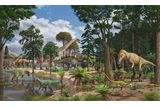
Sauropods, the long-necked dinosaurs that dominated the Jurassic landscape, grew up alongside many hungry neighbors. These herbivores were vulnerable hatchlings and, according to a new study, they may have helped maintain entire populations of predators.
By reconstructing a food web from fossils from Colorado’s Morrison Formation, researchers found that baby and very young sauropods were a central food source for large carnivorous dinosaurs such as Allosaurus And Torvosaurus. The study, published in the New Mexico Museum of Natural History and Scientific Bulletinmapping thousands of feeding relationships dating back around 150 million years ago.
“Life was cheap in this ecosystem, and that of predators like the Allosaurus were likely fueled by eating these baby sauropods,” lead author Cassius Morrison said in a press release.
Learn more: Long-necked titanosaur skeletons surfaced at dinosaur fossil site in Transylvania
Reconstructing the Jurassic Food Web
To reconstruct what the Morrison Formation ecosystem looked like, researchers focused on fossils from the Dry Mesa dinosaur quarry in Colorado. The site preserves at least six species of sauropods, including Diplodocus, BrachiosaurusAnd Apatosaurusas well as large predators and smaller animals.
The fossils were deposited over a relatively short period of time, probably less than 10,000 years. This narrow window gives researchers an unusually focused view of a Late Jurassic ecosystem.
They used estimates of body size, microscopic tooth wear, chemical signatures preserved in bones and fossilized stomach contents. They then entered this information into ecological modeling software typically used to study modern ecosystems.
The result was a network of more than 12,000 potential food chains. Sauropods are related to more species than any other group of quarry herbivores, related to a wide range of plants and predators.
“Sauropods had a huge impact on their ecosystem. Our study allows us for the first time to measure and quantify the role they played,” Morrison said.
Small, unprotected and abundant
As adults, sauropods were immense. Their eggs, on the other hand, were only about a foot in diameter.
“Adult sauropods like the Diplodocus And Brachiosaurus were longer than a blue whale. When they walked, the earth shook. Their eggs, however, were only a foot wide, and once hatched, their offspring took many years to grow,” Morrison said.
Despite their size, the youngsters were not closely monitored. Evidence shows the newborns were left to fend for themselves. Given the size of adult sauropods, maintaining the nests could have risked crushing the eggs, making hands-off reproduction the best strategy.
“A few Allosaurus the fossils show signs of quite gruesome injuries, caused for example by the sharp tail of a Stegosaurus – who had healed and others who had not. But an abundance of easy prey in the form of young sauropods could have allowed injured allosaurs to survive,” study co-author William Hurt said in a press release.
Change in pressures over time
By time Tyrannosaurus rex Appearing about 70 million years later, sauropods were less common in North America. Predators faced prey such as Triceratopswhich were larger and better defended.
With fewer sauropods available, later predators may have faced greater pressure to develop powerful bites, larger bodies, and improved vision.
“Reconstructing food webs means we can more easily compare dinosaur ecosystems at different time periods. This helps us understand evolutionary pressures and why dinosaurs were able to evolve in the way they did,” Morrison added.
By stepping back from individual fossils and looking at the ecosystem as a whole, researchers say sauropods influenced Jurassic life at every stage of their growth. Their enormous adults dominated the landscape, but their exposed young may have quietly supported it.
Learn more: Duck-billed dinosaurs broke off their companions’ tails, revealing the sex and sexual difference of dinosaurs
Article sources
Our Discovermagazine.com editors use peer-reviewed research and high-quality sources for our articles, and our editors review the articles for scientific accuracy and editorial standards. See the sources used below for this article:


