Kabul could become the first modern capital to run out of water — here’s why


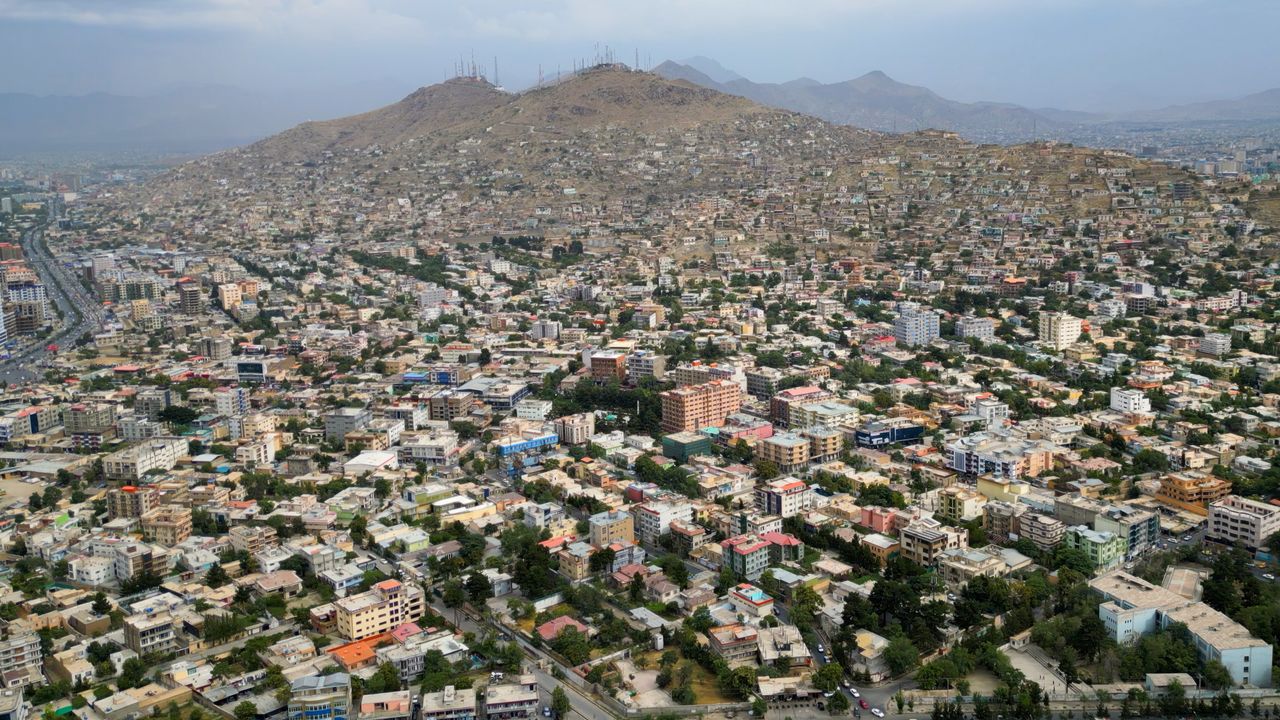
The city of Kabul in Afghanistan risks becoming the first modern capital to lack water, according to a recent report.
Kabul dries due to a combination of different factors, including climate change, poor management of water resources, rapid urbanization and a swollen population which amounts to around 5 to 6 million people.
Mercy body, a humanitarian NGO, published a report In April, which noted that the Kabul water crisis reached a tilting point, the aquifers flowing faster than they can be reappropriate, as well as the problems surrounding the affordability of water, contamination and infrastructure.
In June, a Kabul resident said to the goalkeeper that there is no good quality well available, while last week, another resident said to cnn that they did not know how their family would survive if things were getting worse.
The Kabul water problem is not new and has not regularly cultivated for decades. The report underlined that he had been exacerbated by the drop in humanitarian financing of Afghanistan since August 2021 – when the The Taliban returned to power While we and the Allied forces withdrew from the country.
“Without large -scale changes in Kabul’s water management dynamics, the city is faced with an unprecedented humanitarian disaster during the next decade, and probably much earlier,” Mercy Corps were written at the end of the report.
In relation: “ An existential threat affecting billions ”: three -quarters of the land of the earth have become drier permanently in the past 3 decades
The new report is based on previous United Nations (UN), which found that Kabul’s groundwater may risk risking Run by 2030with about Half of the boreholes in the already dry province of Kabul. Currently, each year, extraction exceeds natural replenishment of approximately 1.5 billion cubic feet (44 million cubic meters), depending on the report.
Mohammed MahmoudA water safety expert who was not involved in the report, Kabul was clearly in the midst of the aggravate water crisis.
“The fact that the extraction of water now exceeds natural recharging by tens of millions of cubic meters each year, and that up to half of the city’s groundwater has already dried, is an indication of an collapse system,” said Mahmoud in an email.
Mahmoud is the chief executive officer of the NGO of the Climate and Water initiative, and the head of the Middle East climate and water policy at the United Nations Water, Environment and Health Institute. He described the conclusions of the report as “quite alarming” and noted that he was also concerned about the abrupt drop in Kabul’s water table and the growing number of forced residents to spend a large share of their income to access water.
Mercy Corps reported that Kabul’s aquifer levels have dropped approximately 100 feet (30 m) over the past decade and that some households spend up to 30% of their income only on water.
“It is not only an environmental problem, it is a public health emergency, a subsistence crisis and an imminent trigger for a large -scale potential human displacement,” said Mahmoud.
A global problem
Water shortage is a global problem affecting many different regions. Water resources have been stretched in recent decades, with environmental factors such as climate change increasing the frequency and severity of the severity of droughtand human factors such as population growth increasing water demand.
A 2016 study published in the journal Scientific relationships found that between the 1900s and 2000s, the number of people faced with the water shortage increased from 240 million to 3.8 billion, from 14% to 58% of the world’s population. Particularly high risk zones The shortages include North Africa, the Middle East and South Asia.
“What is happening in Kabul reflects a broader trend that we see in regions stressed by water in the world, especially in the Middle East and North Africa,” said Mahmoud. “The overputization of groundwater is endemic in many parts of the region, which leads to the recharging levels of groundwater which do not follow the extraction of aquifers. Climate change reduces and also moves the precipitation patterns, which limits more the generation of fresh water and the recharge of groundwater, while increasing the frequency and seriousness of the dryers.”
The new report underlined that Kabul is about to become the first modern capital to lack water, but it is not the first big city to face an existential threat linked to water, and on the basis of current trends, it will not be the last.
In 2018, the CAP – The Legislative Capital of South Africa – Almost lacking in water During a drought, and has just had to deactivate the taps thanks to tight water restrictions and a water saving campaign. The situation was even worse for the Indian city of Chennai in 2019 when its four main tanks dried, seriously limiting the supply of water and plunging the city into a crisis.
Mahmoud noted that water shortages have serious socioeconomic impacts, affecting agricultural and food security, increasing life costs and, in extreme cases, causing migration and mass movement.
“We need stronger investments in sustainable water management, robust water infrastructure and better governance to start solving water shortages,” said Mahmoud.


