Kansas Senate embraces bill to compel age-verification, parental consent on app downloads

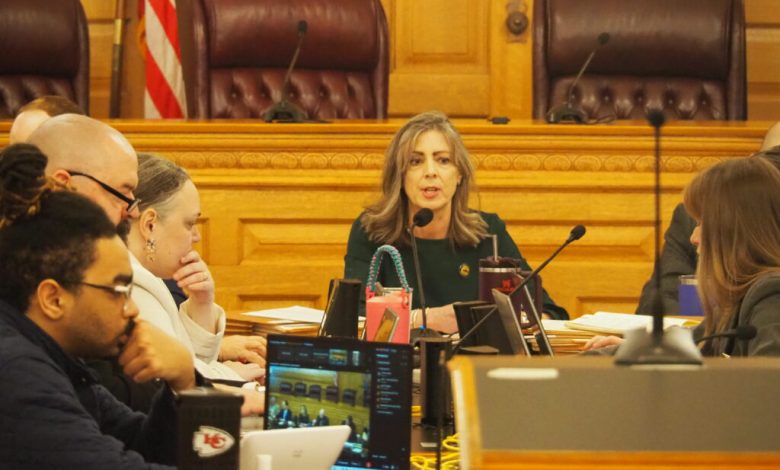
TOPEKA — The Kansas Senate on Wednesday passed legislation requiring app store providers to verify the age of Kansas customers and confirm that minors have adult consent before purchasing or downloading an app.
The Kansas House has not yet passed House Bill 2422, and approval from the second chamber would be needed before sending the package to Gov. Laura Kelly. The Senate vote was 34-6, but the bill faced aggressive opposition from Senate Minority Leader Dinah Sykes of Lenexa.
The major digital marketplaces targeted by the bill included the Google Play Store, with 3 million apps available to Android users, and the Apple App Store, which allowed users to download more than 2 million apps for Apple devices.
Sen. Kellie Warren, a Republican from Leawood and chairwoman of the Senate Judiciary Committee, said the Legislature should help parents protect their children from big tech companies that funnel “harmful” content and ads to consumers. She said teenagers were downloading apps without their parents’ knowledge.
“We have all seen the effect that social media and the Internet have on our children,” she said. “We actually hear a lot about this from Kansas parents.”
In addition to requiring businesses to verify the age of account applicants, HB 2422 would then require businesses to remove personally identifiable information used to confirm the age of adult and minor customers.
The measure would require Attorney General Kris Kobach to adopt regulations by Jan. 1, 2027, establishing age verification methods that app providers would use to confirm the ages of account holders. The state attorney general would investigate the alleged violations and impose civil penalties of at least $7,500 for a confirmed violation of the law.
“This is a small step, but an important step, to keep our children safe online,” Warren said.
Sykes, a Democrat running for state insurance commissioner, said the legislation was unconstitutional. She said it would be misleading to claim the bill would have a significant impact on public consumption of online material considered by some to be objectionable.
“I think lying to parents and misleading them is something we should take very seriously,” Sykes said. “This bill will not protect Kansas’s children. This bill will only open Kansas to more litigation, costing the state and taxpayers millions of dollars. Protecting our children is crucial and must be taken seriously, but this bill does not do that. It only gives parents a false sense of security.”
Conservative Sen. Marie Blew, R-Great Bend, voted for the bill but expressed objections to the legislation because it sought to “regulate parents in parenting.”
Rep. Nikki McDonald, D-Olathe, said she received comments from Johnson County constituents who shared their criticism of the bill negotiated by six House and Senate lawmakers.
“We all agree that protecting children is paramount. I have real concerns about privacy and implementation. Unintended consequences are a real problem,” McDonald said.
Originally, HB 2422 was a bill adjusting state law on the crime level attached to stealing grain or hay. At a House-Senate conference committee, these agricultural provisions were replaced by the “App Store Accountability Act” embodied in Senate Bill 372.
The enforcement bill was supported at a Senate committee hearing in January by the Digital Childhood Alliance, the Family First Technology Initiative, Kansas Family Voice, the National Center on Sexual Exploitation, Paradigm Shift Training and Consulting, Protect Young Eyes, the Kansas Bureau of Investigation and the Kansas Catholic Conference.
Brittany Jones, president of Kansas Family Voice, said changing Kansas law would “save a child’s impressionable mind” from “gross content” by requiring parental involvement.
“Parents reserve the right to ensure that the content their child is exposed to is age appropriate,” she said.
Critics of the legislation included the Computer and Communications Industry Association, NetChoice, the Taxpayers Protection Alliance, the App Association and the James Madison Institute. Objections have been raised to legislation infringing on the privacy of all ages and restricting access to digital commerce.
Amy Bos, vice president of government affairs for the NetChoice association of Internet companies, including Meta and Google, said the U.S. Supreme Court has ruled that age verification mandates blocking a person’s ability to exercise First Amendment rights are unconstitutional. Age verification laws have not stood up to legal scrutiny in California, Utah, Ohio, Arkansas and Louisiana, Bos said.
“If passed, this bill would almost certainly violate Kansans’ First Amendment rights, weaken their privacy and fail to keep children safe,” Bos said.


