Krasheninnikov Volcano Erupts in Russia after Nearby Magnitude 8.8 Earthquake


Russian volcano, dormant for hundreds of years, broke out after a massive earthquake
The Krasheninkov volcano, located less than 150 miles from the Earthquake of the Earthquake of July 29 of Russia, began to break out on August 3
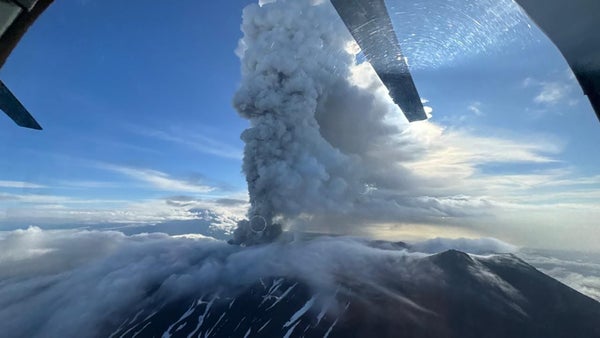
A massive chronicle of ASH bursts from the Krasheninkov volcano in the Russia Kamchatka region of Russia, marking its first eruption since 1550, according to the global volcanism program of the Smithsonian Institution, on August 3, 2025. The eruption comes only a few days after one of the most powerful terms of the region.
Sheldovitsky Artem Igorevich / Ivis / Handout / Anadolu via Getty Images
The Krasheninkov volcano in Russia broke out for the first time in centuries on August 3, sending ashes and gas to almost four miles in the atmosphere, less 150 miles from the Earthquake of the 8.8 magnitude earthquake which struck on July 29.
The mountain is one of the eight active volcanoes of the Kronotsky nature reserve and part of the volcanic arch of Eastern Kamchatka. The eruption began around 6 a.m., local time on Sunday (2 p.m., HAE on August 2), when the regional staff noticed that ashes, steam and gas escaping from the volcano slopes, according to a Russian language declaration published on the Nature Reserve website.
Learn more: Why did the Russian earthquake not cause huge tsunami
On the support of scientific journalism
If you appreciate this article, plan to support our award -winning journalism by subscription. By buying a subscription, you help to ensure the future of striking stories about discoveries and ideas that shape our world today.
The volcano is located on the sparsely populated Kamchatka peninsula, just opposite the international line of the Alaska hazard islands. Due to its distant location, the volcano has little threat to humans. Scientists have catalled 31 previous confirmed eruptions of Krasheninnikov throughout the current Holocene era, which began around 11,700 years ago. Its most recent known eruption occurred around 1550, according to the global volcanism program of the Smithsonian Institution.
Large earthquakes sometimes trigger nearby volcanic eruptions, according to the US Geological Survey, but only if the volcano is already approaching an eruption, with enough magma stored inside suffering sufficiently high pressure.
Another volcano in the same arc, Klyuchevskoy, is also currently bursting. Scientists watched the lava fill in the crater from April and confirmed large amounts of fresh lava on July 19, before the solid earthquake. This volcano has always been much more active than Krasheninkov, with more than 111 Holocene eruptions identified by scientists, including more than a dozen in the past two decades.
It’s time to defend science
Before closing the page, we must request your support. American scientist has been a defender of science and industry for 180 years, and we are thinking at the moment is the most critical moment of this two -centuries story.
We do not ask for charity. If you become a Digital, printed or unlimited subscriber has American scientistYou can make sure that our cover is focused on significant research and discoveries; that we have the resources necessary to report the decisions that threaten laboratories in the United States; And that we support future scientists and workers at a time when the value of science itself is often not recognized. Click here to subscribe.


