Kremlin murdered Navalny with lethal frog toxin

Forensic analyzes indicate that Russian opposition leader Alexei Navalny, who died two years ago in an Arctic penal colony, was killed with a powerful frog toxin, European governments announced on Saturday, directly accusing the Kremlin of murder.
Germany, Sweden, the Netherlands, France and the United Kingdom say analyzes of Navalny’s remains showed traces of the highly potent toxin epibatidine.
“Russia claimed that Navalny died of natural causes. But given the toxicity of epibatidine and the reported symptoms, poisoning was most likely the cause of his death. Navalny died while in prison, meaning Russia had the means, motive and opportunity to administer this poison to him,” a joint statement said.
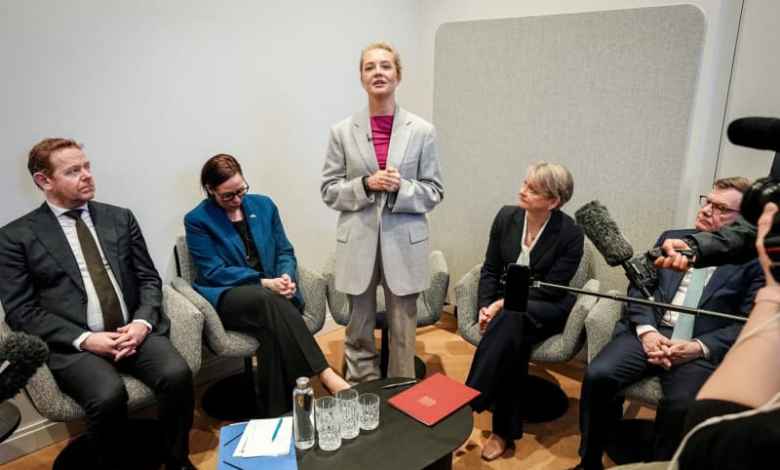
The announcement was made by German Foreign Minister Johann Wadephul and his counterparts on the sidelines of the Munich Security Conference, where dozens of world leaders and top defense officials gathered for three days of talks.
Navalny’s widow, Yulia Navalnaya, who was present during the announcement, said the results proved Russian President Vladimir Putin was a murderer.
Wadephul said the new scans clarified the cause of death. “Alexei Navalny was poisoned while in custody in Russia,” he said.
According to the German minister, the remains contained epibatidine, an extremely potent nerve toxin first discovered in the skin secretions of some poisonous frogs in Ecuador.
He added that the substance – which can also be produced in the laboratory – is around 200 times more powerful than morphine and paralyzes the respiratory muscles, causing victims to suffocate.
It is not clear when, where and how the analyzes were carried out.
Asked by a journalist why the analyses, in which France also participated, had taken so long, Wadephul replied that it was a complicated process that required coordination with different European partners.
Navalny’s death in February 2024 sparked international condemnation and accusations from Western governments that the Kremlin was responsible.
Moscow has repeatedly denied any involvement in his death.
“No one, except Putin’s henchmen, will be able to tell us exactly what happened on February 16, 2024 in the Russian penal colony,” Wadephul said. “One thing is clear: Russian authorities had the motive and means to administer the poison to Navalny.”
Navalny, he said, was not only the brave face of the Russian opposition, but he had already survived a poisoning attempt. After being treated at the Charité in Berlin, he returned to Russia despite the risks.
Navalny’s death, which marks his second anniversary this Monday, remains a blow to everyone, especially in Russia, who have not given up hope for a free country, Wadephul said.
“Putin tramples on international law and humanity on a daily basis, and not only in Ukraine,” he added.
The German minister also accused Putin of failing to respect the Chemical Weapons Convention and said the director general of the Organization for the Prohibition of Chemical Weapons had been informed of the findings.
At the same time, Navalnaya thanked the laboratories of Germany, Great Britain, Sweden and the Netherlands that took part in the analyses.
She said learning of her husband’s death was the hardest day of her life and she knew he had been murdered.
“What else could have happened to a charismatic young opposition leader in Putin’s prison?” she asked.
British Foreign Secretary Yvette Cooper said: “We are here today to shine a spotlight on the Kremlin’s barbaric attempt to silence the voice of Alexei Navalny. »
His Swedish counterpart Maria Stenergard added that it was “extremely important to be able to hold Russia accountable for what it has done.”


