Kurds celebrate Nowruz amid Iran tensions, Ramadan overlap and regional unrest

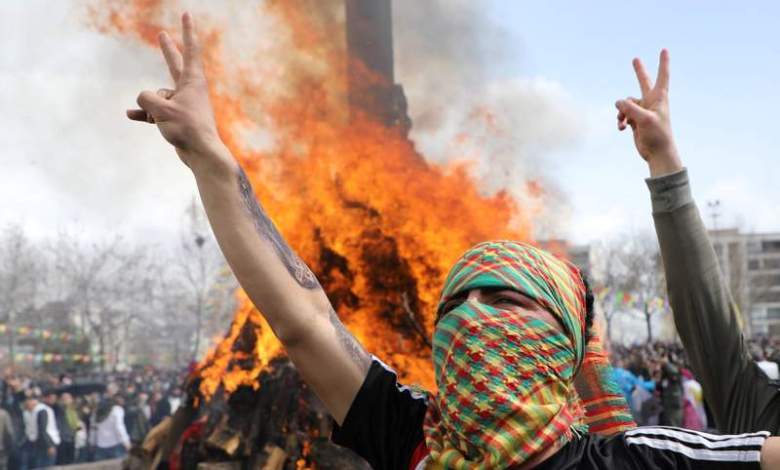
Although widely celebrated, the holiday holds particular cultural and political significance for Middle Eastern Kurds and diaspora communities around the world.
The Kurdish people celebrate Nowruz in 2026 under unusual and difficult circumstances, as the holiday coincides with the end of Ramadan and Eid al-Fitr, taking place against the backdrop of regional conflict.
Observed from March 21 to 23, Nowruz, marking the Persian New Year, is celebrated with gatherings, picnics and traditional bonfires. In Kurdish communities, the holiday remains a powerful symbol of renewal and identity.
“Festivities are taking place across the Kurdistan Region, with hundreds of thousands of Kurds participating in traditional dances while wearing colorful national costumes,” notes Rudaw, a Kurdish media outlet.
Nowruz is widely observed in Iran and beyond. It is usually a time of family, renewal and new beginnings. It falls on the spring equinox and is considered the celebration of a new day for millions of people in Iran and the Persian and Kurdish diasporas.
But this year, for many Iranians, the festivities bring little joy.

A man gestures while others wave flags with an image of jailed Kurdish militant leader Abdullah Ocalan during Nowruz celebrations in Diyarbakir, southeastern Turkey, March 21, 2026. (credit: REUTERS/SERTAC KAYAR)
Although widely celebrated, the holiday holds particular cultural and political significance for Middle Eastern Kurds and diaspora communities around the world.
Celebrations marked by conflicts and security threats
This year’s celebrations take place against the backdrop of an ongoing conflict involving Iran, affecting Kurdish regions in neighboring countries. In the Iraqi Kurdistan region, the festivities take place against a backdrop of security threats and disruptions linked to drone and missile attacks.
Iran-backed militias launched more than 300 drones and missiles into the Kurdistan region, contributing to closures and increased tensions over the holiday period.
In Syria, Kurds celebrated Nowruz in Afrin, a region in the northwest of the country where many Kurdish residents were displaced in 2018.
Afrin: return after years of displacement
Afrin, a predominantly Kurdish region of hills and mountains, remained largely untouched for much of the Syrian civil war before coming under the control of the Kurdish People’s Protection Units (YPG).
Turkey has opposed the YPG, arguing that they are linked to Kurdistan Workers’ Party “terrorists.” In 2018, as Ankara expanded its influence in northern Syria, Turkish forces and allied factions of the Syrian National Army launched an offensive in Afrin, causing large-scale displacement of Kurdish residents.
Years later, after the fall of the Assad regime and Turkey’s withdrawal from the region, some Kurds began to return home.
In Afrin, Nowruz celebrations have resumed, holding deep symbolic meaning for returning residents. Kurdish flags reappeared in public, reflecting a change from previous years. However, reports indicate that tensions and occasional clashes with Syrian security forces have persisted.
However, the situation marks a significant change compared to recent years.
Syria signals cultural shift
In Damascus, Nowruz was also marked by official events, reflecting what authorities describe as a broader shift in cultural recognition.
Syrian state media SANA reported that “Syria marked Nowruz with a cultural event at the Damascus Opera House, with performances and official statements highlighting cultural diversity and recent changes in recognition of the occasion.” »
According to the report, “the program included seven performances staged by the Kurdish heritage troupe ‘Ashti’, combining elements of dance and storytelling. The main piece explored the origins and symbolism of Nowruz, with narration by actor Abeer Shams al-Din and participation by artist Jwan Hasso and singers Alan Murad, Rostu Ramadan and Ivana Mohammad.”
SANA added that “media supervisor Idris Murad said the production blends storytelling and dance to present the story of Nowruz in a contemporary format. He added that the troupe presents an annual show reflecting Kurdish cultural traditions within the broader cultural landscape of Syria.”
Officials framed the event as part of a broader effort to embrace diversity. “Minister of Culture Mohammad Yassin Saleh said the celebration marks a change in the Syrian cultural scene, emphasizing that Nowruz, once restricted, is now recognized as a national occasion reflecting the role of the Kurdish community in cultural and scientific life.
The European Union’s charge d’affaires in Syria, Michael Ohnmacht, described the event as “the symbol of a new Syria”, SANA reported. Nowruz is now recognized as an official public holiday in the country.
Kurdish diaspora celebrates Nowruz in Europe
Beyond the Middle East, large-scale celebrations are also taking place across Europe.
According to Kurdistan 24, a major Nowruz event in Bonn, Germany, is expected to attract tens of thousands of Kurds from across the continent. The report notes that “the Bonn Nowruz festival is expected to attract tens of thousands of Kurds from across Europe.”
A 100-meter Kurdish flag is expected to be flown during the event, highlighting the scale and symbolic importance of the diaspora celebrations.