Lead has been poisoning humans for over 2 million years


Today, lead exposure is directly linked to a post-industrialized world. However, new evidence indicates that exposure to this toxic element is not necessarily a new problem. Based on an interdisciplinary approach to geoarchaeological analysis, Homo sapiens and our hominid ancestors have been battling lead for over two million years. According to a study published on October 15 in Scientific advancesLead’s influence is so pervasive that it may have affected the evolution of the human brain, behavior, and even our language. Additionally, our ability to withstand some of the worst impacts of metal may also partly explain how we survived our cousins, the Neanderthals.
The state of lead today
Lead exposure remains a public health problem worldwide, even after decades of efforts to address it. According to the Institute for Health Metrics and Evaluation, the toxic metal contributed to more than 1.5 million deaths worldwide in 2021. It also continues to negatively affect children’s physical and neurological development, often leading to lower test scores, behavioral problems, hearing problems and anemia.
Despite this knowledge, lead is still used in the manufacture of many vehicle batteries, ceramics, cosmetics and other everyday items. Meanwhile, even drinking water may be susceptible to contamination due to lead leaching into water supplies through outdated plumbing systems.
Teeth tell a different story
For years, experts largely agreed that lead exposure was a modern crisis almost entirely linked to industrial projects, including smelters, mines and the long-standing use of leaded gasoline. While this is partly true, an international team of archaeologists, geneticists and chemists are convinced that hominids ingested the metal at different times over millions of years.
The evidence comes from 51 fossilized teeth from Homo sapiens and Neanderthals, as well as great ape species such as African Australopithecus And Robust Paranthropus. After analyzing the teeth with a technique known as high-precision laser ablation geochemistry, the researchers identified clear “lead bands” formed inside the teeth as their dentin and enamel developed during each specimen’s childhood.
“Our data shows that lead exposure was not just a product of the industrial revolution, but part of our evolutionary landscape,” Renaud Joannes-Boyau, head of the Geoarchaeology and Archaeometry Research Group (GARG) at Southern Cross University in Australia, said in a statement.
Instead of lead paint or gasoline, exposure millions of years ago would have been due to soil and water contamination, sometimes exacerbated by volcanic activity. The metal is even occasionally released from the body’s bone stores in cases of illness or stress.
“This means that our ancestors’ brains developed under the influence of a powerful toxic metal, which may have shaped their social behavior and cognitive abilities over millennia,” Joannes-Boyau added.
Brain organoids and NOVA1
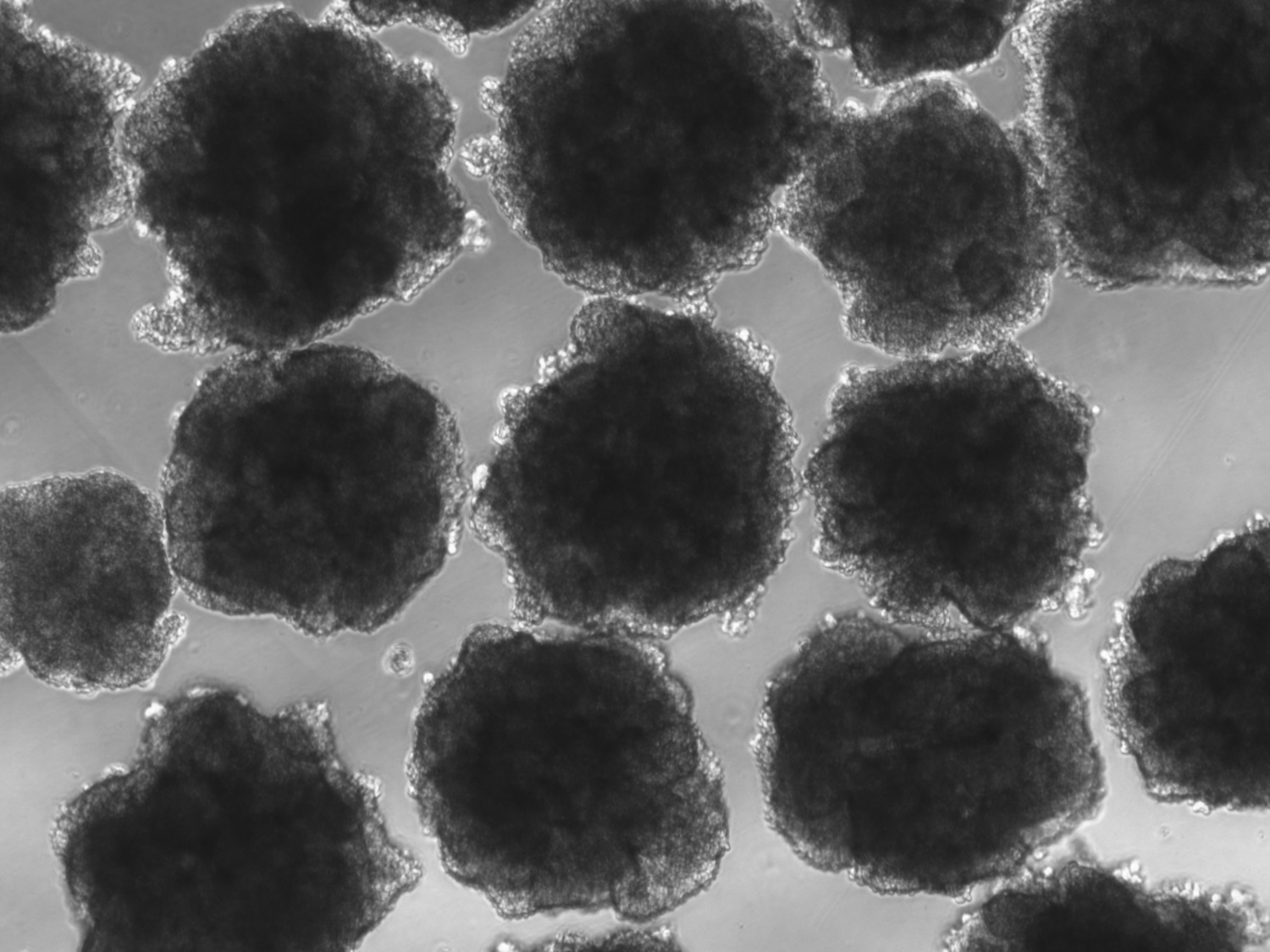
To test how lead exposure might have affected evolutionary cognitive development, Joannes-Boyau and colleagues turned to brain organoid experts. Formed by directing the growth of stem cells in a laboratory, brain organoids function as miniature models of the mind that scientists can use as proxies to study the human brain. In this case, the researchers grew organoids to test the influence of lead on two variants of a gene linked to neurodevelopment called NOVA1. Scientists have known for a long time Homo sapienthe version of NOVA1 differs from NOVA1 in Neanderthals and our other extinct relatives, but an explanation for this characteristic was lacking.
One possible reason became apparent shortly after the brain organoids were exposed to lead. In older examples of NOVA1the metal disrupted neurons in the cortex and thalamus, two regions of the brain largely responsible for speech and language development. But this disruption was not as serious a problem in organoids with modern human forms. NOVA1 Genoa.
“Our work not only rewrites the history of lead exposure, but it also reminds us that the interaction between our genes and the environment has shaped our species for millions of years and continues to do so,” Joannes-Boyau said.
With a better understanding of humanity’s genetic journey, researchers may be able to better mitigate the worst effects of lead exposure, particularly during childhood development. According to Alysson Muotri, a pediatric cellular medicine researcher at UC San Diego, the results suggest an “extraordinary example” of environmental pressure driving evolution.
“In this case, lead toxicity could have led to genetic changes that improved survival and our ability to communicate using language,” explained the study co-author before warning that these same changes “now also influence our vulnerability to modern lead exposure.”

Shop Amazon’s Prime Day Sale


