Learning Another Language May Slow Brain Aging, Huge New Study Finds


November 11, 2025
2 min reading
Learning another language could slow brain aging, important new study suggests
Large international study suggests being multilingual can slow cognitive aging
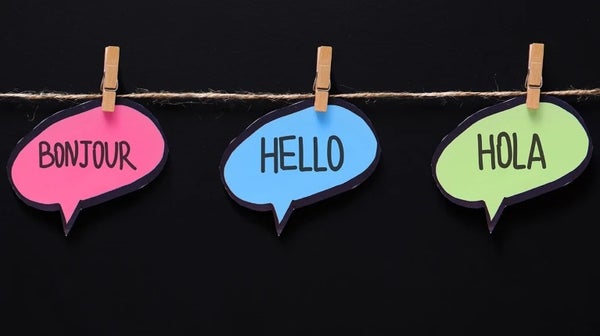
Prostock-Studio/Getty Images
Speaking multiple languages could slow brain aging and help prevent cognitive decline, according to a study of more than 80,000 people.
The work, published in Natural aging on November 10, suggests that multilingual people are half as likely to show signs of accelerated biological aging as those who speak only one language.
“We wanted to fill one of the most persistent gaps in aging research, namely whether multilingualism can actually delay aging,” says Agustín Ibáñez, study co-author and neuroscientist at the Adolfo Ibáñez University in Santiago, Chile. Previous research in this area has suggested that speaking multiple languages can improve cognitive functions such as memory and attention, which improves brain health as we age. But many of these studies rely on small sample sizes and use unreliable methods of measuring aging, leading to inconsistent and non-generalizable results.
On supporting science journalism
If you enjoy this article, please consider supporting our award-winning journalism by subscription. By purchasing a subscription, you are helping to ensure the future of impactful stories about the discoveries and ideas shaping our world today.
“The effects of multilingualism on aging have always been controversial, but I don’t think there has been a study of this scale before, which seems to demonstrate them quite decisively,” says Christos Pliatsikas, a cognitive neuroscientist at the University of Reading, UK. The results of the study could “bring a step change in the field,” he adds.
They might also “encourage people to go out and try to learn a second language, or keep that second language active,” says Susan Teubner-Rhodes, a cognitive psychologist at Auburn University in Alabama.
Long live the linguists
Researchers used a computational approach to explore the link between multilingualism and healthy aging in 86,000 healthy participants aged 51 to 90 in 27 European countries.
For each participant, they determined the biobehavioral age gap, the difference between their chronological age – the number of years they have lived – and their “predicted” age, which takes into account various physiological, lifestyle and socio-economic factors, ranging from cardiometabolic health to education level. A high biobehavioral age gap may be a sign that a person is aging particularly quickly – or slowly.
The researchers compared participants’ biobehavioral age gaps with the number of languages they spoke. This part of the data was based on self-report and therefore did not take into account language proficiency level.
Researchers found that people who spoke only one language were twice as likely to have a high biobehavioral age gap as those who spoke two or more languages. This effect increased with the number of additional languages spoken. “Just one additional language reduces the risk of accelerated aging. But when you speak two or three, this effect is greater,” says Ibáñez.
A study of this magnitude “really reinforces the interpretation that multilingualism, rather than other factors, protects us during aging,” says Teubner-Rhodes. “This was a very large and geographically diverse sample, which allowed them to control for a number of confounding factors that are typically present in multilingualism research, such as immigrant status and wealth.” Future research should include more diverse populations outside of Europe, she adds.
The researchers hope their findings will inspire policymakers to encourage language learning in education.
This article is reproduced with permission and has been published for the first time November 10, 2025.
It’s time to defend science
If you enjoyed this article, I would like to ask for your support. Scientific American has been defending science and industry for 180 years, and we are currently experiencing perhaps the most critical moment in these two centuries of history.
I was a Scientific American subscriber since the age of 12, and it helped shape the way I see the world. SciAm always educates and delights me, and inspires a sense of respect for our vast and beautiful universe. I hope this is the case for you too.
If you subscribe to Scientific Americanyou help ensure our coverage centers on meaningful research and discoveries; that we have the resources to account for decisions that threaten laboratories across the United States; and that we support budding and working scientists at a time when the value of science itself too often goes unrecognized.
In exchange, you receive essential information, captivating podcasts, brilliant infographics, newsletters not to be missed, unmissable videos, stimulating games and the best writings and reports from the scientific world. You can even offer a subscription to someone.
There has never been a more important time for us to stand up and show why science matters. I hope you will support us in this mission.


