Rare ‘daytime fireball’ meteor creates powerful sonic boom as 7-ton space rock explodes above eastern US


An extremely rare meteor, a “daytime fireball,” was recently spotted streaking across the sunny blue skies of the eastern United States after a refrigerator-sized space rock exploded and triggered a powerful sonic boom. The unusual event, also visible from space, may have rained tiny meteor fragments onto the local area, experts say.
The 6-foot-wide asteroid entered Earth’s atmosphere Tuesday, March 17, around 8:57 a.m. EDT, and began burning in the sky over Lake Erie in northern Ohio at a speed of about 40,000 mph (64,400 km/h), according to a report. NASA report. The flaming space rock, which weighed about 7 tons (6.4 metric tons), then shattered about 30 miles (48 kilometers) above the town of Valley City, near Akron, creating a bright flash that lasted up to seven seconds.
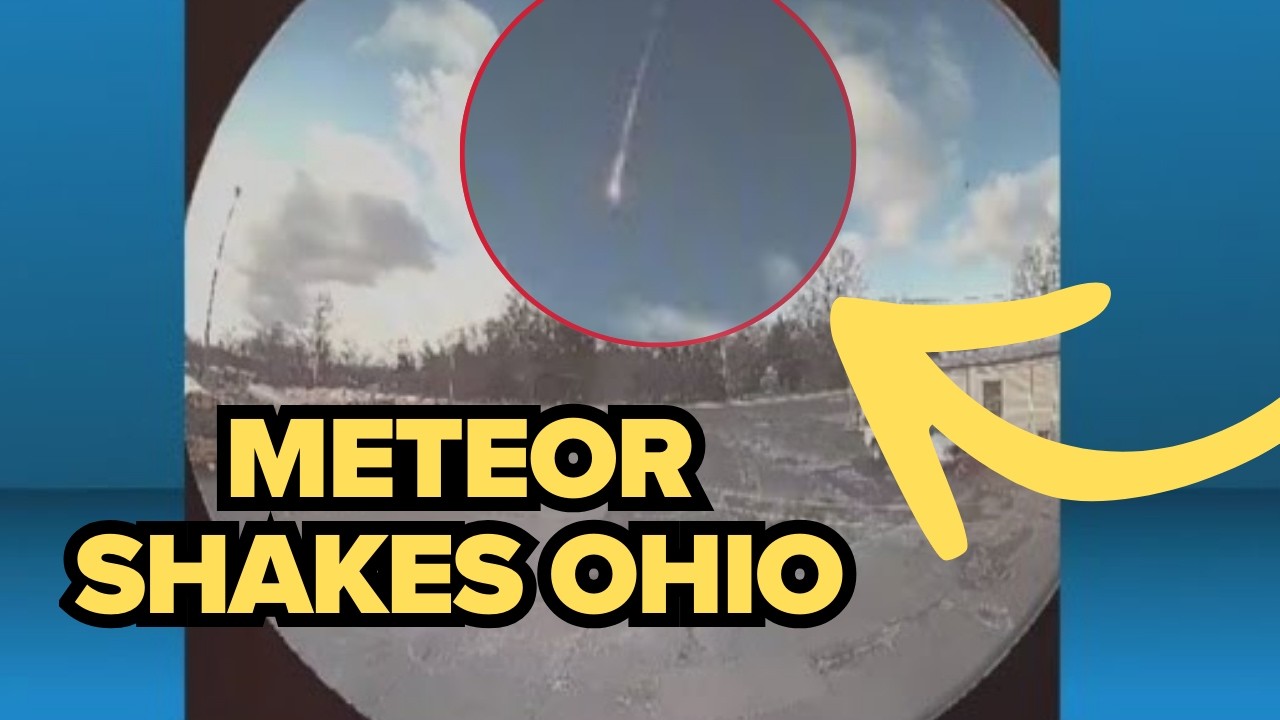
Multiple eyewitnesses and security cameras recorded the explosionand at least 200 people – from states including Ohio, Pennsylvania, Delaware, Illinois, Indiana, Kentucky, Maryland, Michigan, North Carolina, New Jersey, New York, Wisconsin, Virginia, West Virginia and the District of Columbia, as well as parts of Canada – said he saw the event at the American Meteor Society (AMS).
Article continues below
Several people along the meteor’s path reported hearing a loud bang coming from the sky, which was later confirmed to be a sonic boom coming from the fragmenting space rock, according to a report. publish on social platform by the Cleveland branch of the National Weather Service.
The streaking fireball was also visible from space and was filmed by the National Oceanic and Atmospheric Administration’s (NOAA) GOES-19 weather satellite, which orbits Earth at an altitude of about 22,000 miles (35,500 km), Live Science’s sister site. Space.com reported.
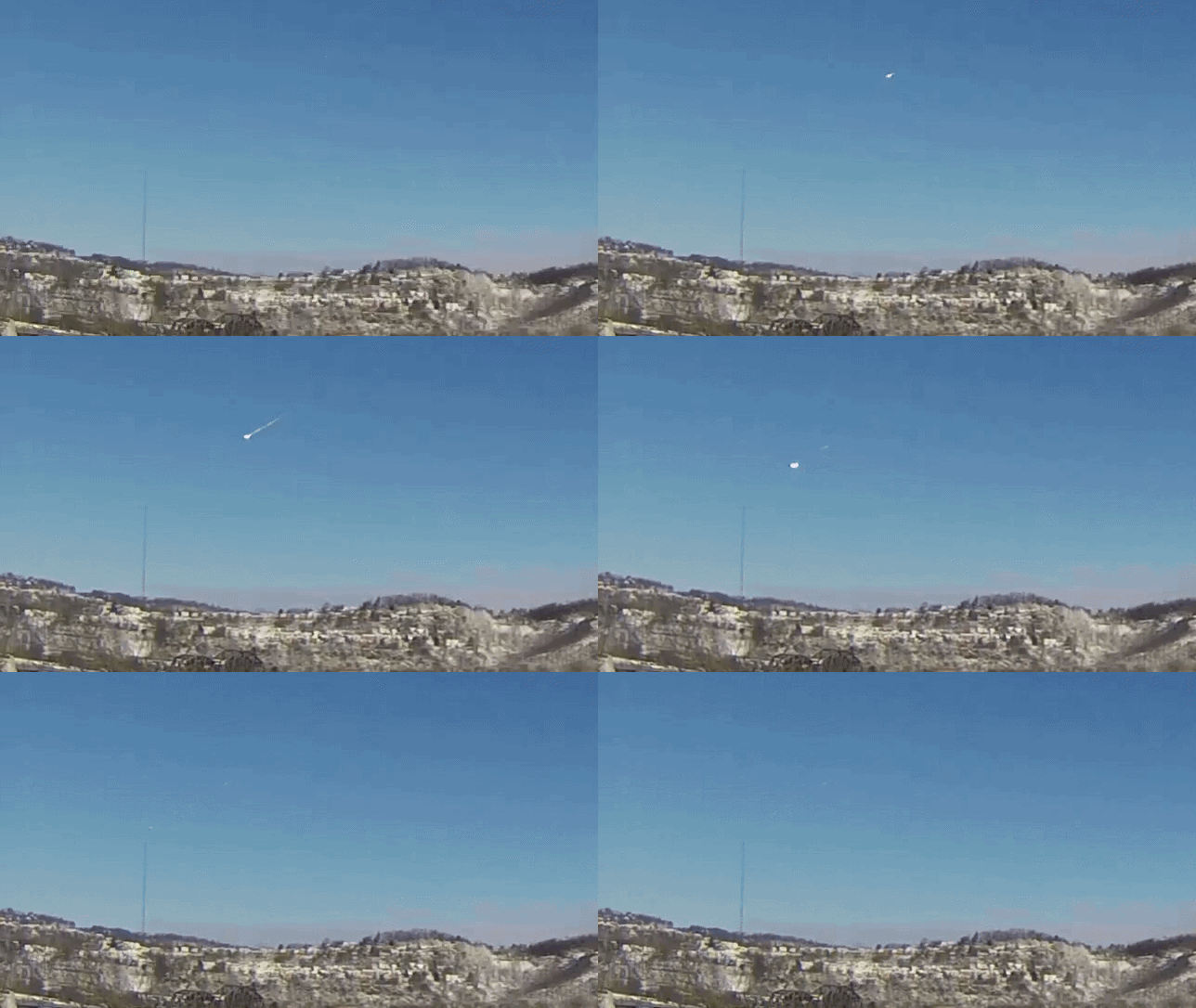
Fireball meteors occur when falling space rocks are superheated due to high levels of friction from the surrounding air, according to MSA. This eventually causes the object to break, which creates a bright flash of light.
These explosions can be extremely powerful. The latest fireball, for example, likely exploded with a force equivalent to 250 tons (227 metric tons) of TNT and triggered pressure waves that “could have shaken houses” on the ground, according to the NASA report.
Most fireball meteors are spotted at night, when they are much more visible. However, the light shows can be so bright that they briefly eclipse the sun in the daytime sky. These ultra-bright “daytime fireballs” are often reported alongside sonic booms.
The majority of fireball fragments either burn up before reaching the ground or are too small to notice. However, particularly heavy space rocks, like the one that exploded over Ohio, can produce meteorites that impact Earth’s surface.

“When an extraordinarily large meteor (the size of a beach ball or larger) enters the atmosphere, it often survives all the way to the lower atmosphere, where air molecules are dense enough to carry sound.” Robert Lunsfordan AMS meteor observer, told Space.com. Therefore, the sonic boom heard during this incident is “a good indication that the fireball produced fragments on the ground.”
If there were meteorites, AMS simulations suggest they probably landed somewhere “near Akron,” Lunsford added.
Most fireball fragments land in sparsely populated areas and therefore pose little threat and can be very difficult to find. But this is not always the case. For example, just nine days before this incident, on March 8, a dozen meteorites fell on a German city in a bright fireball event, one of which drilled a large hole in the roof of a family home.
Look on it


