Liberals formally abandon emissions target but Ley says reaching net zero would still be ‘welcome outcome’ | Australian politics


Liberal leader Sussan Ley has defended the Liberal plan to abandon legislative commitments to net zero emissions and renewable energy while affirming her commitment to the Paris agreement, saying “I can handle this” if she faces criticism for backtracking on climate targets.
The Liberal Party will abandon a firm net zero emissions target, siding with the Nationals to end the Coalition’s commitment to the climate target, aiming to pursue what Ley and energy spokesman Dan Tehan called “energy abundance” by backing nuclear power and backing coal and gas.
But in a sometimes confusing press conference, Ley said it would still be a “welcome outcome” if they managed to achieve net zero emissions anyway, despite their intention to reject the Labor government’s legislation and renewable energy targets that support such an outcome.
“I couldn’t be clearer when I say we are removing net zero targets and long-term targets from our policy. We are not pursuing a net zero policy,” Ley said in Canberra on Thursday.
The Liberal shadow ministry agreed on Thursday that a future coalition government would scrap the net zero emissions commitment by 2050, as well as Labour’s legislated 43% emissions reduction target by 2030 and its 82% renewable energy target.
Subscribe: Email AU Breaking News
However, the liberal plan did not include withdrawing from the Paris agreement, which was a red line that could have led to the resignation of moderate liberals such as Andrew Bragg and Maria Kovacic. In an olive branch to moderates who wanted the target to remain, MPs will also be free to argue that reaching net zero would be a “welcome outcome” in the future, two sources confirmed to Guardian Australia.
In his press conference, Ley did not specify how a coalition government could remain in the Paris agreement – which does not allow for a rollback of targets – while removing legal emissions reduction targets. Ley said the opposition’s plan would put energy affordability above climate considerations.
“I’m not going to say there are details in an international agreement that prevent us from doing what we know we need to do for Australians,” she said.
Ley asserted that the opposition’s alternative was “a plan to reduce emissions and provide affordable energy…if there are reasons why people in Paris or in a United Nations organization don’t like it, I can deal with it.” »
Ley and Tehan said the Liberal Party would reduce emissions “on average year on year, for each five-year period” from Australia’s nationally determined contributions under the Paris agreement. This would be based on what they call “doing our fair share” while “taking into account the actual performance of comparable countries”, while focusing on technological progress rather than imposing approaches or methods.
Questions and answers
What is net zero emissions?
To show
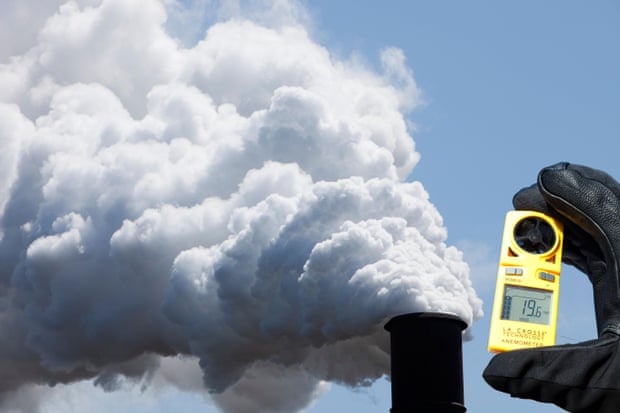
Net zero emissions is a goal adopted by governments, businesses and other organizations to eliminate their contribution to the climate crisis. This is sometimes called “carbon neutrality”.
The climate crisis is caused by carbon dioxide and other greenhouse gases being released into the atmosphere, where they trap heat. They have already caused a significant increase in average global temperatures above pre-industrial levels recorded since the mid-20th century.
Countries and others that set net zero emissions targets commit to ending their role in making the situation worse by reducing their climate pollution and balancing remaining emissions by sucking an equivalent amount of CO2 from the atmosphere.
This could happen through natural projects – planting trees, for example – or using carbon dioxide removal technology.
Removing CO2 from the atmosphere is the “net” part of net zero. Scientists say some emissions will be difficult to stop and will need to be offset. But they also say net zero targets will only be effective if carbon removal is limited to offsetting “hard-to-reduce” emissions. The use of fossils will still have to be considerably reduced.
After signing the Paris Agreement in 2015, the global community asked the Intergovernmental Panel on Climate Change (IPCC) to assess what would be needed to give the world a chance of limiting global warming to 1.5°C.
The IPCC has estimated that this would require significantly reducing global CO2 emissions: to around 45% below 2010 levels by 2030, and to zero by around 2050.
The Climate Action Tracker found that more than 145 countries have set or are considering setting net zero emissions targets.
The high-profile meeting followed a nearly five-hour meeting of the Liberal party room on Wednesday, during which a majority of MPs expressed support for abandoning the Scott Morrison-era net zero target by 2050.
This is despite the party’s federal director, Andrew Hirst, telling MPs that voters equate net zero emissions with action on climate change.
Three Liberals and three Nationals will now be responsible for developing a common coalition position, which will be submitted to the parties’ common room on Sunday.
The Nationals’ Matt Canavan, Ross Cadell and Susan McDonald will represent the Country Party in the talks, while Dan Tehan, Anne Ruston and Jonathon Duniam will represent the Liberal Party.
Even if a future coalition government would not withdraw from the Paris agreement, promising to abandon the net zero emissions target could put Australia in breach of its obligations under the agreement, which requires countries not to roll back their emissions reduction targets.
At the press conference, Tehan was unable to specify how the Coalition would reduce emissions while removing the Labor government’s clean energy incentives and extending the life of coal-fired power stations. He highlighted the ruling Coalition’s previous record and said its plan called for “putting all technologies at the service of reducing emissions.”
Tehan gave the example of carbon capture and storage – a costly and still-developing technology that has failed to meet major emissions reduction targets despite significant investments from government and private companies.
Tehan confirmed the government’s Capacity Investment Program, which supports renewable energy and storage projects, would be open to other energy projects – the same position as the National Party.
Speaking before Ley’s announcement, Prime Minister Anthony Albanese said the Coalition was moving away from a net zero emissions target because it “fundamentally” did not believe in the science of the climate crisis.
“There is no doubt that the coalition approach would harm Australians. It would lead to less investment, less reliability, less jobs, less economic growth. It would also harm our relationships in the region, including our security relationships,” Albanese said.
Albanese said the sight of Angus Taylor and Andrew Hastie walking side by side in the village hall on Wednesday showed the Liberals were a “divided rabble” and a “clown show”.
Earlier on Thursday, Liberal senator and net-zero emissions supporter Andrew McLachlan warned it would be “very difficult” to win back the city’s voters if it abandoned the climate target.
When asked to respond to the view of some colleagues that abandoning the target could be a winning outcome, McLachlan replied: “You are wrong. »
“If you claim we’re going to abandon net zero, you’re going to be very alone in the community and also in the business world. I think all levels of the community have evolved,” he told ABC’s RN Breakfast.
Asked if the Coalition could regain city seats, Ley said: “We will advocate and present serious, credible and compelling policy alternatives in the next election. These include city seats.”


