Life on Earth may have come from cosmic dust


The scientific community is largely divided into two camps regarding the origins of life on Earth. On the one hand, the idea that life arose spontaneously from the planet’s primordial soup of amino acids and organic molecules. On the other side, life arrived after hitching a ride on interstellar debris. This interstellar debris theory often implies that an object like an asteroid crashed into Earth billions of years ago. However, according to a study published in the Monthly Notices of the Royal Astronomical Societyit is arguably more likely that the ingredients of life came aboard microscopic particles of cosmic dust filled with the most basic building blocks of life.
There are over 500 natural compounds called amino acids. A particularly large group called α-amino acids are made up of 22 specific molecules that make up the proteins and genetic coding of living organisms. Besides water, protein is the most important component of human muscle and other body tissues. But even though geneticists know a lot about amino acids and proteins, Or the very first examples remain an open question.
Previous studies have found high concentrations of these organic materials in asteroids and meteors, leading many researchers to hypothesize that these chunks of deep space rock could be responsible for introducing the conditions necessary for the evolution of life. Based on simple probability, a team from Diamond Light Source, the UK’s national synchrotron, believes it is much more likely that the organic molecules appeared via tiny grains of cosmic dust.
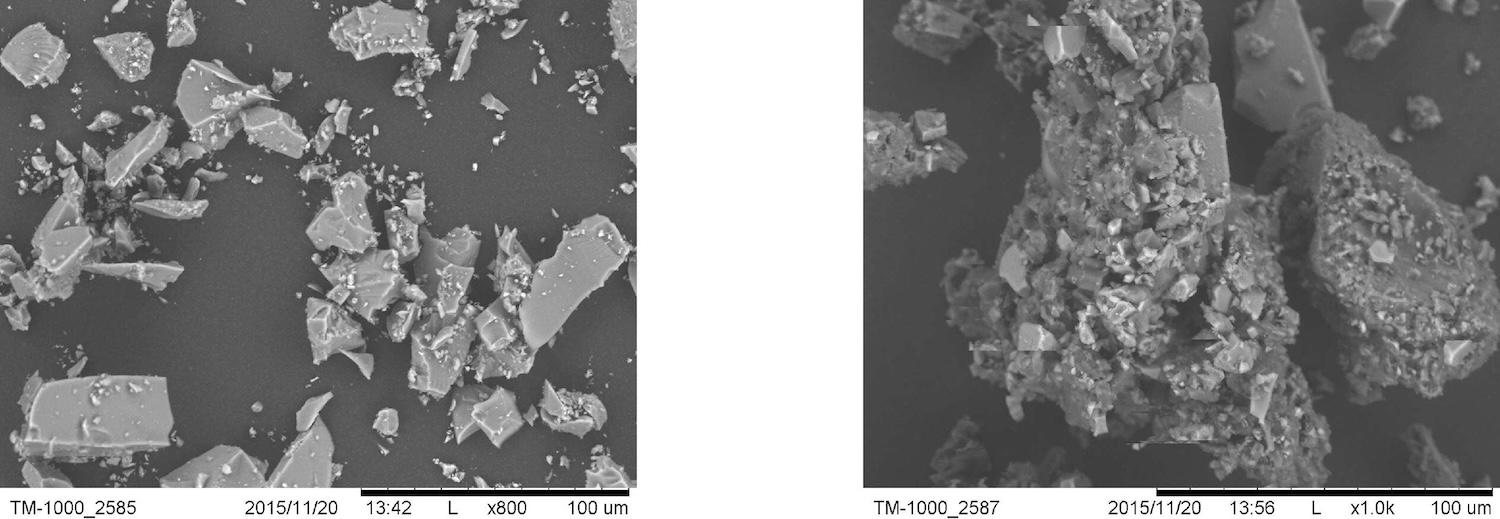
Think of it this way: only about 10,000 decent-sized meteorites hit Earth each year. Meanwhile, the planet is bombarded by up to 40,000 tons of dust every year. The volume alone indicates that the amino acids were attached to the last debris instead of the first.
But this dust theory is only possible if the molecules can survive the journey. Recently, Diamond Light Source astrobiologists decided to test whether specific amino acids like alanine and glycine could withstand the harsh interstellar environment long enough to reach Earth. To do this, they first synthesized amorphous magnesium silicate, one of the most widespread cosmic dust particles. They then placed the amino acids alanine, glutamic acid, glycine and aspartic acid on the inorganic material. Next, they used synchrotron and infrared spectroscopy to study how the molecules behaved under overheated conditions similar to those encountered during the early phases of the solar system.
Among their selection of amino acids, only glycine and alanine were able to adhere to silicate particles to form crystal structures. The study authors believe this suggests the potential existence of an “astromineralogical selection mechanism” that would ensure that only certain amino acids could adhere to cosmic dust. If true, it would have influenced the varieties of molecules that ultimately arrived on Earth, creating very specific conditions leading to the formation of life.
The researchers believe their results support the idea that amino acids like glycine and alanine may have survived the intense conditions of space long enough to reach Earth 3.4 to 4.4 billion years ago. This era ended with the creation of the Earth’s crust and its oceans, and includes the earliest geological records of microfossils. This influx of cosmic amino acids may have compensated for the limited amount of molecules that form naturally on Earth, creating the right conditions for life.

Shop Amazon’s Prime Day Sale


