
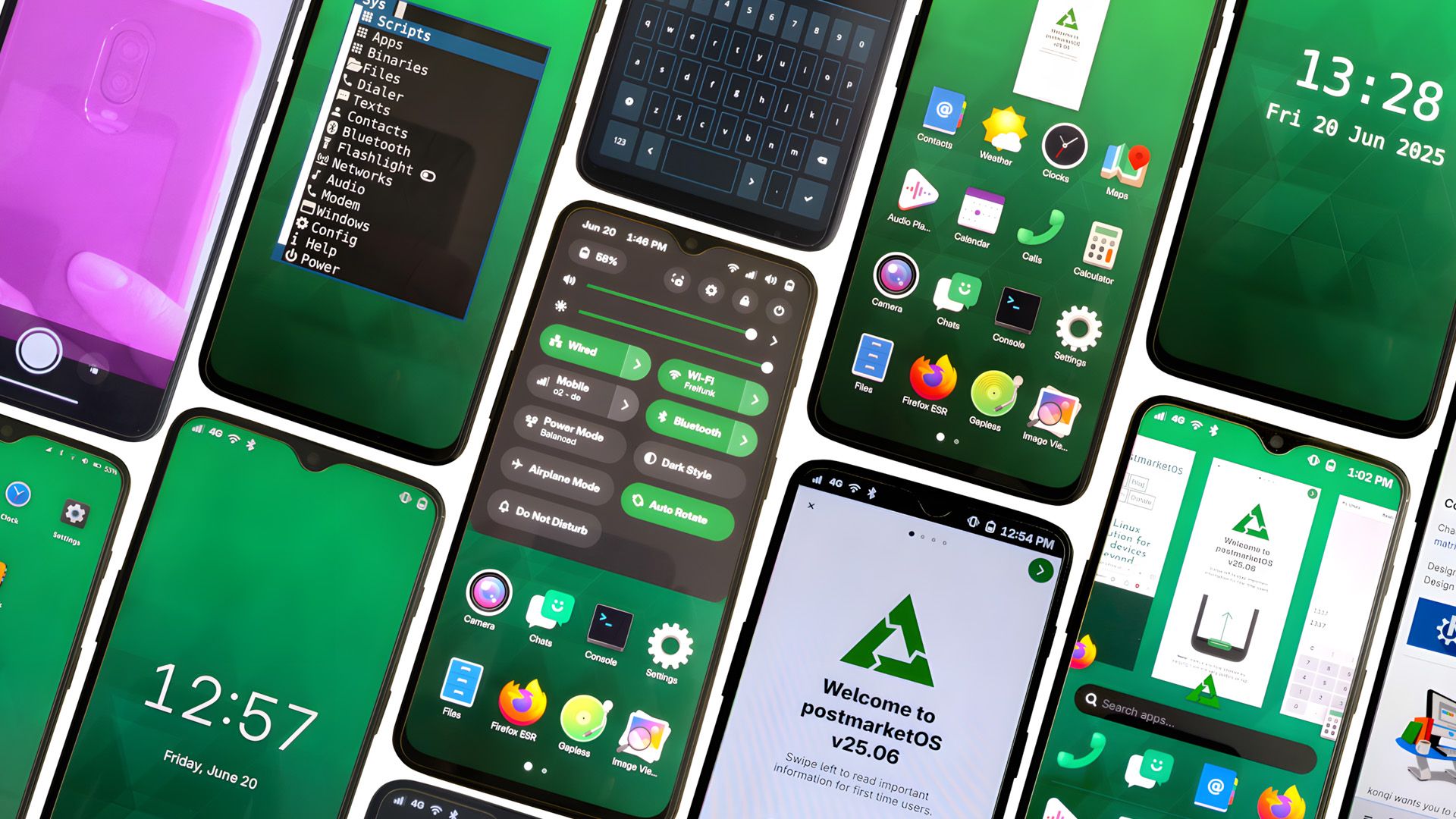
Even though postmarketOS is an impressive effort to bring the open-source Linux experience to smartphones, it does have many shortcomings at the moment. Now, the project is hoping to fix some of them with a new immutable variant, called Duranium.
There are already many ‘immutable’ Linux distributions, which store the core operating system in a read-only partition, with most software running in containerized environments like Flatpak or Snap. That’s not ideal for every situation, but it does make breaking your system nearly impossible, even when a system update goes wrong—the device simply rolls back to the previous state. Fedora Silverblue, NixOS, and other distributions have an immutable design.
Duranium was announced today as a new immutable variant of postmarketOS, with most of the same benefits as other immutable Linux distributions. The blog post explained, “System updates are applied as complete, verified images rather than individual packages. Either the new image works, or the system falls back to the previous one automatically. No partially-applied state. No debugging audio when you need to make a phone call and no fussing with a broken web browser when you just want to doomscroll cat photos.”
The team is making it clear that Duranium is a “different deployment model,” and not a fork or an additional distribution. Not every device that can boot postmarketOS will supper Duranium, mostly due to the requirement for UEFI or U-Boot. It also uses more storage than regular postmarketOS, since there are two 5GB system partitions.
Android phones and tablets already have an immutable system structure, usually with dual A/B system partitions, which helped push some desktop Linux distributions and ChromeOS to adopt the same structure. At long last, we’ve come full circle with an immutable version of postmarketOS.
Installing software in postmarketOS usually relies on the apk package manager, but that doesn’t work with an immutable structure. Instead, Flatpak will be the primary way to install and manage applications, just like on most immutable desktop distributions. Duranium will also include the coldbrew package manager, which is similar to Homebrew, but uses Alpine Linux packages and sandboxes them in the home directory. You could also set up Nix or Homebrew, if you want.
The initial Duranium system images are now available for the Fairphone 5, the Google Pixel 3a, Chromebooks, the Lenovo ThinkPad X13s, and the OnePlus 6. More devices will be added in the future, and the wiki has installation instructions.
Source: postmarketOS Blog


