Live Science Today: Jensen Huang AGI claim and major leap to reanimation after death


Today’s news

Have major linguistic models (LLM) equaled or exceeded human intelligence? Nvidia CEO Jensen Huang says so — saying “I think we’ve reached AGI” in a Monday, March 23, episode of the Lex Fridman Podcast.
Considered the Holy Grail of artificial intelligence (IA), there have been numerous claims that “general artificial intelligence” since LLMs became widespread in 2022, despite the little scientific evidence that the current harvest of chatbots are even closeand the threat of energy and supply chain shortages due to Iran War Bursts Potential AI Bubble.
Huang continued his claims by referencing OpenClaw, an open source AI platform that gained viral fame with the release of Moltbook, a social network for AI robots that threatened (in a likely hoax) a total purge of humanity.
Huang later walked back his statements on the same podcast, saying, “A lot of people use it. [OpenClaw] for a few months and it kind of dies down. Today, the chances of 100,000 of these agents building Nvidia are 0%. »
The trend

Scientists have taken an important step towards resuscitation after death in freeze a pig’s brain with minimal damage and its cellular activity lockedreports New Scientist.
The procedure worked by pumping a pig’s brain with preservative solutions followed by cryoprotectants, before freezing it. The technique has resulted in an unprecedented preservation of neurons, synapses and constituent molecules of the brain.
Still, other scientists remain skeptical that the pig could be resuscitated afterward, saying the experiment was much closer to high-fidelity embalming than a path to resuscitation.
Would you have your brain preserved if you could? What would be your reasons for doing so? Let us know in the comments below.
Three to read
- Antarctica could warm 1.4 times faster than rest of Southern Hemisphere in coming decades, study finds [Live Science]
- “I saw the devil”: the Brazilian capital of UFOs celebrates 30 years of the “encounter with extraterrestrials” [The Guardian]
- Russian rocket en route to ISS suffers major antenna problem, triggering remote-controlled astronaut ‘back-up plan’ [Live Science]
Photo of the day
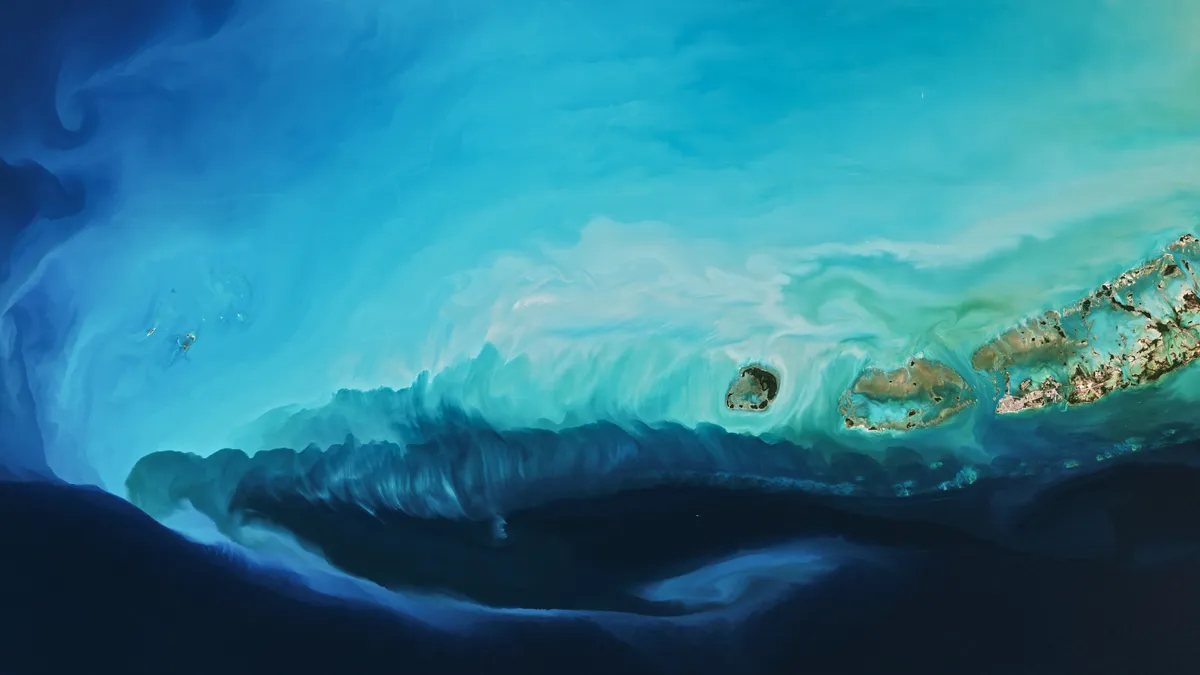
Say it, I said it
Word of the day
Slobgollion — Invented by Herman Mellville in “Moby-Dick,” this substance is derived from the compression of spermaceti – the precious white waxy substance found in the head cavities of sperm whales.
“There is another substance, very singular, which appears in the course of this affair, but which I find very difficult to adequately describe. It is called slobgollion; an original name among whalers, and even the nature of the substance is also so. It is an ineffably oozing and stringy substance, most often found in vats of semen, after prolonged compression and subsequent decantation. I consider it wonderfully thin, ruptured casing membranes, fusing together — Herman Melville, Moby-Dick, chapter 94.
Researchers reported this week that they had sperm whales filmed headbutting each otherappearing to confirm the anecdotal accounts of 18th and 19th century whalers that inspired Melville’s novel.
Quote of the day
“Viruses are the most abundant entity in the body. There are more viruses than human cells, bacterial cells, and any other cell. Yet their role is a huge black box.”
Fun and games
Think you know your hardy micro-animals? Take this crossword to see if you can guess the most famous of them all.
Follow Live Science on social media
Want more science news? Follow our Live Science WhatsApp Channel for the latest discoveries as they happen. It’s the best way to get our expert reports on the go, but if you don’t use WhatsApp, we’re here too Facebook, X (formerly Twitter), Flipchart, Instagram, TikTok, YouTube, Blue sky And LinkedIn.


