What were books like in ancient Greece and Rome?


This article was originally published in The Conversation.
If you were to visit a bookstore in the ancient world, what would it look like?
It’s not enough to imagine it. The Roman writer Aulus Gellius, who lived in the 2nd century AD, gives us a number of descriptions of his adventures in bookstores. In one passage, he describes a meeting in Rome, where he was going with a poet friend:
I had the chance to be seated in a bookstore in Sigillaria with the poet Julius Paulus […] The Annals of Quintus Fabius Pictor were sold there in a copy of incontestable antiquity, which the merchant maintained without errors.
Gellius then tells us that as they sit there, another customer enters the store. The new customer has a disagreement with the dealership. He complains that he “found an error in the book.” The dealer says it’s impossible. Then the customer provides evidence to prove the dealership wrong.
In different passages, Aulus tells us about some bookstores that he encountered when he arrived by boat at the port of Brundisium, on the Adriatic coast. The books, he reports, were “in Greek, filled with marvelous tales, unheard of, incredible things.” […] The writers were ancient and of great authority.”
The volumes themselves, however, were soiled by neglect, in disrepair, and unsightly. Nevertheless, I approached and asked their price; then, attracted by their extraordinary and unexpected price, I bought a large number of them for a small sum.
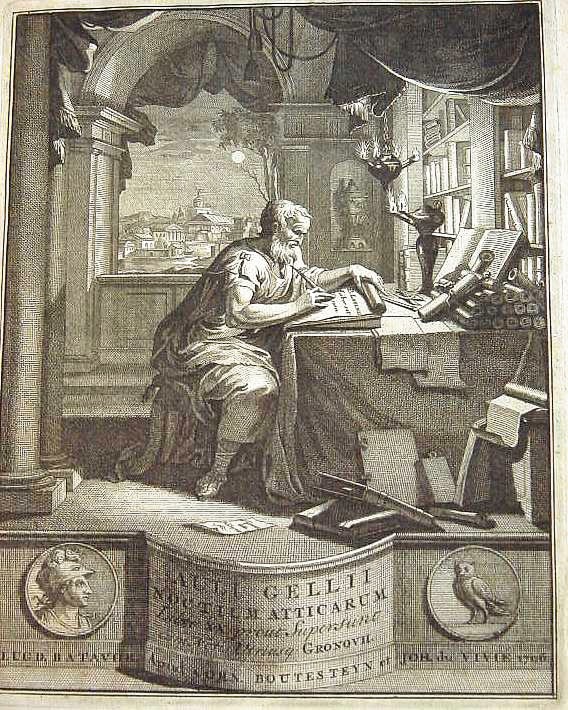
Aulus goes on to describe in enthusiastic language all the strange facts he has gleaned from these books – such as how people in Africa can “cast spells by voice and tongue” and, through this sorcery, cause the death of people, animals, trees and crops.
The origins of writing
These kinds of stories bring us closer to how ordinary people in ancient Greece and Rome obtained books and interacted with books. But if we read stories like this, it might lead us to want to know more. How were books and writings born? And how were the books written and produced?
Many people in the ancient world believed that writing was invented by gods or heroes. For example, the ancient Egyptians believed that the god Thoth was the first to create signs to represent spoken sounds.
The origins of writing are certainly mysterious. It is not known exactly when writing began and who invented it.
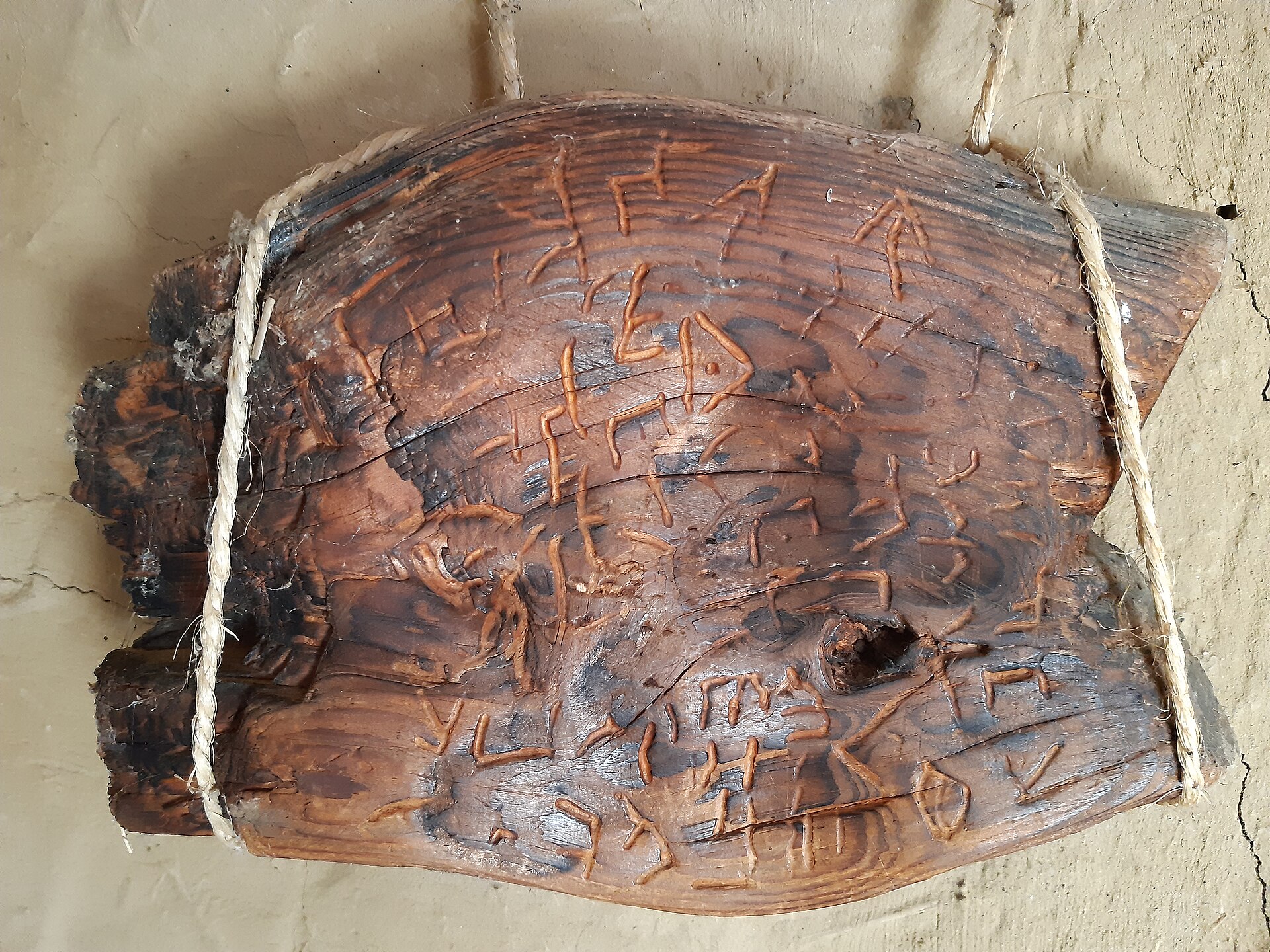
The oldest written text is a radiocarbon wooden tablet dated before 5000 BCE. This is known as the Dispilio tablet, as it was discovered in a Neolithic lakeside settlement at Dispilio in Greece. It is carved with strange linear markings. These have not been deciphered, but most researchers believe it to be a form of writing.
Evidence of writing appears very early in different parts of the world. In Mesopotamia and Egypt, the oldest texts, such as the Kish limestone tablet at Uruk or the Narmer palette at Hierakonpolis, date from before 3000 BCE. In the Indus Valley, the Harappan script, which remains undeciphered, appeared around the same time. In China, the earliest characters, the Dawenkou graphics, also date from around 3000 BCE.
One of the most interesting aspects of ancient writing is that there is a wide variety of different writings. For example, the first known texts in the Greek language are written in Linear B script, used between 1500 and 1200 BCE and which was only deciphered in 1952. Linear B is not an alphabet, but a syllabary of more than 80 different signs. A syllabary is a kind of writing system where each sign represents a syllable.
Around the 8th century BCE, most Greeks began using an alphabet instead of a syllabary. Unlike a syllabary, in an alphabet, each letter represents a vowel or a consonant. The Greeks adapted their alphabet from the Phoenician alphabet, probably through interactions with Phoenician traders. The Phoenician alphabet had only 22 letters, making it much easier to learn than the 80+ syllabic signs of Linear B.
Our English alphabet comes from the Romans who, in the 8th and 7th centuries BCE, also obtained their alphabet from the Phoenicians, via the Greeks.
The origins of books
In ancient times, people used many different things as writing materials.
The Roman writer Pliny the Elder (23-79 CE) tells us that the world’s first people
we wrote on palm leaves, then on the bark of certain trees, then we began to use folding sheets of lead for official ammunition, then also linen leaves or wax tablets for private documents.
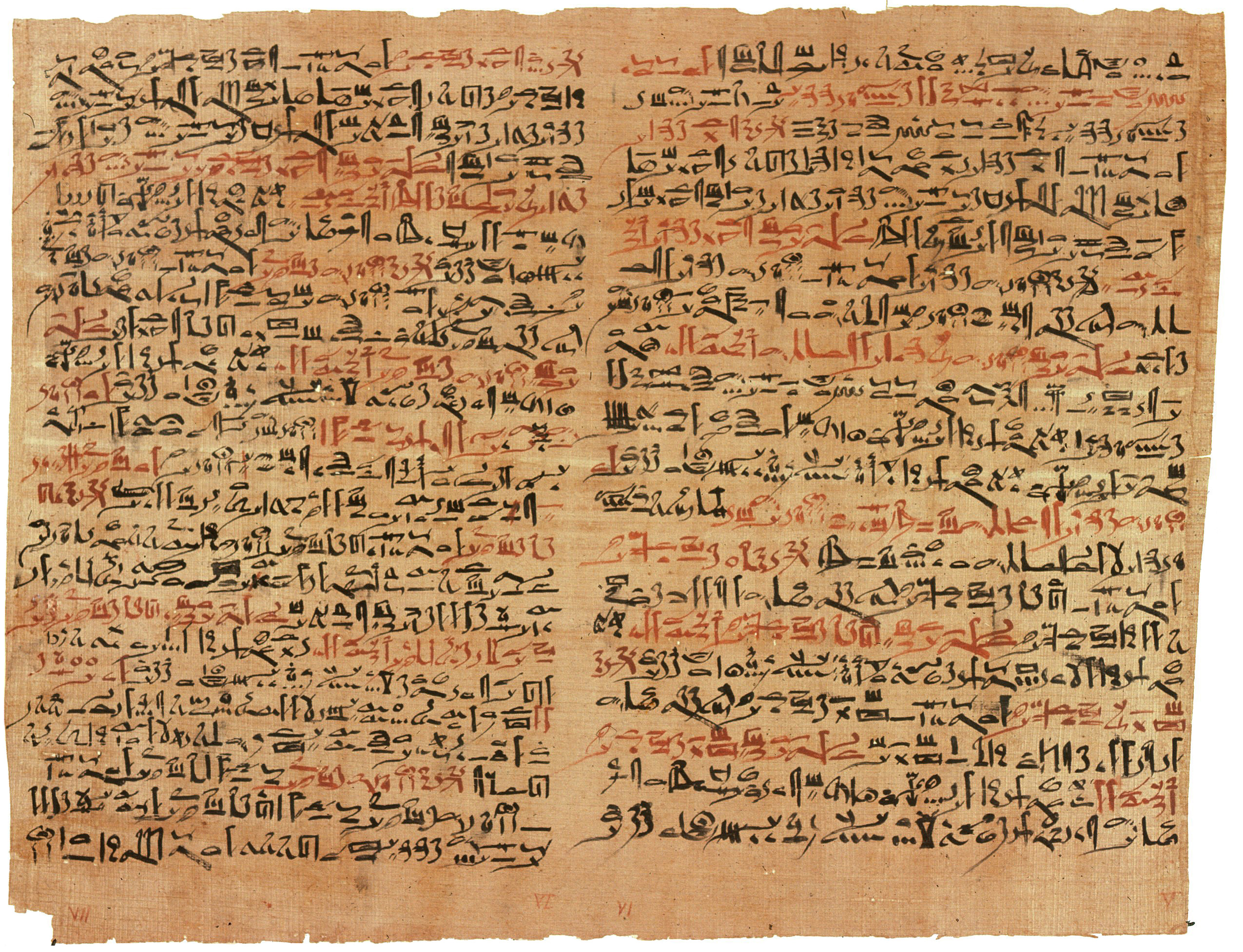
However, the most popular writing material in the ancient Mediterranean was papyrus, hence our word “paper.”
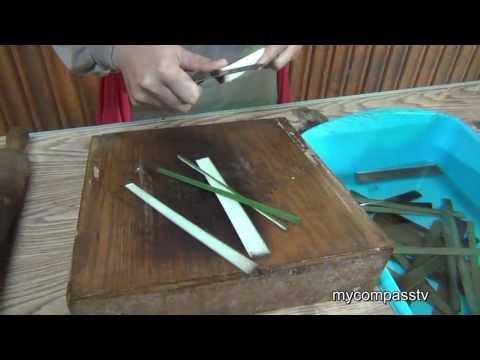
To make papyrus, you obtain the pith of the papyrus plant (Papyrus Cyperus), cut it into thin strips, then press it together. Once dried, it forms a thin sheet that you can write on.
Papyrus sheets were usually glued together to form scrolls. These rolls could be very long. Some of the most lavish Egyptian papyrus scrolls were over 10 meters long, such as the recently discovered Waziri papyrus containing parts of the Book of the Dead.
When papyri were rolled up, they were stored in shelves or boxes. Labels were placed on the handles of the papyri so you could identify their contents. In his play Linus, the Greek playwright Alexis (c. 375-275 BC) asks one character to explain to another how to look through a pile of scrolls to find what he wants:
go and find any papyrus scroll you like, then read it… examining it quietly and at your leisure, based on the labels. Orpheus is there, Hesiod, the tragedies, Choerilus, Homer, Epicharmus, prose treatises of all kinds…
Papyrus appears fragile to the naked eye, but it is a durable writing material, stronger than modern paper. Many papyri have survived for thousands of years, stored in jars or sarcophagi or buried under sand.
The oldest surviving papyrus text is the so-called Diary of Merer (which you can listen to here), the logbook of a man named Merer, who was an inspector during the construction of the Great Pyramid of Giza under the pharaoh Khufu. This papyrus, which dates to around 2,600 BCE, provides a day-to-day account of how Merer and his team of around 200 men spent time hauling and transporting stones and doing other work.
Papyrus was susceptible to being eaten by insects or mice. But there were ways to avoid this. Pliny the Elder, for example, advised that papyrus leaves soaked in citrus oil should not be eaten by moths.
How to make papyrus paper
https://youtube.com/watch?v=DCR8n7qS43w%3Fwmode%3Dtransparent%26start%3D0
How to write a book in antiquity
If you lived in ancient Greece or Rome and wanted to write a book, how would you do it?
First, you would buy sheets or rolls of papyrus to write on. If you do not have the means, you will have to write on the back or in the margins of the papyri that you already have.
If you don’t already have papyrus, then you will need to write on other media. According to the Greek historian Diogenes Laertius (3rd century CE), the philosopher Cleanthes (c. 331–231 BCE) “wrote lectures on oyster shells and ox blade bones, due to lack of money to buy papyrus.”
Second, you would get your ink. In the ancient world, there were many varieties of ink. Normal black ink was made from burnt resin soot or pitch mixed with vegetable gum. When purchasing ink, it comes in powder form and you will need to mix it with water before using it.
Third, you would have your pen. It would be made from reed, hence its name “calamus” by the Greeks and Romans (“calamus”).calamus” is the Greek word for reed). To sharpen your pen, you would need a knife. If you made a mistake, you would erase it with a damp sponge.
You now have all the equipment you need. However, you don’t need to use the pen and papyrus yourself. If you wish, you can ask a scribe to write your words for you.
The Greek orator Dio Chrysostom (c. 40-110 CE) even advised writers not to use the pen themselves:
I do not advise writing in your own hand, or very rarely, but rather dictating to a secretary.
If you needed to consult other books while writing, you could ask friends to send them to you or ask booksellers to make you a copy. In a 2nd century CE papyrus found in Oxyrhynchus, Egypt, and written in Greek, the writer asks his friend to find the books he needs and make copies. Otherwise you would go to a library, although the best libraries in Alexandria, Rome and Athens might be far away.
When you have finished writing your book, you will need to revise and edit it. You could then publish it by having numerous copies made by scribes and delivering these copies to friends and booksellers.
When all this was done, your book would be made public. Perhaps someone like Aulus Gellius would find it by chance in a busy Roman bookstore. Maybe he would even buy it.

The best new PopSci 2025 releases

:max_bytes(150000):strip_icc()/Health-GettyImages-1352583993-b50840d777dd4be5879c2c5c73a9f56b.jpg?w=390&resize=390,220&ssl=1 "The Best Workout Order for Fat Loss and Muscle Gains, According to a New Study")


