Luxury jet replaces cabin windows with video screens


For average air travelers, window seats are often considered as first-rate real estate, so much so that they have triggered several dramatic skirmishes halfway over the years. But this is not quite the case for plane manufacturers, who have long considered these coveted oval players more as design obstacles to overcome.
Although windows are pleasant for passengers, they create structural weaknesses that require additional strengthening and add weight. Combined with their curved form, they also increase the drag, which means more energy and fuel consumption. All of this, in the long term, is added to a more expensive driving. Now, after years of most unsuccessful efforts to eliminate the windows from the cabins, a luxury jet manufacturer seems to be about to do this exactly.
This week, Otto Aerospace, based in Texas, announced an agreement with Flexjet, a supplier of private luxury reacters, to provide 300 elegant Phantom 300 jets and Otto fuel economy to its fleet in 2030. Outdoor. The result is a panoramic digital experience that business managers describe as a “supernatural vision” and available for each passenger on board.
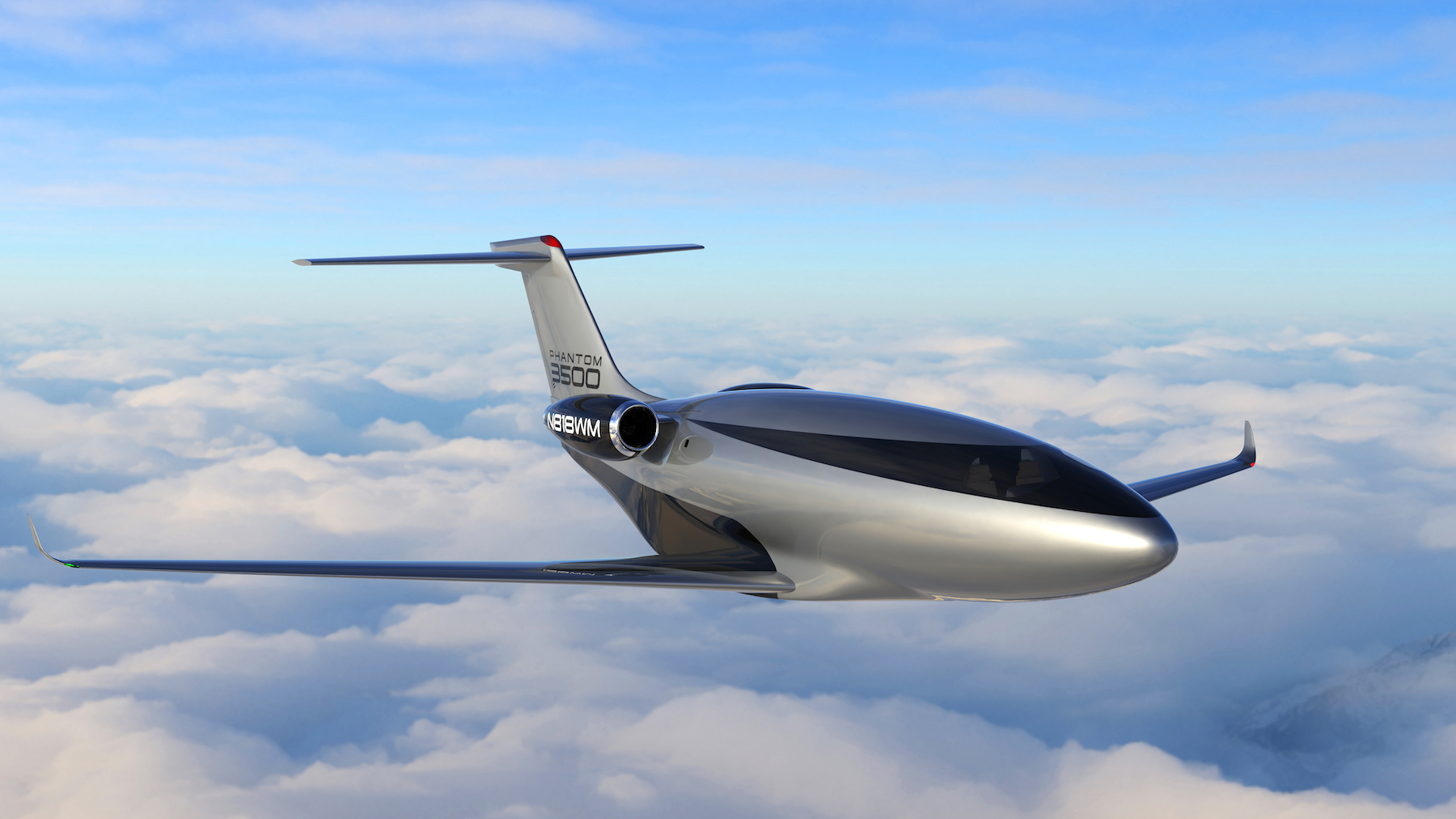
In other words, no one has a window seat, but everyone gets a virtual. (An Otto spokesperson said Popular science The pilots will always have conventional windows in the cockpit.) Although questions remain on the way in which passengers really really really really really what could feel like a more claustrophobic cabin, a successful Otto deployment could inspire similar conceptions of other manufacturers wishing to reduce costs and reduce emissions.
“You have these wonderful digital windows inside that we call the supernatural vision,” said Scott Drennan, president and chief of the Otto Aerospace exploitation Popular science. “It’s experiential and we think it’s really important with a large cabin to make our customers take advantage of driving.”
“More steps through a single window to see Mont Rainier or another beautiful site located on your flight journey,” added Drennan.
The news of the agreement with Flexjet was reported for the first time by the Wall Street Journal.
The windows were sacrificed in a battle against aerodynamic trail
Otto’s decision to abandon the windows is part of a wider design philosophy focused on maximizing the laminar flow. The laminar flow, the opposite of the turbulent flow, refers to the smooth movement and ordered air on a surface. In the design of aircraft, various components can exceed the body of the plane and disturb this smooth air flow, introducing turbulence and the increase in drag. Traditional windows are one of these components.
With the Phantom 3500, Otto says that he designed the plane to maximize the laminar flow through the whole body, a first, they say, for a commercial jet. This is done, says the company, using ultra smooth surfaces from advanced composite materials designed for resistance and sustainability, with minimum surface distortion.
“Contrary to the progressive improvements of aviation, the laminar flow represents an evolution of the way in which the aircraft are designed, built and operated,” writes Otto on his website.
The resulting plane is notably quite small. His cabin is only 22 feet long and 6 feet 5 inches high, more and more than an average NBA player. The twin engines of the plane allow it to navigate at 51,000 feet, with a maximum range of 3,682 miles, which is roughly the distance from Denver, Colorado, in Honolulu, Hawaii. The cabin can accommodate up to nine passengers, and the absence of windows allows greater interior customization, whether for relaxation or productivity purposes. And OTTO claims that the efficiency obtained from the small frames of frame and design of the plane (including the elimination of windows), reduce the overall fuel burn by 60% compared to other jets of similar size.
The elimination of window portholes can also reduce the stages of the construction process, which, according to society, should help reduce manufacturing costs. In theory, these savings on manufacturing and fuel could one day lead to prices for tickets very slightly lower than travelers who seek to engage in a private jet experience.

False windows can reduce costs, but they really wanted them?
Aerospace companies have explored means of eliminating windows for a better part of the decade. In 2014, a Boston engineering company called Spike Aerospace presented its own virtual screen design. Even earlier, Emirates, based in Dubai, unveiled what she called a “fully closed first class suite”, with real -time fiber optic camera technology.
The researchers, on the other hand, studied the feasibility of modernizing certain mid-range jets (such as the Boeing 737-800, Airbus A320, ATR 72 and Embraer 190) with windowless conceptions and reported promising results. A 2020 study, published in the International newspaper on interactive design and manufacturesuggested that the replacement of windows with simulated versions could save millions of tonnes of carbon dioxide each year if it is adopted on a large scale.
But we still do not know how passengers (especially the financially endowed type) will react to time passages in flight without access to “real” visual lines. It also remains to be seen how travelers will react to other possible use cases presented by these screens. Otto’s spokesman said Popular science The screens do not always need to display a live flow from outdoor cameras and said it was “possible” that they could even display safety videos for airlines, flight entertainment (such as films and emissions) or advertisements. It is also possible, added the spokesperson, that screens could be used for virtual meetings or other work-related applications. In any case, passengers will be able to control and adjust these parameters, said the spokesperson.
“It’s cinematographic, worldly, it’s like freedom,” said Drennan about the experience of the virtual screen. “And then when you start to execute entertainment applications and packages, there will be a whole new world you live.”
Otto has a little time to explain exactly how all these tools will work. The first flight of a Phantom 3500 is not expected before 2027 and even then, it will always have to obtain approval from the FAA before being able to transport travelers commercially.
So, for all private jet suppliers, take advantage of your traditional window seats while you can.

More offers, reviews and purchasing guides