Tourists Need To Follow This Train Etiquette Rule To Blend In When Visiting Japan

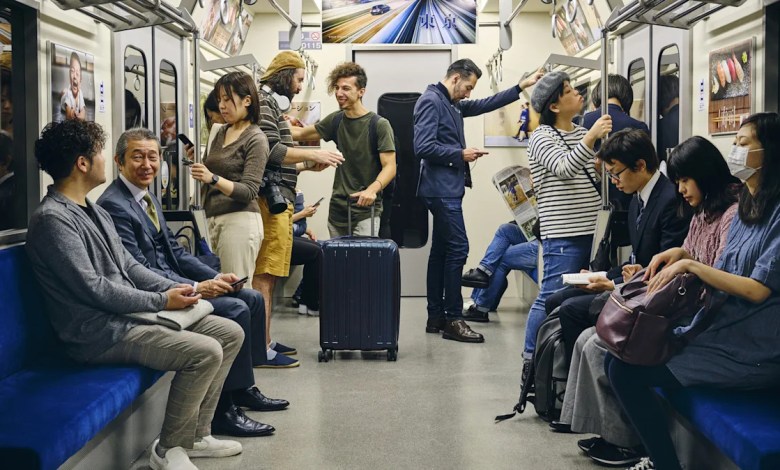
Although eating on the subway isn’t exactly easy, hungry visitors should refrain from snacking on Japanese subways. In Japan, a country known for its order and cleanliness, subway car seats are often arranged like benches, facing the middle, so that you are shoulder to shoulder with other riders. If it’s crowded, you may need to stand, holding on to the rails for support. These positions are not suitable for eating, and munching on a sandwich or granola bar risks covering your or your neighbor’s outfit with crumbs. Many of us would also consider this environment unsanitary, with the circular flow of passengers, the easy spread of germs, and the lack of on-board toilets for washing hands. In short, passengers should wait until they return to street level to deal with the rumbling stomachs.
In Japan, even munching on a snack is considered taboo on the subway, and the same goes for bottled drinks. While Americans might innocently open a bag of Fritos on the Chicago L and wash it down with a swig of Coke Zero, Japanese riders would disapprove of this behavior. In the same way that Japanese subway passengers generally follow the unwritten rule of train etiquette regarding backpacks, people are expected to refrain from eating or drinking while traveling on the subway or waiting in the station. It’s not just about good manners: food consumption is often prohibited.
Read more: Avoid These Embarrassing Bathroom Mistakes When Visiting Different Countries
Eating on Japanese trains

A woman eats in an ekiben on a Japanese train – CandyRetriever/Shutterstock
While eating is prohibited on subways and commuter trains, eating is allowed on intercity routes, and bullet trains (or Shinkansen) are a pretty decent place to have lunch. The difference is obvious as soon as you board a Shinkansen car: the folding trays function as small tables, and if you’re traveling first class (known as the “green car”), vendors often push carts of food down the center aisle.
Meanwhile, major Japanese train stations regularly double as food courts, where you can purchase compact meals called ekiben, which are effectively designed for easy eating on the train. Plus, 7-Eleven is a haven for travelers in need of coffee and snacks, and it’s easy to purchase a hearty lunch on-the-go. So save your snack time for long commutes rather than local subways, and you’ll find a wide range of sandwiches, noodle bowls, and sushi platters to devour when hunger strikes. One of the best options is the classic Japanese staple, the bento box, and here is a list of the best train station bento boxes for your trip through Japan.
Ready to discover more hidden gems and expert travel tips? Subscribe to our free newsletter to access the world’s best-kept travel secrets. You can also add us as your preferred search source on Google.
Read the original article on Explore.


