This Armored World War I Plane Looks Like an Early Blueprint for Modern Attack Aircraft

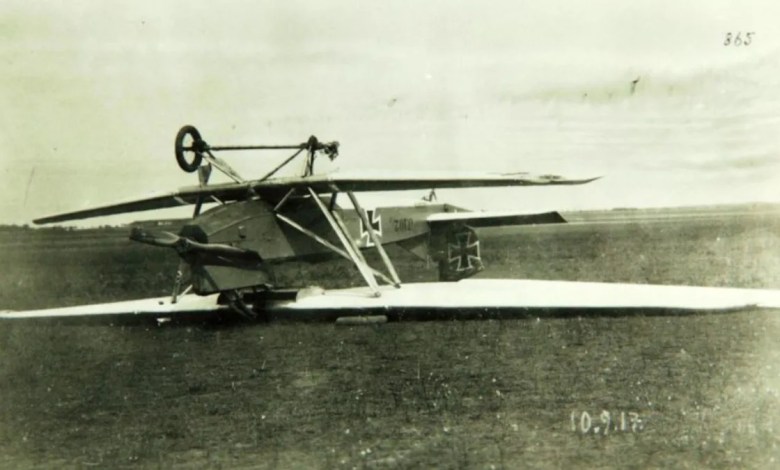
In January 1917, the Junkers JI made its first flight and quickly established itself as one of the most technically advanced military aircraft of the First World War.
Designed as an armored aircraft for ground attack missions and battlefield liaison work, it introduced an all-metal structure combined with exceptionally strong crew protection. This combination set a new benchmark for durability in frontline aviation and influenced the way military aircraft designers thought about survivability for decades.
The first flight took place on January 28, 1917. In internal Junkers company documentation the aircraft was designated J 4. In German service it became known as the Junkers JI, a World War I J-class sesquiplane.
The J class designation was introduced in Germany in 1917 for dual-purpose armored aircraft intended for both communications functions and ground attack missions.
An armored plane designed for low-altitude combat

Photo courtesy: Autorepublika.
The Junkers JI was developed specifically for low-altitude operations, including ground attacks, observation and cooperation with German army units. These missions exposed crews to intense small arms fire from below, so armor protection became a defining feature of the design.
A large, one-piece steel structure ran from the rear of the propeller area to the rear crew station. Often described as a “bathtub”, this armored hull protected both the aircraft’s vital areas and its crew. The engine cover also received additional protection of the same thickness, 5 mm, or approximately 0.2 inch.
Fuel tanks and radio equipment were also protected, reflecting the aircraft’s liaison role on the battlefield, where communication and endurance mattered as much as firepower.
Robust flight controls for dangerous work
Another notable technical choice was how the controls were used. Instead of the steel cables and pulleys common at the time, the Junkers JI used push rods and crank mechanisms to transmit control inputs. The goal was greater durability and resilience in combat, as rigid links could be less vulnerable to damage from ground fire than cable-driven systems.
A sesquiplane wing layout and modest power
The aircraft’s wing design clearly reflected its sesquiplane configuration, with an upper wing much larger than the lower wing. The area of the upper wing was 35.89 square meters, which corresponds to approximately 386.3 square feet. The area of the lower wing was 13.68 square meters, or approximately 147.3 square feet. This large difference was typical of sesquiplane configurations, which sought to balance the needs for lift and structure while keeping weight and drag under control.
Power came from a Benz Bz.IV engine rated at 200 horsepower. With this configuration, the Junkers JI reached a maximum speed of approximately 97 mph.
Operational figures included a range of approximately 193.3 miles and a service ceiling of approximately 13,000 feet. These figures underline the aircraft’s priorities. It was built to survive and work close to the front, not to chase faster fighters at high altitudes.
Armament, service history and the sole survivor

Photo courtesy: Autorepublika.
Armament generally consisted of a flexible 7.92mm Parabellum MG14 machine gun for the rear crewman, although some accounts mention additional guns on some aircraft.
Junkers JIs primarily served on the Western Front, notably during the German Spring Offensive of 1918. From 1917 until the end of World War I, Junkers produced a total of 227 JI aircraft.
Only one original airframe is known to survive today, marked with the German military designation JI 586/18. Built in 1918, it was sent to Canada in 1919 as a war trophy. The Canadian War Museum preserved the aircraft until 1969, when it was transferred to the Canada Aviation and Space Museum. JI 586/18 is currently on display at this museum in Ottawa, Ontario.
In addition to the surviving original, a flyable replica of the Junkers J. It was reported to be under construction in Hungary.
This article was originally published on Autorepublika.com and has been republished with permission from Guessing Heads. AI-assisted translation was used, followed by human editing and review.
Learn more


