Traffic congestion in the U.S. hits record high : NPR


Rush hour traffic on Interstate 405 in Los Angeles in March 2022. After plummeting during the COVID-19 pandemic, congestion levels reached an all-time high last year, researchers say.
Patrick T. Fallon/AFP via Getty Images
hide caption
toggle caption
Patrick T. Fallon/AFP via Getty Images
A few weeks ago, Taelyr Vecchione expressed her growing frustration with traffic in San Diego.
“Remember when the traffic started at 5 p.m.? » she said in this video posted on TikTok. Vecchione filmed herself sitting in her car, lamenting the way things have changed in her Southern California hometown.

“Now,” she said, “there’s always traffic. Always!”
In fact, there is data to back this up. According to researchers, San Diego has seen a significant increase in traffic delays, as U.S. congestion hits record levels in 2024.
If it seems like traffic is getting worse where you live, that’s probably because it is. After dropping during the COVID-19 pandemic, congestion has matched — and, in many places, exceeded — pre-pandemic levels, researchers say. And these delays extend to more times of the day and more days of the week.
“We’re back. But the delay feels different than before,” said David Schrank, a senior research scientist at the Texas A&M Transportation Institute, which has tracked traffic congestion since the 1980s in its annual Urban Mobility Report.

For decades, Schrank says, these models barely changed. Then came 2020, when congestion collapsed during the pandemic lockdown. Today, that figure is back to record levels, he says, with the average American spending 63 hours a year stuck in traffic.
There are also other notable differences from previous years. Rush hour during rush hour remains the worst time to drive, Schrank says, but there is also more congestion at other times of the day.
“It extends over a larger portion of the day, and so it’s not just a commuting problem,” Schrank said in an interview with NPR. “Everyone is experiencing this delay more.”

Those aren’t the only changes researchers are seeing in the data. Schrank says there are more delays on weekends. Traffic on Monday tends to be noticeably lighter than other days of the week, he said, while Thursday has almost caught up to Friday as the heaviest traffic day of the week.
“There is more daily variability than before the pandemic. The day of the week matters, and the time of day matters,” Schrank said.
Trucks also cause more congestion, according to the Texas A&M report. Although some truck traffic has shifted to off-peak times in 2020 and 2021, the most recent data shows that peak-hour truck-related delays are returning to pre-pandemic levels.
Schrank and his colleagues ranked each metropolitan area in the United States based on traffic delay hours. San Diego saw the largest increase in the percentage of late hours per commuter since 2019, at more than 37%. Miami, Phoenix and the San Francisco Bay Area also saw significant increases.
But no city has caught up to Greater Los Angeles, where the average commuter lost 137 hours to delays last year, according to the Texas A&M report.

Traffic on Interstate 210 during the morning commute in Pasadena, California this month. Researchers say the average Los Angeles driver lost 137 hours to traffic delays in 2024, the most of any U.S. city.
Mario Tama/Getty Images
hide caption
toggle caption
Mario Tama/Getty Images
This didn’t come as a big surprise to Michael Manville, a professor of urban planning at the University of California, Los Angeles. He cautions against reading too much into the rankings of individual cities, but says the overall results make sense.
“Congestion moves largely in line with broader trends in regional economies. So if the economy is doing well, congestion tends to be worse. In a recession, things tend to be a little better,” Manville said.
Texas A&M researchers also identified a few areas where congestion is down compared to before the pandemic – including Washington, DC. This could be linked to the persistence of remote work in the federal government in 2024. And it could also have something to do with regional efforts to combat congestion, including a tolling strategy known as dynamic pricing.
“If you contribute to excessive congestion during rush hours and perhaps evening rush hours, you’re going to pay more for tolls,” said Robert Puentes, a vice president and transportation expert at the Brookings Institution.
Puentes lives in Northern Virginia, which has adopted an extensive toll system on major highways that charges different prices at different times. And he says it seems to help reduce traffic congestion.
“This is something that could really be applicable in other metropolitan areas. We see places in Texas and California, other places, that are using it. I think it has a real future in this country,” Puentes said.
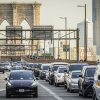
Another ambitious effort to combat traffic congestion is underway in New York, where motorists now pay up to $9 to enter Lower Manhattan.
This congestion pricing plan has already reduced traffic in the toll zone since its launch in January. But it is still too early to say to what extent this changes travel habits in the region.