Takeaways from AP’s report on potential impacts of Alaska’s proposed Ambler Access Road

AMBLER, Alaska (AP) — In northwest Alaska, a proposed mining road has become a hot spot in a region already stressed by climate change. The 211-mile (340-kilometer) Ambler Access Road would pass through Gates of the Arctic National Park and cross 11 major rivers and thousands of streams that salmon and caribou depend on. The Trump administration approved the project this fall, raising concerns about how the Inupiaq’s subsistence lifestyle can survive amid rapid environmental change. Many fear this route will push the ecosystem beyond a breaking point, while also recognizing the need for jobs.
A mineral deposit of strategic importance
The Ambler Mining District has one of the largest untapped sources of copper, zinc, lead, silver and gold in North America. Demand for minerals used in renewable energy is expected to increase, even though most of the copper mined in the United States is currently for construction and not green technologies. Critics say the road raises broader questions about who decides the conditions for mining on indigenous lands.
Climate change has already devastated livelihood resources
Northwest Alaska is warming about four times faster than the global average – a change that has already upended daily life. The western Arctic caribou herd, which once numbered nearly half a million animals, has fallen 66 percent in two decades to about 164,000 animals. Warmer temperatures delay cold weather and snow, disrupting migration routes and keeping caribou in the Brooks Range where hunters can’t easily reach them.
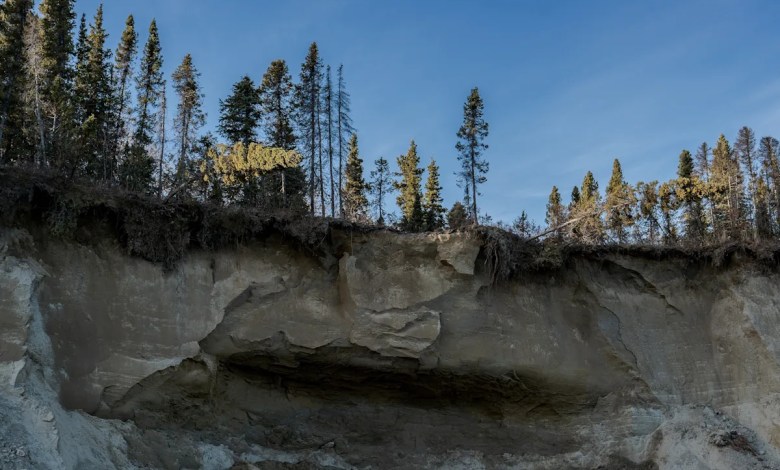
Salmon runs have suffered repeated collapses as record rainfall, warmer rivers and thawing permafrost transformed once-clear streams. In some areas, thawing permafrost has released metals into waterways, adding to pressure on already fragile fish populations.
“Elders who have lived here all their lives have never seen such environmental conditions,” said a local environmental official.
The road threatens what remains
The Ambler Highway would pass through a large, largely untouched region to reach significant deposits of copper, zinc and other minerals. Its construction would require nearly 50 bridges, thousands of culverts and more than 100 truck trips per day during peak periods. Federal biologists warn that naturally occurring asbestos could be kicked up by passing trucks and deposited on waterways and vegetation on which caribou depend. The Bureau of Land Management has designated some 1.2 million acres of nearby salmon spawning and caribou calving habitat as a “critical environmental concern.”
Mining would drain large amounts of water from lakes and rivers, disrupt permafrost and rely on a tailings management facility to contain toxic sludge. As record rainfall becomes more frequent, downstream communities fear contamination of drinking water and traditional foods.
Residents also fear the road could eventually be opened to the public, inviting outside hunters into an already stressed ecosystem. Many cite the Dalton Highway in Alaska, which was opened to the public despite earlier promises that it would remain private.
Ambler Metals, the company behind the mining project, says it uses proven controls for working in permafrost and will treat all water the mine comes into contact with to strict standards. The company says it tracks precipitation in order to size facilities in the event of heavier precipitation.
A potential economic lifeline
For some, the mine represents an opportunity in a region where gasoline can cost nearly $18 a gallon and basic travel for hunting has become prohibitive. Supporters argue that mining jobs could help people stay in their villages, which face some of the highest costs of living in the country.
Ambler Mayor Conrad Douglas summed up the tension: “I’m not sure how willing the State of Alaska is to jeopardize our way of life, but people need jobs. »
___
Follow Annika Hammerschlag on Instagram @ahimmergram.
___
The Associated Press receives support from the Walton Family Foundation for coverage of water and environmental policy. The AP is solely responsible for all content. For all of AP’s environmental coverage, visit https://apnews.com/hub/climate-and-environment


