Master your BIOS: 8 tweaks that unlock hidden PC performance


No one who assembles a PC or configures a new computer can avoid BIOS or UEFI. This is where you set the basics, from boot sequence and memory profiles to security features like Secure Boot.
Modern UEFI interfaces are graphical, can be used using a mouse, and are much more convenient than the text menus of the existing BIOS…but they can still be intimidating to new users.
If you’re hesitant to delve into your PC’s BIOS/UEFI, fear not! These tips will have you familiarized and comfortable in no time.
How to boot into BIOS/UEFI settings
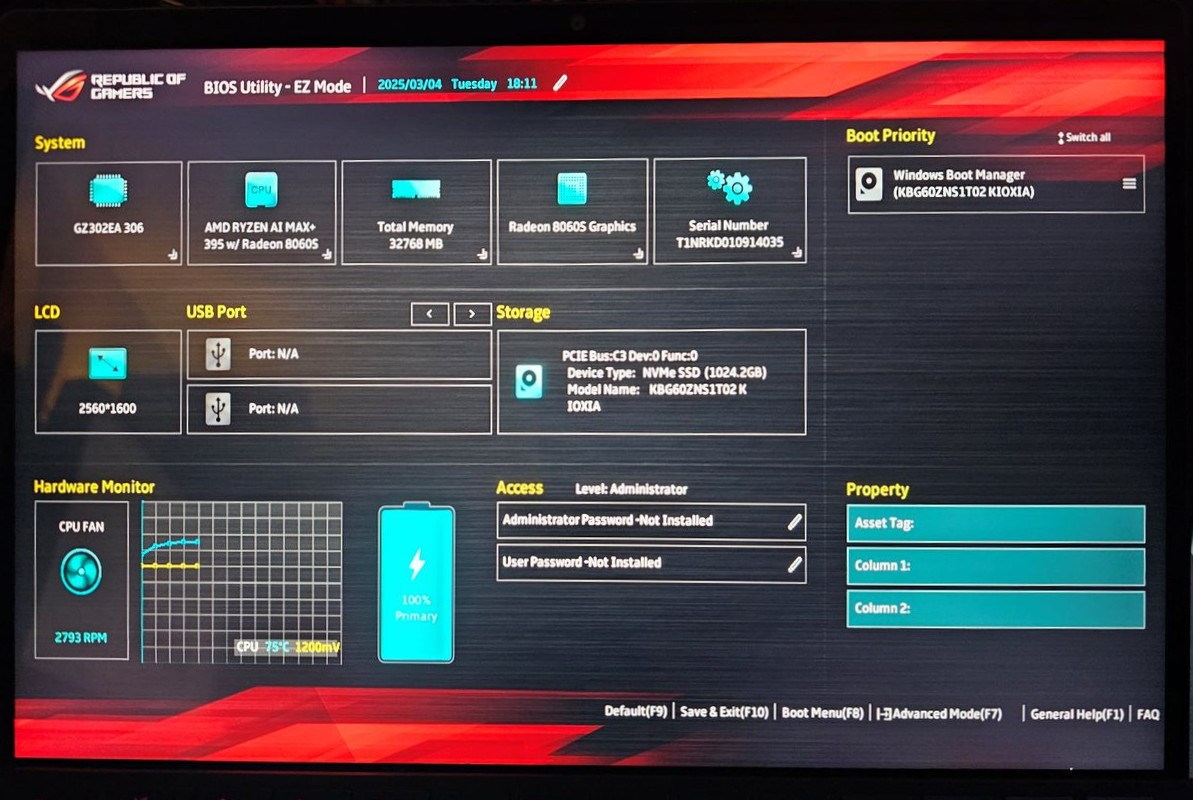
Mark Hachman / Foundry
To boot into BIOS/UEFI, you must press a key (or key combination) during the boot process. If you’re not quick enough or press the wrong keys, you’ll end up in Windows.
The exact key(s) you need to press depends on your motherboard manufacturer, but most use one of the following standardized keys: DELETE, F2, F10Or F12. The correct key will often appear on the screen for a brief moment along with the motherboard logo, and it is best to press the key several times as soon as you see it.
However, there is also an alternative method in Windows 11: open Settings > System > Recoveryscroll to Recovery options and search for “Advanced Startup,” then click the button labeled Restart now. There you can call directly the UEFI Firmware Settings.
Step 1: Update your BIOS/UEFI
Before you even start fine-tuning, you need to update your BIOS/UEFI to the latest version. New versions often provide better RAM compatibility, expand CPU support, and/or fix security vulnerabilities.
Download the update from the manufacturer’s website. (Pay attention to the exact model of your motherboard.) This will usually be a ZIP file, which you can unzip and copy to a USB stick. Then you should be able to find the update function in the BIOS under “EZ Flash”, “M-Flash” or similar. (If you can’t find it, search the web for instructions on how to update your particular motherboard.)
Important: Make sure your PC does not crash, restart or shut down during a BIOS/UEFI update. Also avoid experiencing overclocking or unstable power supplies while updating. Also avoid updating if there is an impending storm or known power fluctuations affect your area/home.
Step 2: Set language and interface
Many modern UEFI menus offer a graphical view and some of them even allow you to interact using mouse commands. You’ll usually find the language setting directly in the main menu or under a tab called “General Settings.” Always change the language first so you can find your way around more easily later. Some motherboards also offer a “simple view” for beginners and an “advanced mode” for fine-tuning.
Step 3: Customize the boot sequence
To install Windows on a PC, it must be able to boot from a USB key. This means you may need to rearrange the boot sequence so that if the system detects a USB drive plugged in, it will try to boot it first before switching to the internal SSD (for example).
You can do this in BIOS/UEFI by going to the appropriate section and dragging the USB drive option up. Once Windows is installed, make sure to change the order and select Windows Boot Manager or your system’s hard drive as the first boot device.
Advice: If your PC does not reliably recognize your USB drive during startup, try disabling “Fastboot Mode”.
Step 4: Optimize working memory
Foundry
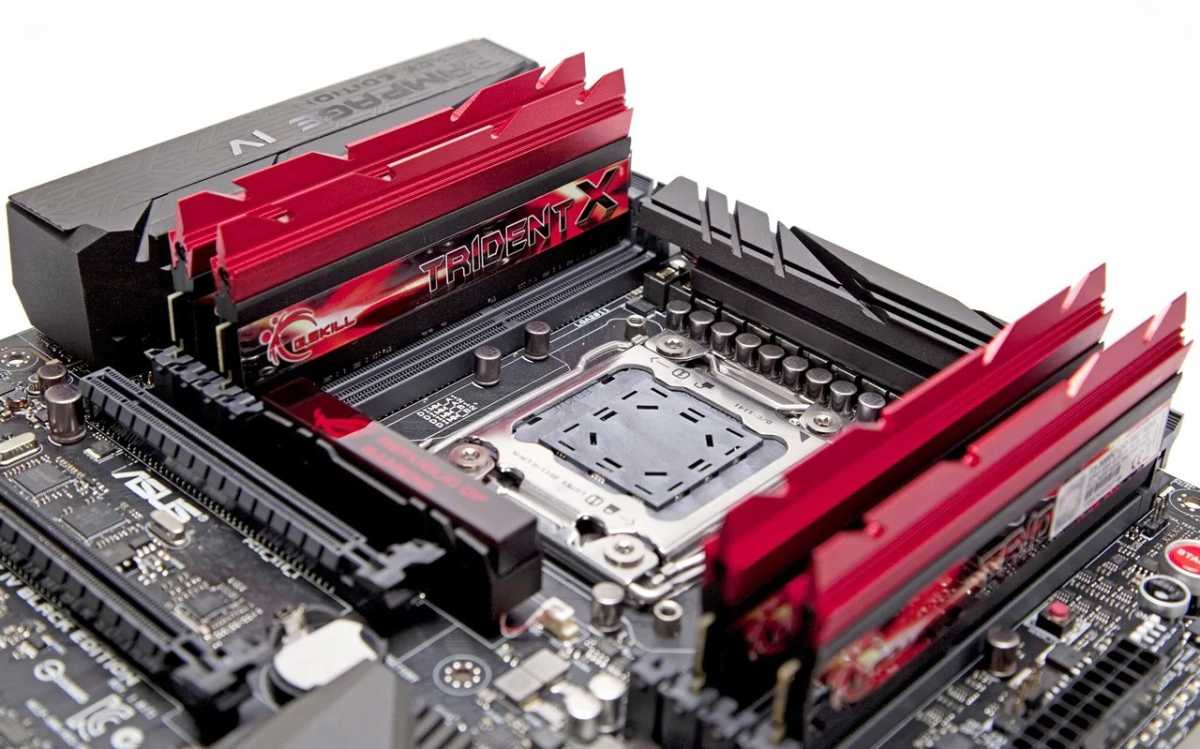
By default, RAM often only runs at the base clock rate. Activate the appropriate profile in UEFI: depending on the manufacturer, it is called XMP (Intel), DOCP (Asus/AMD) or EXPO (AMD). This allows your RAM to use the full speed it was designed for without you having to manually overclock it. You can usually find this option on the main UEFI menu page or under a tab such as “AI Tweaker” (for Asus), “OC” (for Gigabyte), or “Advanced Memory Settings.”
Step 5: Adjust Fan and Temperatures
You can adjust fan curves under menu items like “Q-Fan” or “Smart Fan Control,” allowing you to determine how noisy or quiet your PC’s fans are on a daily basis. A steeper curve (i.e. faster at higher temperatures) is recommended for gaming while a flat curve (i.e. remaining slow even when temperatures rise slightly) is more suitable for office or home server use, ensuring peace and quiet.
Step 6: Optimize Energy and Performance
Many motherboards offer power saving features such as “C-States” (reduces CPU voltage when idle) or “ErP ready” (reduces power consumption when off). If you need more power, enable Turbo Boost (Intel) or Precision Boost Overdrive (AMD). The latter ensures higher clock frequencies, but requires good cooling.
Note: The combination of power-saving features and aggressive performance options can lead to instability on cheaper motherboards. If your PC crashes frequently after making such changes, disable Turbo Boost/PBO/C-States again as a test.
Step 7: Check security settings
For Windows 11 to install, certain security features must be active in BIOS/UEFI. If they are missing, the installation will be canceled or even refuse to start. The two most important options are:
- Enable Secure Boot: Ensures that only bootloaders signed by Microsoft are loaded. Without Secure Boot, malware could be installed before the operating system boots. As a security measure, Windows 11 will refuse to install without Secure Boot.
- Enable TPM 2.0: Called “fTPM” (AMD) or “PTT” (Intel) depending on the manufacturer. TPM 2.0 stores cryptographic keys securely within the system. Windows 11 will refuse to install without this.
It’s also worth taking a look at the extensive security options:
- BitLocker support: With TPM enabled, hard drive encryption such as BitLocker can be used without additional effort. This protects your data in case the computer is stolen or lost.
- Supervisor/BIOS password: Protects firmware settings from unauthorized access.
- Lock interfaces: Some motherboards allow you to disable USB ports or network adapters directly in UEFI. This is convenient for particularly sensitive environments where access to external devices must be restricted for security reasons.
Step 8: Other Advanced Features
If your PC is still working stably after all the above adjustments, now it’s worth taking a look at some additional options:
SATA/NVMe mode:
- For SSDs and single hard drives, AHCI is the standard. This ensures full performance and TRIM support.
- RAID is only good if you want to use multiple drives for data mirroring (RAID 1) or performance (RAID 0). It is important to define this parameter Before Windows is installed, because changing it later may cause startup errors. Learn more about RAID configurations and multiple drive collaboration.
Enable virtualization:
- Features like Intel VT-x and AMD-V make it possible to run virtual machines efficiently. If you want to use Hyper-V, VirtualBox or VMware, you must enable this option.
- Without virtualization enabled, many things will still work but with significantly reduced performance.
IOMMU/SR-IOV (optional):
- This feature is interesting for advanced users who want to use device passthrough or special virtualization scenarios.
- Advice: Even if you don’t need virtualization right away, you can enable the feature directly right now. This will save you from having to search through the BIOS later if you ever end up experimenting with virtual machines.
Get to know your BIOS/UEFI
In short, BIOS/UEFI is the control center of your PC. Just a few settings, such as RAM profile, boot sequence, and secure boot, can make all the difference between a limping system and a stable, fast, and secure one.
If you feel like it, you can optionally try your hand at fine-tuning the deeper settings, from individual fan curves to overclocking. But even without experimenting, with the right BIOS/UEFI settings, your new PC will now be ready to boot and optimally prepared.
Good to know: You only need to perform most BIOS/UEFI settings once. After that, your computer will constantly run at optimal settings without requiring tedious readjustments.


