Maximize iCloud+! 5 tips and tricks you need to start using right now


One of the reasons why people invest in Apple ecosystem is interoperability between devices. The main reason for interoperability is iCloud, Apple Cloud service. You can get a free subscription when you create an Apple account, which includes a wireless 5 GB of cloud storage. We recommend that you switch to at least 50 GB if you can afford it, which costs $ 0.99 / £ 0.99 per month.
If you register for more storage, you also get Apple’s iCloud + service. With iCloud (without the “+”), you get synchronization between your iPhone, iPad and Mac and 5 GB of storage. The ” +” in “iCloud +” means that the service offers more features, but as iCloud has been a storage service for so long, these additional features are often overlooked.
Do not ignore them! ICloud + has features that you should use regularly because they are useful. If you pay for that, you should get the most out of it. Here are the iCloud features that you should start using.
Hide my email
It seems that you have to provide an e-mail address to access everything now, which is a bit scary because you don’t know what they do with it. And even their honesty, there is sometimes nothing you can do on this subject, especially when it is for a service you absolutely need. In addition, because there may be times when you must receive an email from this particular service, so you must use an accessible address.
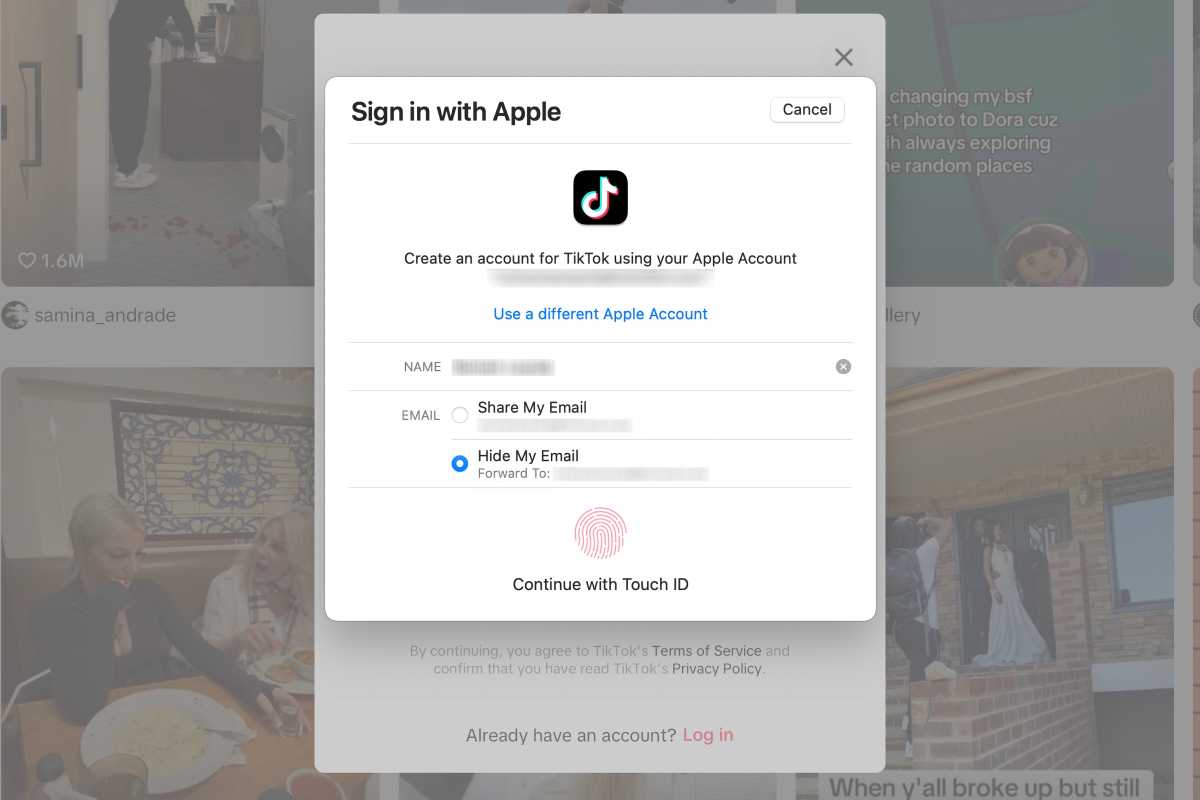
Hide my email is practical for all these accounts that you need to do online.
Foundry
I used a free web email service for the times when I needed to create what I considered a low priority account. But it was a problem when I needed to receive an email from the service, then the messaging supplier closed (RIP @ hellokitty.com e-mail). Now, I use the hide and seek functionality in iCloud +, one of the best features that the service offers.
When you create a new account and decide to connect with an Apple account, you can use your real iCloud e-mail address or you can use Master my e-mail to create an alias per e-mail. When you use Master my e-mail, Apple will create an e-mail address ending in @ privaterelay.appleid.com, then will transmit any e-mail that you receive at your real iCloud address.
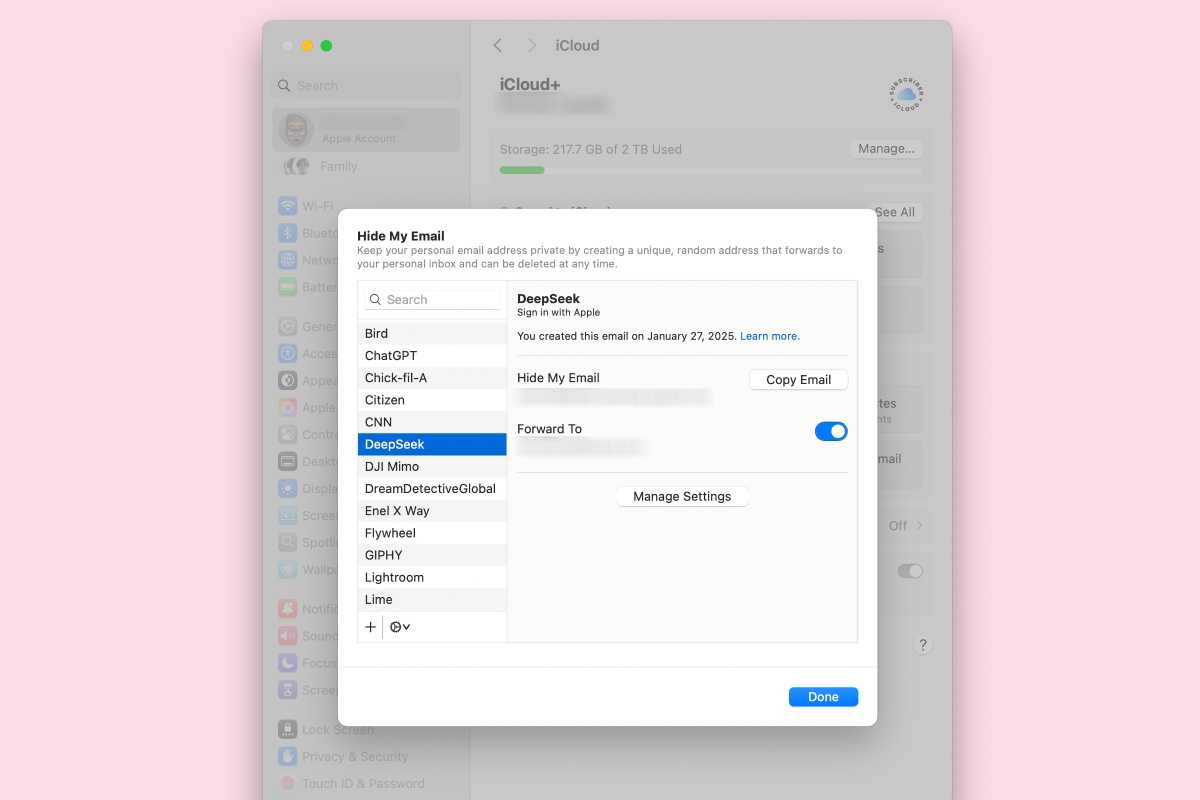
You can manage your mask of my email addresses in the settings.
Foundry
Now, maybe you already enjoy this feature, and it’s great. But what you may not know is that you can deactivate the transfer of emails in the settings> Apple account > iCloud > Hide my email. You will see a list of accounts on the left, and if you select one, you can define it to stop the transfer of emails, stop using an Apple connection or delete accounts.
Share passwords with family members
Do your children always bother you for the Apple TV +password? If you have an iCloud family plan, you can configure family passwords, where you can share connection information. To configure this, all the devices that your family use must be executed at least iOS 17, iPados 17 and MacOS Sonoma.

During the configuration, you can select the passwords to include in the shared group.
Foundry
To create a group of family passwords, go to Settings> Family > Recommended for your familyThen scroll towards the No more recommendations Section, where you will find a button to Configure family passwords. The application of passwords will launch and lead you to the stages of the configuration of a shared group. You can add or delete people (they must be in your contacts), then you select the passwords you want to share.
You can also configure this via the password application via Deposit > New shared group. Do it via settings> Family To the convenience of family members automatically added to the group. You can also create groups other than your family via the application of passwords. Learn more about the application of passwords.
Manage storage
ICloud storage is precious because you pay it. So, if you lack space, you may have the impression that you need to spend more to get more. But closely examine what uses your storage, and you will find ways to release space and save money.
To manage your iCloud storage, access Settings> Apple account > iCloudAnd at the top, you will see an indicator of the quantity of storage you use. Press this (or click the Manage in MacOS button and you get more details on how your storage is used.
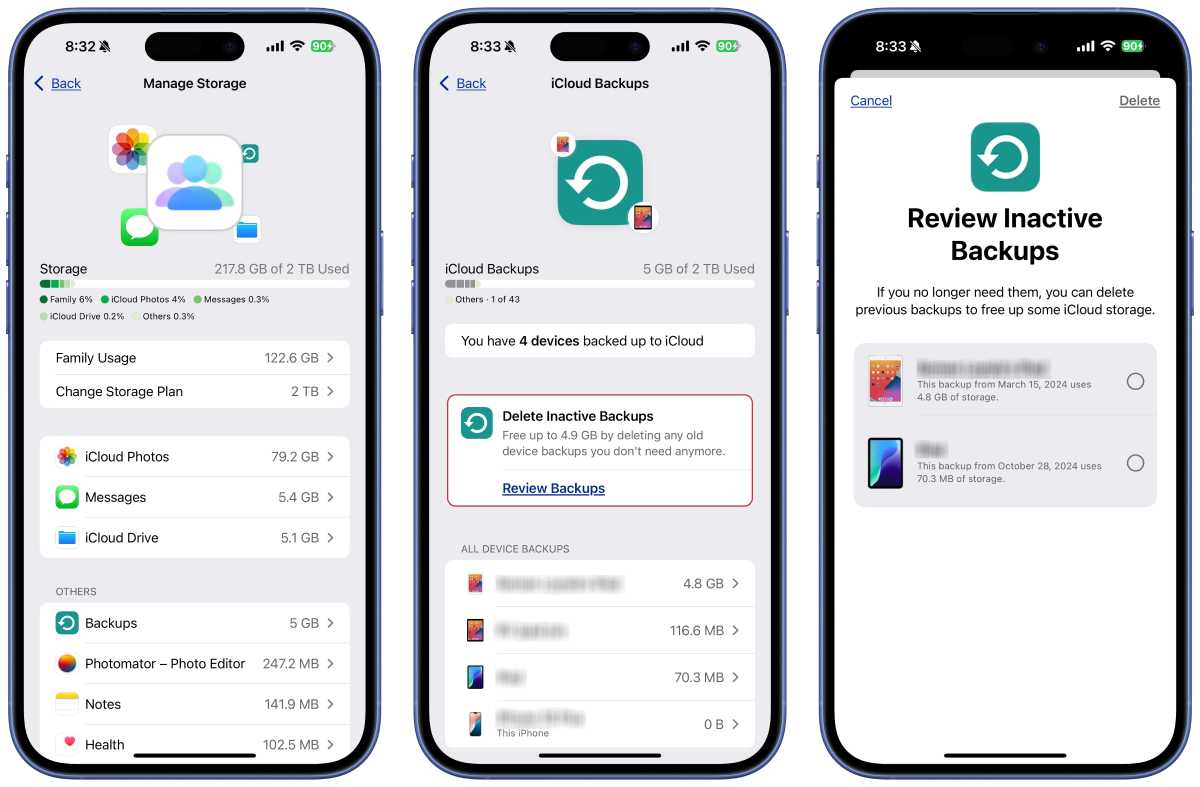
Deleting inactive backups can free up a lot of storage space.
Foundry
A way to release space is to check the backups in the Others section. Press / click BackupAnd you see a list of devices that have been saved in iCloud. If you use an iPhone or iPad, you can see a section called Delete inactive backups. Faucet Examine backups, And an older backup list appears, which you can delete or leave alone. On the Mac, the backup list is dated, so you can determine what to delete according to age.
The other place where you can free from space is with iCloud photos. The tools provided in iOS / iPados are different from macOS, so you can use an iPhone or iPad here. In the Manage storage Section, press ICloud photosthen press Review photos and videos. You will then see a list of elements that could be deleted. For example, I have 96 duplicates and 267 videos that can be deleted to free up space. (A screen of screenshots will appear if you have.) If you press a category, you get a set of miniatures to go, and you can select and delete anything. In the case of duplicates, you can choose the photos you want to “merge” and end up with a copy.
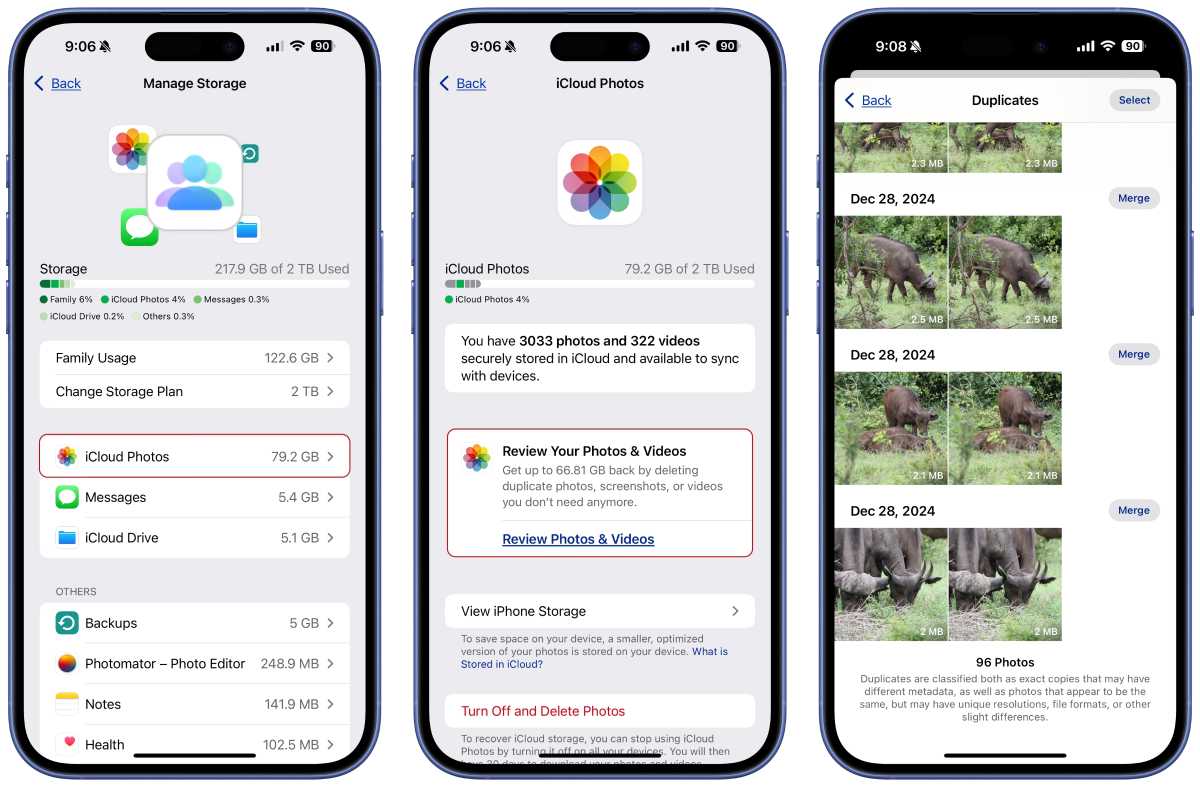
ICLOUD management storage settings have a great way to check the double photos.
Foundry
Another way to release space is to go through the Others section of Manage storage And inspect applications that use iCloud. You can have an application that you no longer use who takes up space and you can delete iCloud data.
Access your account on a PC
Most of the time, when you need to use the calendar, contacts, mail, notes and reminders, you use these applications on your iPhone, iPad or Mac. And the rest of Productivity Software I of Apple – Keynote, figures and pages – is available for free in the App Store. But Apple also offers web versions of all these applications, which is practical for the moments when you do not have access to your Apple device but that you need to access these applications.
To access these web applications, access iCloud.com in a browser and use your username and Apple password to log into. Your personal iCloud page will open, and you will find a window with the application icons. Click on one of them to launch the application.
Everything you do in these applications is saved on iCloud. When you return to your Apple device and launch the application, you will have access to this data. For example, when you enter an appointment in the calendar web application, it appears in the Calendar Device application. Or if you create a document on pages, it is saved in iCloud Drive, and you can then open it in the Device Pages application.
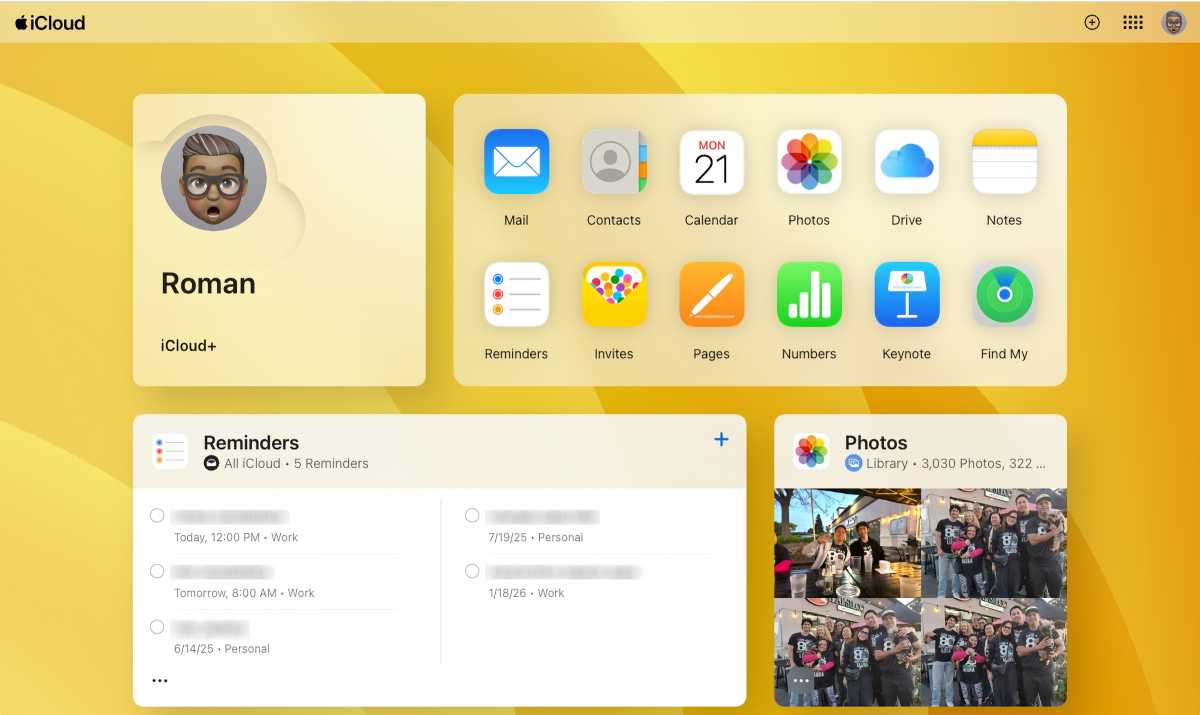
Your iCloud web page is a useful place for your iCloud resources.
Foundry
Pro tip: don’t forget to log out, especially if you use a computer that is not yours.
Advanced data protection
Advanced data protection is a security option available for iCloud +users, where end -to -end encryption is used when you access iCloud data for certain functions. These functions include backups, photos, reminders, safari bookmarks and wallet passes. Some applications, such as Health and iCloud Keynchain, always have an end -to -end encryption without advanced data protection.
With this activated function, even Apple is unable to read your data, so if you have additional concerns about your privacy, you should consider activating advanced data protection. Apple warns that this feature is not available in all countries; It is available in the United States but not in the United Kingdom
Advanced data protection can be activated via parameters> Apple account > iCloud, Then scroll down and look Advanced data protection. Press / click this to activate it.
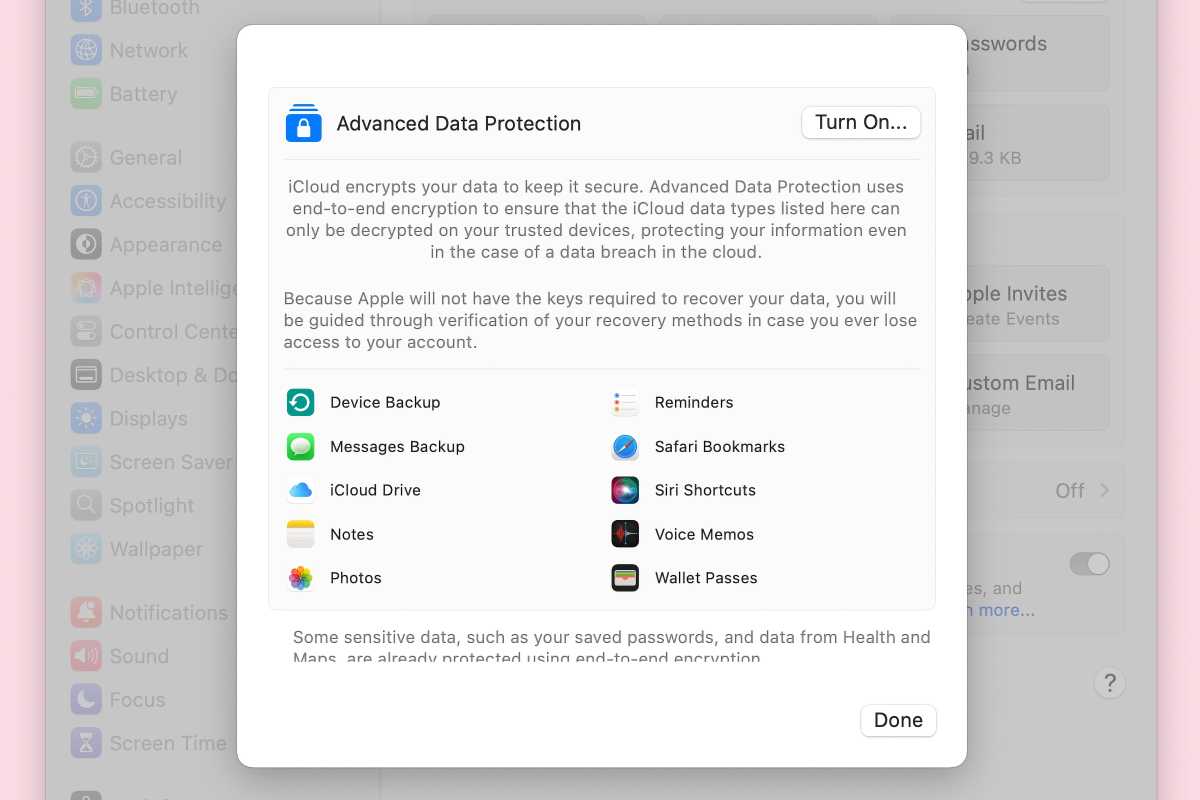
Advanced data protection provides end -to -end encryption for several Apple applications.
Foundry
Since Apple cannot read your data with this activated function, the company is limited in its ability to help you access your account in case you lose the password, therefore, if you turn it on, you must configure an account recovery method, which involves establishing a recovery contact (someone you trust to help you access your account) and a recovery key in the recovery process).
You should get all the details on the advanced data protection before activating it. If you are concerned about your ability to access your account in case you lose your password, you may not want to activate it. Apple uses encryption for data stored in iCloud, which can be safe enough for you.
Other major iCloud features
ICloud + has a few other major features, some are a little more esoteric; Others are more universal and you are probably already using. They include:


