Nutritionist Marion Nestle weighs in on ‘What to Eat Now’ : NPR

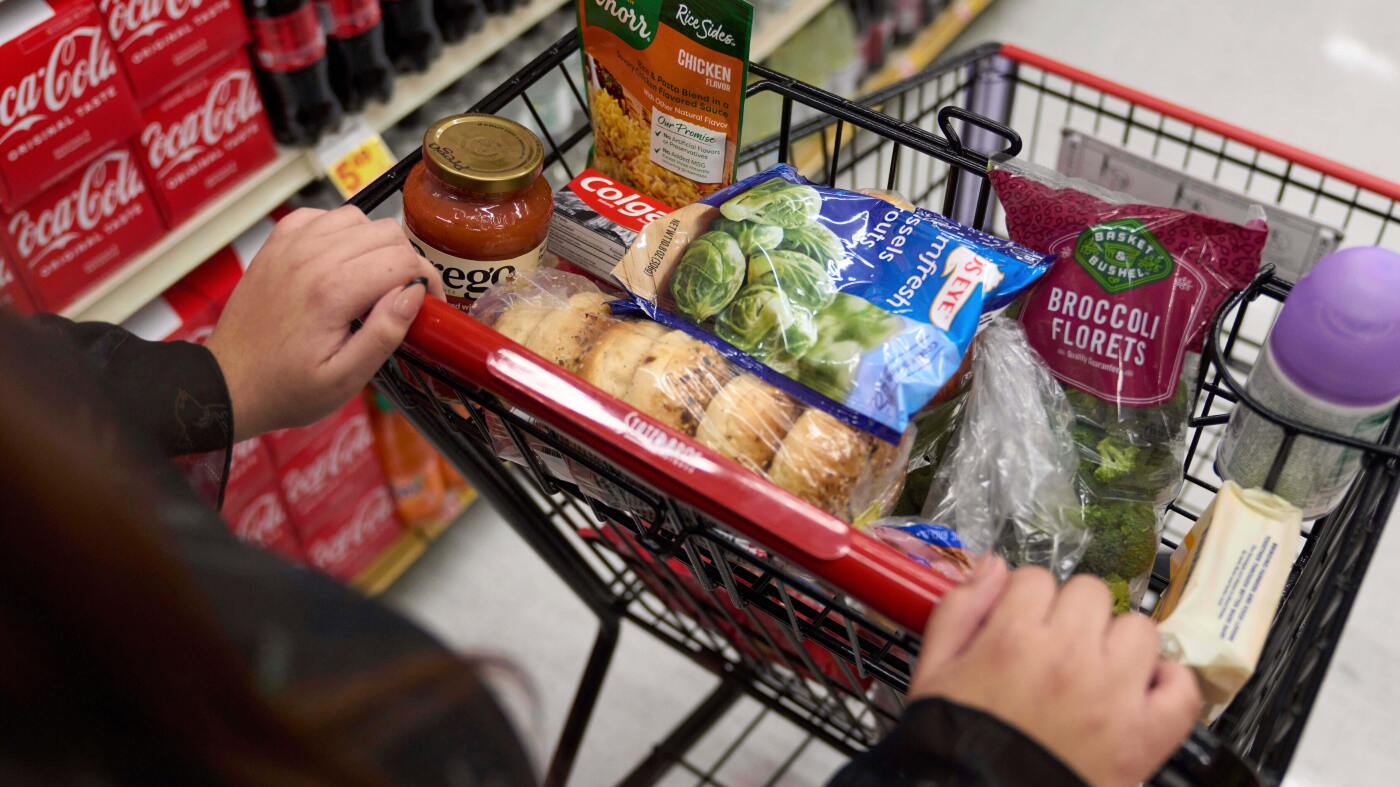

A California SNAP benefits shopper pushes a cart at a supermarket in Bellflower, California, February 13, 2023.
Allison Dinner/AP
hide caption
toggle caption
Allison Dinner/AP
Nutrition policy expert Marion Nestlé says that when she wrote her first book, Food policyin 2002, he was often asked what connection food had with politics.
“No one asks me that anymore,” says Nestlé. “When I look at what’s happening with food aid, I’m just stunned.”
Nestlé says the Trump administration’s efforts to deny SNAP benefits to millions of Americans have made clear how fragile our economy is: “We have 42 million people in this country – including 16 million children – who cannot count on a constant source of food on a day-to-day basis and must rely on a government program that provides them with benefits that don’t really cover their food needs, but only a portion of their food needs.

Decades of study of the food industry have given Nestlé a clear view of why it has become difficult to obtain food, including how supermarkets contribute to the problem. “The goal of a supermarket is to sell as much food as possible to as many people as possible, as often as possible, at as high prices as possible,” she says.

The 2006 Nestlé book, What to eatbecame a consumer bible of sorts upon its release, guiding readers through the supermarket while exposing how marketing and industry politics drive our food choices. Today, two decades later, she is back with What to eat nowa revised field guide for the 2025 supermarket.
Nestlé recommends what it calls a “triple” diet aimed at preventing hunger, obesity and climate change: “Eat real foods, as minimally processed as possible, with an emphasis on plants,” she says.
Interview Highlights

On how supermarkets are in the business of selling products, not providing nutrition
The more products you see, the more likely you are to buy. Therefore, the products organized so that you cannot miss them are found in top supermarkets. And companies pay supermarkets to place their products at eye level, at the ends of aisles – these have special names, end caps – and at the checkout. When you see products at the catch register, they pay a fee to the supermarket per square inch. And that’s how supermarkets make a lot of their money, through placement fees. And, of course, that has the effect of driving away small producers, because they can’t afford to make those kinds of payments. …I mean, we’re talking thousands, or in some cases, hundreds of thousands of dollars. And every product in a supermarket is placed where it is for a reason.
How Dollar Stores Got Into the Food Business
They started by selling the most popular ultra-processed foods. …They’re going to have chips. They will eat sugary cereals. They will eat every junk food imaginable. This is how they make their money. They’ll have a few fruits and vegetables, a few sad bananas, a few sad apples, maybe some pears, maybe some greens, but not a lot, and they’ll be in a crate somewhere because they have to give them away. Because they receive SNAP benefits, they must meet the storage requirements of the SNAP program, which requires them to have a certain number of fruits and vegetables on hand. … And [dollar stores are] just everywhere. And during the pandemic, in particular, they have proliferated like crazy and undercut local stores. They are cheaper. They have lower quality food, but the prices are lower. Price is a huge problem.

If you want a Trader Joe’s or a Whole Foods or a Wegmans in your neighborhood, you have to have hundreds of thousands of people within walking distance or a short drive making very, very good incomes or the [people] I’m not going to go there. They’re going to close stores that aren’t doing well, which means a lot of people are spending a lot of money there. And so, as the big grocery stores closed their doors in downtown neighborhoods, the dollar stores moved in.
On food waste in America

Our food system in the United States produces 4,000 calories per day for every man, woman and small baby in the country. This represents approximately double the average needs of the population. Waste is therefore integrated into the system. Because that’s how subsidies work. Agricultural subsidies encourage food producers to produce as much food as possible because they are paid for the amount of food they produce.
By initially agreeing with Robert F. Kennedy Jr..’s “Making America Healthy Again” approach to the food industry
I had high hopes when he was nominated because he talked about eliminating toxins from the food supply. Let’s make America healthy again. Let’s make America’s children healthy again. Let’s do something about ultra-processed foods. Let’s do something about mercury and fish. And on a lot of other things, I thought, “Oh, it’s absolutely wonderful to have someone who cares about the same kinds of issues that I do. It’s very exciting.”


When President Trump introduced the nomination of Robert F. Kennedy Jr. on social media, he talked about the food industrial complex. I almost fell off my chair! I thought, “Here’s the president who talks like me.” What is going on here? So we had the first MAHA report, the first Make America Healthy Again report, which talked about a lot of these issues and laid out an ambitious agenda. “We’re going to work on this, this and this” – it all sounded great. And then the second report came out and they had backed off on almost all the things that I thought were really critically important.
Why she thinks the food system needs a revolution

Marion Nestlé recommends a diet aimed at preventing hunger, obesity and climate change: “Eat real foods, as minimally processed as possible, with an emphasis on plants.”
Pierre Menzel
hide caption
toggle caption
Pierre Menzel
I think it would start by transforming our agricultural production system to one focused on food for humans rather than animals and automobiles. We will have to change our electoral system so that we can elect public officials who are interested in public health rather than the health of businesses. We would need to fix our economy so that Wall Street favors companies that have social and public health values as part of their corporate mission. These are revolutionary concepts at this point because they seem very far from what is achievable. But I think if we don’t work on it now, if we don’t do what we can to advocate for a better food system, we won’t get there. And only if we defend it do we have a chance of achieving it. And you never know, sometimes you get lucky. …
I tell people that they can’t do it alone, that even walking into a grocery store and trying to make healthy choices means that you, as an individual, are faced with an entire food system that aims to make you eat the most profitable foods possible, regardless of their effects on health and the environment. You must therefore join organizations. You need to join with other people who are interested in the same questions and concerned about the same problems and get together with them to set goals for what you would like to do, and then work to achieve those goals. Because if you don’t, who will?
Therese Madden and Anna Bauman produced and edited this interview for broadcast. Bridget Bentz, Molly Seavy-Nesper and Meghan Sullivan adapted it for the web.


