Medieval knight’s grave discovered under ice cream shop


The relocation of a glacier in the Polish port city of Gdańsk marked the end of an era. Miś had worked in the same place since 1962, but a few years ago, the owners of the glacier decided to move across the city. Vacance presented local archaeologists a unique opportunity, however, as the original location of the historic central district of śródmie.moutle was above a medieval cemetery attached to the oldest church in Gdańsk. Knowing this, experts have seen a rare chance to investigate if a story was hidden in all these ice creams.
After two years of excavation, the researchers discovered a remarkable discovery: the tomb of a medieval knight. And to judge by the details of his burial, the man was not an ordinary vassal. According to Sylwia Kurzyńska, archaeologist and director of the Archeology Archeology firm, the location is of “exceptional meaning”.
“”[It’s] One of the most important archaeological discoveries in Poland in recent years, “she said in a statement in CNN.
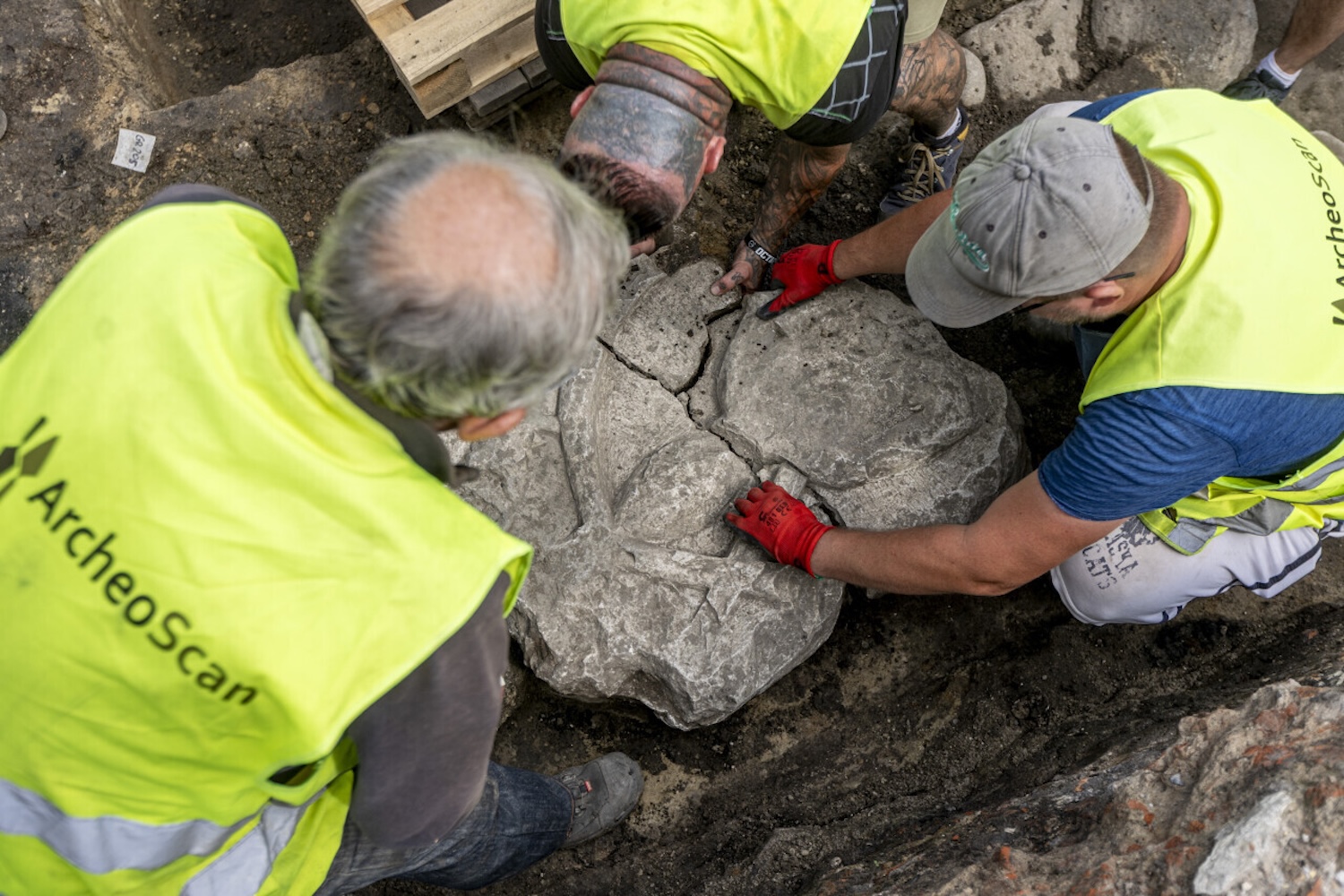
The first index that Kurzyńska’s team had discovered something really notable had happened when the workers found a plaque of almost five feet of Gotland limestone, a precious material in the Middle Ages. Other examinations have revealed that the stone had been cracked into four pieces, but the experts could still discern a engraved relief of a full -cut knight with a sword and a shield.
“The knight is shown to stand with a sword raised – a posture probably symbolizing high authority and social status,” said Kurzyńska.
After carefully withdrawing limestone, archaeologists located a rectangular arrangement of 23 additional field stones, below which poses a complete skeleton. The initial analysis indicated that the man was about 40 years old and between 5’7 ”and 5’11” at the time of his death. This would have made the individual at the average height, if not slightly larger than his contemporaries.
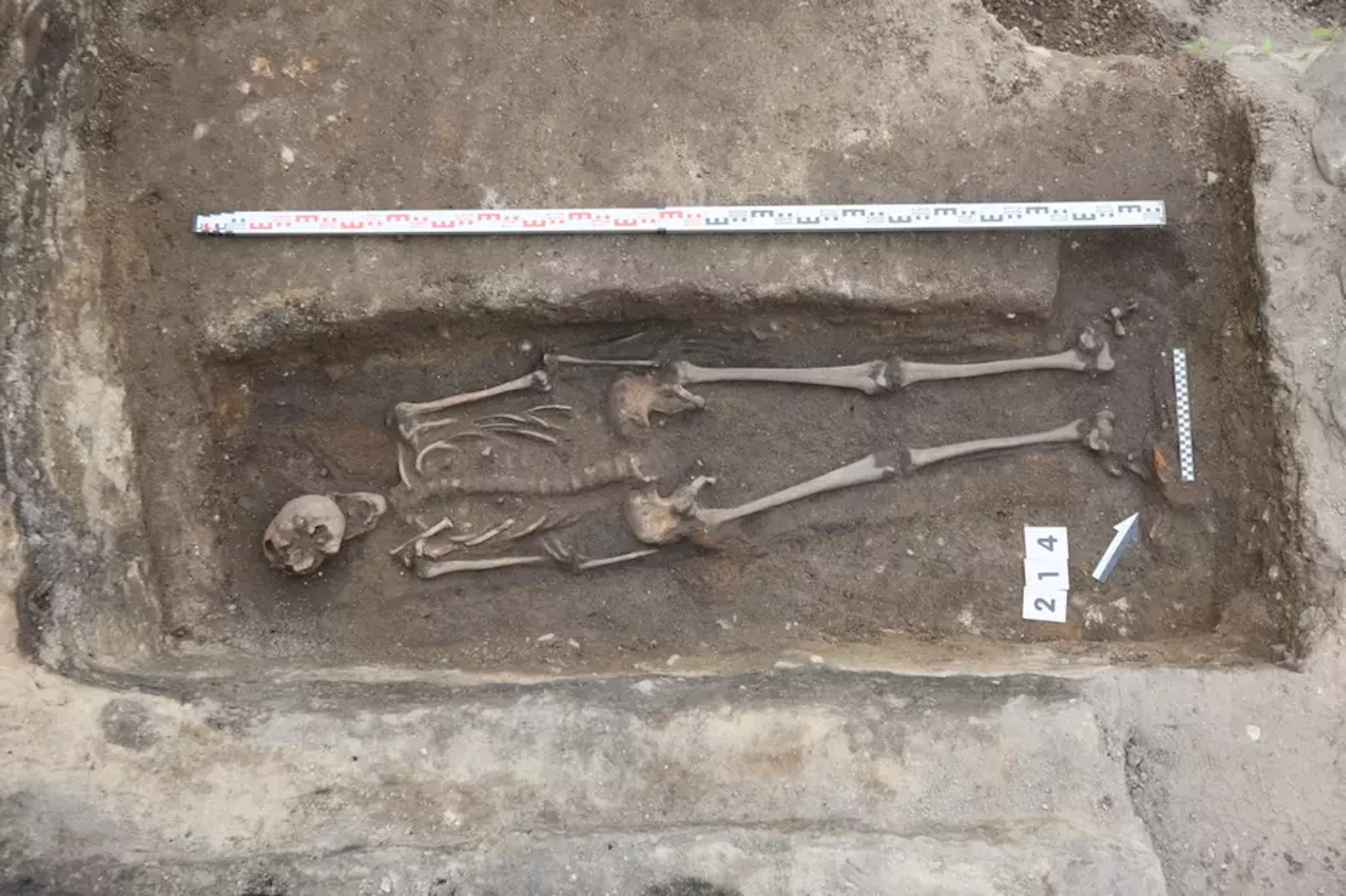
The exact age of the grave remains in question. It is possible that the knight lived during the 13th and 14th centuries, a period during which Gdańsk was occupied by the Teutonic Knights, a German Catholic military order founded in Jerusalem in 1190 this during the Crusades. It is also possible that man lived a centuries earlier, in which case he was probably a knight in the Sobiesław dynasty. Be that as it may, the serious limestone marker suggests that man made a name before his death.
“Although no serious commodity has been found, all the evidence available suggest that the deceased was a high social level person – probably a knight or a commander held in a particularly high esteem and respect,” said Kurzyńska.
With the tombstone and the skeleton transported to the Gdańsk Archaeological Museum, environmentalists are now working on cleaning and preserving discoveries. Archaeologists will supervise a complete 3D 3D scan to create a digital rendering, while other team members will perform an anthropological and genetic analysis on the bones, including a possible facial reconstruction.

More offers, reviews and purchasing guides


