Megafauna was the meat of choice for South American hunters


Thus, the evidence is mixed. Now Prates and his colleagues argue that we are not won. Humans and the extinguished megafauna only shared South America for less than 3,000 years, and it was more than 10,000 years ago, so that the chances that the evidence is preserved are quite low. In many of these sites, the layers of the Pleistocene – which would include the extinguished megafauna – are mixed with bones left on behalf of the Holocene, which biaises the number in favor of prey and smaller species which survived at the end of the ice period.
The researchers focused on 20 sites where the calendar was clear, so that they could determine what people did before 11,600 years ago, when the megafauna was still potentially on the menu. And if some researchers were inclined to exempt humanity because it seemed that we had not really killed so many megafauna, the results of Prates and his colleagues suggest the opposite.
“Our results,” write Prats and his colleagues, “put human foramen again at the heart of the debate”.
The Pleistocene hunters bought in bulk
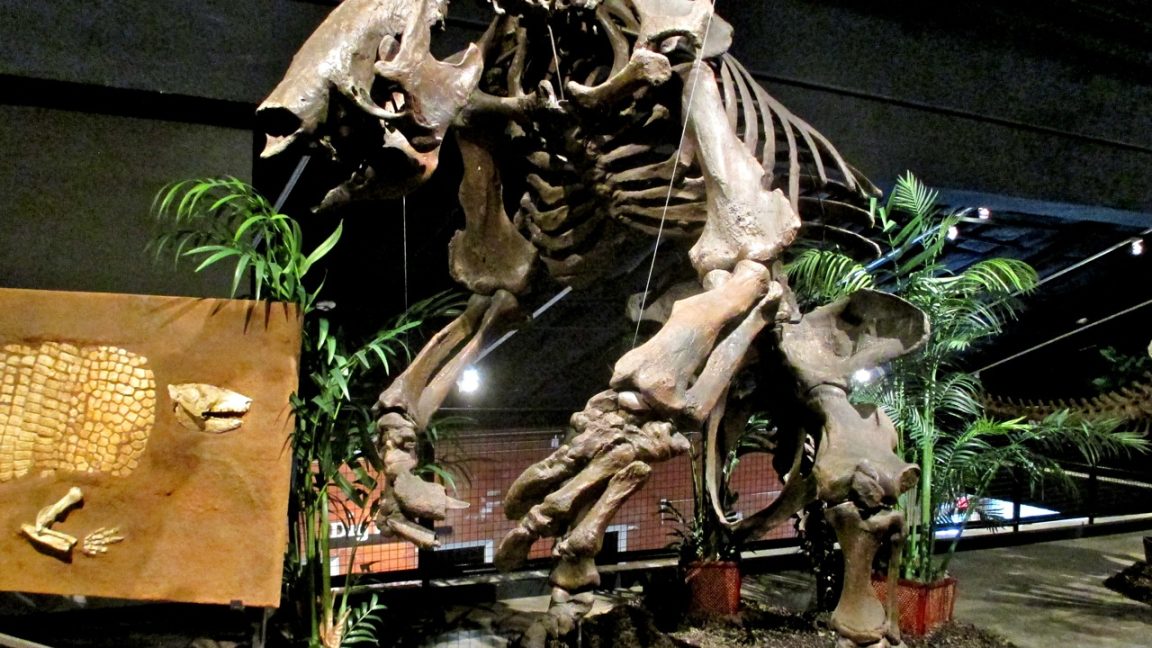
According to the “prey model”, a system that researchers use to explore how hunter-gatherers choose what hunting, megafauna are privileged prey. The prey model classifies animals according to the number of calories that they are likely to provide in relation to the amount of energy spent to prosecute them (and to luggalize the carcass house and sculpt it into edible pieces). Giant lazy people, giant tatous and extinguished American horses are all constantly classified at the top of this list.
The Pleistocene hunters were just as intelligent as modern people, and extremely warned about their own environment, they probably made their own versions of prey calculations and choose to shop in bulk, so to speak.
Surprisingly, the modern megafauna like Guanaco, Taruca and Vicuña are not very high on the list of prey compared to the Mégafauna of yesteryear. You can feed a strip of hunter-gatherers by hunting the Taruca, but not as effectively or that you can by pursuing giant lazy. It seems that more recent hunters have moved to these options only once their choices more optimal statistically have become too rare. And that – as well as modern conservation efforts – probably help explain why these species are still here today.
Science Advances, 2025. Doi: 10.1126 / SCIADV.ADX2615 10.1126 / SCIADV.ADX2615; (About owe).