Methane pollution still rises, but UN reports hope for near future reductions

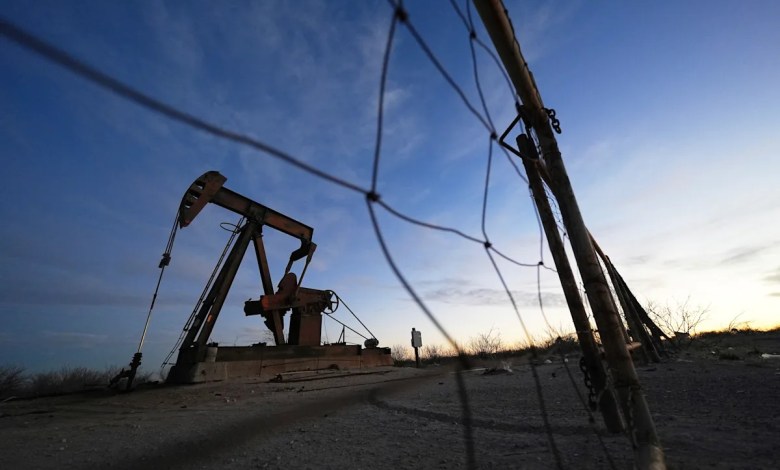
BELEM, Brazil (AP) — Global efforts to reduce emissions of methane, a potent but short-lived gas that traps heat, are performing about as poorly as those of the more widespread carbon dioxide, but there is hope for the next five years, U.N. officials said Monday.
Methane emissions can be a “handbrake” to slow greenhouse gas pollution and temperatures, said Martina Otto, head of the U.N. climate and clean air commission on methane pollution. Indeed, methane from fossil fuels traps nearly 30 times more heat than the most common carbon dioxide, but because they don’t last as long in the air, rapid action to reduce methane could have a big effect on controlling warming, she said.
If countries do what they say in their climate plans, global methane emissions in 2030 will be 8% lower than 2020 levels, Otto said. This would be an improvement, because without any effort these emissions would increase by 13%.
And yet, that is not enough. The UN Global Methane Pledge target for 2021 is a 30% reduction.
“We’ve gotten bigger,” Otto said. “We can still get there, but it takes a lot of extra effort. »
Instead of an 8 percent decrease that the U.N. hopes to see, outside expert Bill Hare, CEO of Climate Analytics, said projections from his Climate Action Tracker show that methane emissions will remain rather stable — neither increasing nor decreasing much — through 2030. Either a stable decline, or an 8 percent drop, as the U.N. predicts, would be better than projections of increasing carbon dioxide, he said.
Over the past six years, carbon dioxide and methane emissions have increased at about the same rate, about 4 percent, Hare said.
Methane stays in the atmosphere for about a dozen years, compared to hundreds of years for carbon dioxide.
Officials said that for methane emissions from burning fossil fuels — about 72 percent of the methane released by humans into the air — in many cases companies would save money by capturing and using the gas that has just been burned at drilling sites because it is easier, often because there is no infrastructure to collect and transport it. They could make money by capturing methane that leaks or flares, but the return on investment from capturing methane that escapes is not as great as new exploration, Otto said.
“This report reveals some very hard truths, but also a glimmer of hope,” said Paul Behrens of the University of Oxford.
EU Energy and Housing Commissioner Dan Jørgensen said the last five years had seen “unprecedented action” to reduce methane emissions.
“It takes time to see results,” Jørgensen said. “Persistence and patience are essential.”
___
Associated Press climate and environmental coverage receives financial support from several private foundations. AP is solely responsible for all content. Find AP’s standards for working with philanthropic organizations, a list of supporters, and funded coverage areas at AP.org.


