Why Newsom’s cops aren’t the same as Trump’s troops

How dangerous are the American streets?
To hear President Trump saying, the killers hide in each shadow not already filled with rapists and thieves.
California Governor Gavin Newsom is not as disastrous, stressing that crime numbers are decreasing.
But “the figures mean little for people,” said Newsom during a press herd in his office on Thursday, where he ruthlessly failed Trump with a configuration of flags and everything that seemed to make fun of the meeting of the president’s marathon office earlier in the week.
Yes, people, mid -term elections arrive and crime is high – in our conscience if not in reality. Although violent crimes and certain crimes of property have decreased in most of the cities of California (and in many major cities across the country), the dangers of city life remain stubbornly trapped in our collective psyche.
This anxiety has increased in another era of the abolition of crime, leading to the fulfillment of the authoritarian fantasy of Trump of the national guard troops which patrols Los Angeles, Washington, DC and potentially more cities to come.
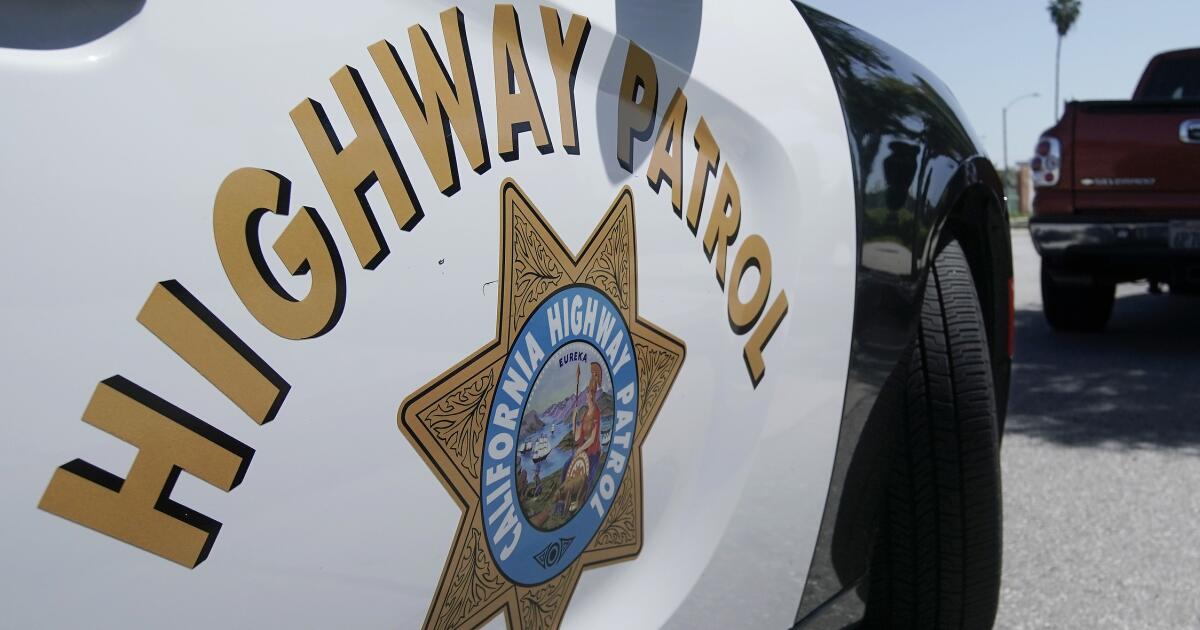
Newsom now offers what many have formulated as counterpunch to Trump’s military intervention: a wave of California road patrol officers in strategic places through the state, mainly boots of Newsom -controlled cops on the ground to reflect Trump’s troops.
But looking at the deployment by Newsom of more CHP officers as a reaction to Trump lacks a more important debate on what makes our communities safer. Understand what makes the soldiers’ cops different – and the Newsom movement different from that of Trump – finally understands the difference between repression and public security, strength and finesse.
Newsom has used CHP to complete local police services for years. In 2023, when the San Francisco net zone was plagued by the consumption of open drugs, making it the preferred right of a democratic city, Newsom sent this Status of State to help clean it (although this work continues). The following year, he sent it to Oakland and Bakersfield, the two places where car flight, retail crime and side shows were creeping.
Now he extends the role of the CHP in the local police to include Los Angeles, San Diego, the Interior Empire and certain cities of Central Valley, notably Fresno and Sacramento.
In each of these places, mobile teams of a dozen officers, who will all be volunteer for employment, will target crimes, criminals or areas. These officers will not patrol or respond to calls like local force, but to reach targets identified by data or information, or to make their presence in high crime areas.
This is where Trump’s military approach has overlap with the Newsom – and where the two men could agree: it is true that a visible show of armed authority dissuades crime. Whether the national guard or the road patrol, criminals, petty and violent, tend to avoid them.
“We are entering and satur an area with great visibility and let’s aim at the patrol,” said Sean Duryee, California Highway Patrol commissioner, standing alongside Newsom. “People who have a problem with this are the criminal community.”
The approach seems to work. I can set you off – 400 firearms seized in San Bernardino, Bakersfield, Oakland; 4,000 stolen vehicles recovered from Oakland; More than 9,000 arrests across the state.
But the figures really don’t matter. This is really what a community thinks of its safety. Throughout California, many otherwise the majority of small and medium-sized law enforcement services are in sub-efficient. Even the major departments such as Los Angeles have trouble hiring and retaining officers. There are simply not enough cops – or resources such as helicopters or K9 teams – to do the work in too many places, and the citizens feel it.
The use of these small strike teams from CHP officers fills the void of workforce and expertise. And by targeting this use precisely on troubled places, it can make communities badly served more safe and the criminal communities are actually safer.
Tinisch Hollins is the head of the Californians for security and justice, a defense group who works to end the overexcarceration and to promote public security beyond the simple taking of arrests. She is obviously not a great supporter of sending the police to communities like that, “she said.
But she lived in San Francisco when the homicides exceeded 100 per year, and now lives in the city of Bay Area, Vallejo, where the local police were so little tapered and prey to a scandal that local leaders declared the state of emergency.
She saw how the CHP “had an impact” in the bay region.
“There are very effective things,” said Hollins.
This membership of the community, in particular the skeptical community, is a massive gap in the militarization of Trump, and also alludes to the deeper difference between the troops and the cops.
California has been at the forefront of the reform of the police for years, although it is a conversation that has dropped favor and titles of the Trump era.
In the wake of the murder of George Floyd by Minneapolis police, California has prohibited the controversial carotid constraints that can cut breathing. The state has implemented a method of awarding agents found guilty of bad behavior. He has increased age and education standards to become a peace agent, increased transparency requirements and granted more surveillance on the use of military equipment by civil forces, to appoint some reforms.
More importantly, Newsom defends a new vision of incarceration and rehabilitation on the model after successful efforts in Norway and in other places that focus on the simple truth that people ‘arrest does not end the crime.
Most people who are condemned and imprisoned will return to our streets after a few years maximum, and if the state does not change their prospects and opportunities, they will probably return to crime – not making us safer than the day they were put in the headlines for the first time.
But for a while, it seemed to some as if these reforms with their application objective and to alternatives to incarceration had gone too far. Images of groups of marauders of retail thiefs invading the stores have fulfilled the news and reasonably caused anxiety – which led the Californians to pass the still uninformed and difficult proposal on crime 36 which sought to create more severe sanctions for certain crimes of drugs and property, as well as compulsory treatment for the drug addiction, but which could also take money from Rehabilitation.
As much Trump, the use by Newsom of the CHP is the answer to this decline on the reform, a recognition that the application of the law remains a key element of the crime dilemma.
But Hollins underlines that the rehabilitation aspect, the most innovative and undoubtedly important aspect of the California crime approach is to get lost in the current political climate.
“It is not only to stop people who reduce crime,” she said. “THE [penal] The system will not deal with crime engines. »»
This is where Newsom must do better, both in the field and in his explanations. It may not be popular to talk about rehabilitation, and Trump will certainly seize it as weak, but that is what works and what makes the Californian method different from Maga’s vision of crime.
For Trump, the whole and the end is the subsequent arrest and cruel joy of punishment. He called for more severe and longer sanctions for still minor crimes, and recently demanded the general use of the death penalty in all cases of murder accused in Washington, DC is the authoritarian opinion that fear and repression will make us safer.
“We lost reality, the idea that soldiers can be there on every street corner in the United States of America,” said Newsom on Thursday.
Or should be.
The soldiers in our streets make citizens that are respectful of the laws less free and ultimately do not do much to solve the problems of poverty and opportunities that often start the cycles of crime.
This is the test of strength that is happening at the moment in the American streets, and finally the confrontation between the democratic vision of the prevention of crime and Trump – soldiers or cops, the easy spectacle of compliance induced by a barrel of a firearm or a complicated and imperfect system of the community and the police working together.


