The Supreme Court’s ‘History and Tradition’ Test Has Now Run Into America’s History and Tradition of Anti-Black Racism


This article is part of the TPM Café, the TPM opinion and news analysis site. It was originally published on Balls and Strikes.
The Supreme Court heard oral arguments Tuesday at Wolford v. Lopeza case over whether states can prohibit people from carrying concealed firearms on private property without obtaining the owner’s consent. Under the Hawaiian law in question, any armed person wishing to enter a shopping center, restaurant or other private property open to the public must first obtain “express permission,” such as a sign at the entrance to a store or a verbal “ok” from an employee. Gun laws like Hawaii’s are often called “vampire rules” because, like the rules that applied to vampires in Bram Stoker’s, Draculathey ward off a deadly threat unless it receives an explicit invitation to enter.
Hawaii enacted its law in 2023 in response to New York State Rifle and Pistol Association v. Bruena 2022 Supreme Court case that created a new test for determining the constitutionality of gun control laws. Below Bruenlaws that regulate “the right of the people to keep and bear Arms” violate the Second Amendment unless there is a “well-established and representative historical analogue.” This rigid standard calls on courts to strike down all gun laws unless, in a judge’s opinion, the people of the Founding Era imposed similar restrictions for similar reasons.
Bruen immediately caused chaos in the lower courts as it called into question the legality of previously uncontested gun laws. And in July 2024, after a federal appeals court ruled that laws disarming domestic violence perpetrators were unconstitutional because the country had not historically disarmed domestic violence perpetrators, the Court began reversing course. Writing for the majority of eight justices United States v. RahimiChief Justice John Roberts explained that lower courts had “misunderstood” Bruenand that modern gun safety laws only need a historical “analogue,” not a historical “twin.” (For what it’s worth, the author of BruenJustice Clarence Thomas, dissenting in Rahimi say that the lower court understood his opinion very well.)
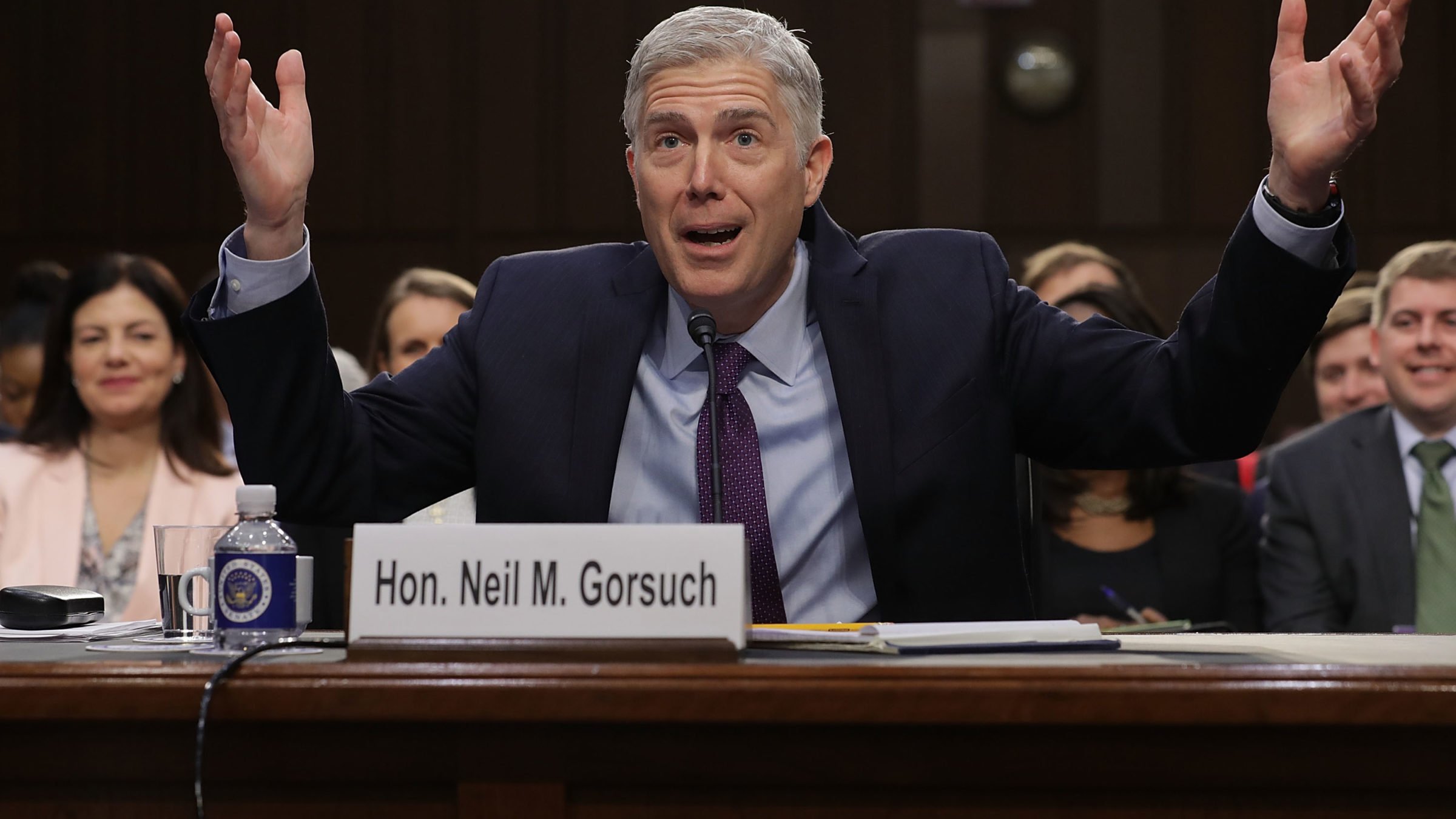
Wolford v. Lopez is the Court’s second confrontation with the absurdities produced by BruenThe embrace of originalism, the idea that the Constitution has true, historically discoverable meaning. During Tuesday’s oral argument, the Republican justices were deeply troubled that Hawaii defended its status in part by invoking an 1865 Louisiana law that prohibited people from entering private property with firearms “without the consent of the owner” — a law that lawmakers originally passed to disarm black people. With a nod to the genesis of the “vampire rule” moniker, Justice Neil Gorsuch marveled that “many people” who would normally react to historic anti-Black laws like “garlic to a vampire” now cite them to promote gun restrictions. “I’m really interested in why,” he said.
THE Bruen The opinion, which Gorsuch joined, contains the answer to his question. State legislators who dig into historic gun regulations to justify modern gun regulations are simply doing what the Court told them to do. It’s not their fault that many historic gun regulations are racist.
Wolford began in June 2023, when members of the Hawaii Firearms Coalition filed a federal lawsuit arguing that the vampire rule lacked merit. Bruen-conforming historical analogue. In August 2023, the district court agreed, issuing a preliminary order blocking Hawaii from enforcing the law while the case challenging its legality was pending. But in September 2024, the Ninth Circuit Court of Appeals reversed that decision; Writing for the three-judge panel, Justice Susan Graber placed particular emphasis on the 1865 Louisiana law, as well as an 1771 New Jersey law prohibiting people from carrying “a firearm on land not owned by him” unless “he has a license or written permission of the owner.”
During Tuesday’s oral argument, Gorsuch threw a softball at challengers’ attorney Alan Beck, asking whether it was appropriate for Graber and the Ninth Circuit to rely on a law “intended for freedmen” in the aftermath of the Civil War. “Do you think the Black Codes, as they are called, should inform the decision-making of this Court when it attempts to discern what the traditions of this nation are? » he asked.
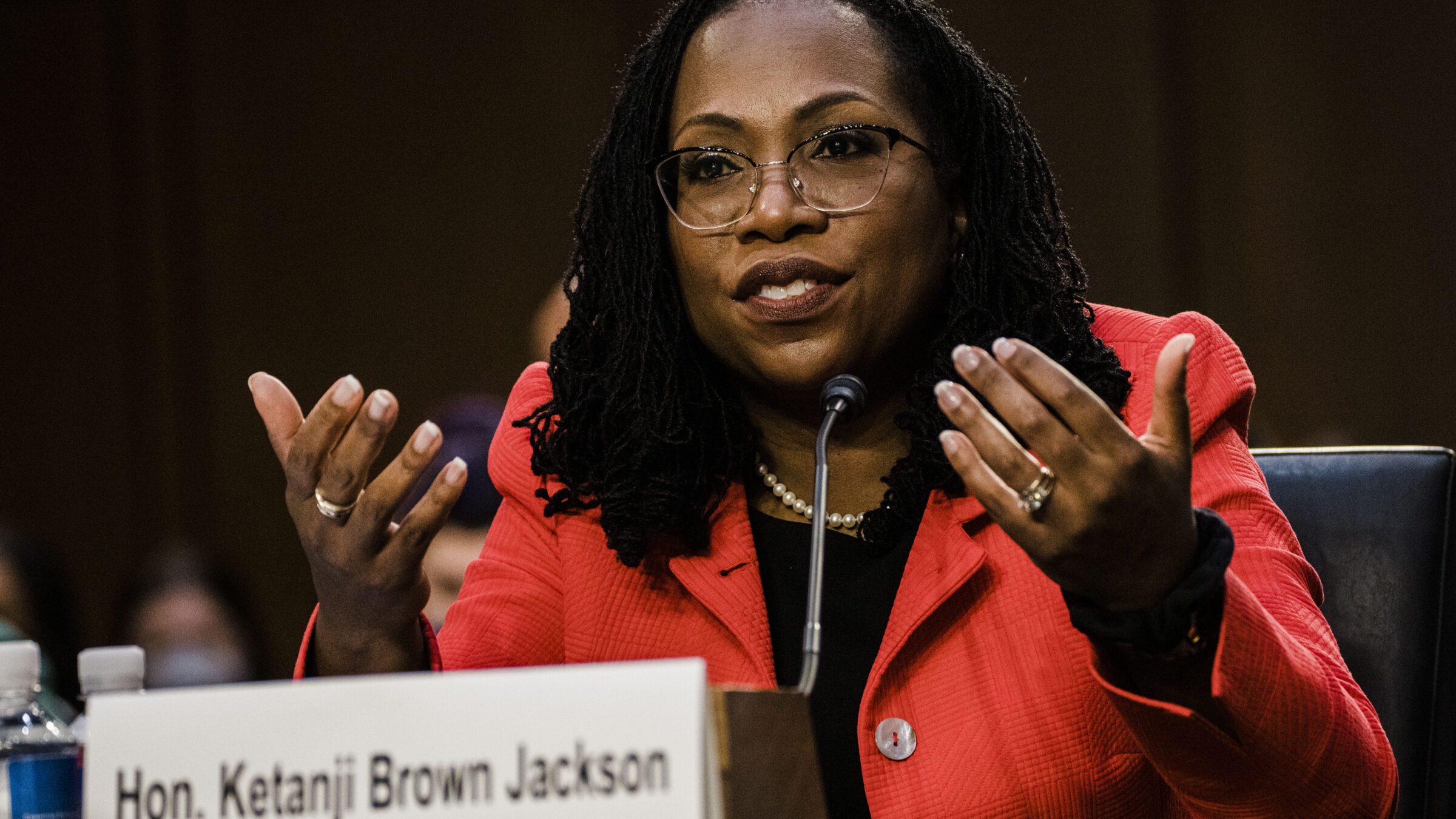
Beck had the good sense to say no. But Justice Ketanji Brown Jackson quickly weighed in, essentially asking why Hawaii’s reference to Louisiana law should reflect poorly on Hawaii’s ban rather than the Court’s precedent. “To the extent that we have a test that addresses regulatory history, but the full regulatory history is not taken into account, I think there might be something wrong with the test,” she said. Jackson went on to argue that there is an important distinction between recognizing that the country has “moved away from that history” and pretending that “that history didn’t exist.”
In an exchange with Deputy Attorney General Sarah Harris, who represented the Trump administration in its support of the challengers, Gorsuch invoked the black codes again, asking Harris whether the Court “should really consider them important here.” Harris, who, just as a reminder, works for President Donald Trump’s Justice Department, also said no, calling it “somewhat astonishing” that the Black Codes “are being held up as evidence of what our tradition of constitutionally authorized gun regulation looks like.”
Jackson pushed again. “The black codes were proposed here under the name of Bruen “It’s a test to determine the constitutionality of this regulation, and that’s because we have a test that asks us to look at history and tradition,” she said. “The fact that the Black Codes were later determined to be unconstitutional does not seem to me relevant to the assessment that Bruen asks us to do.
Harris began to respond by saying that the Black Codes should have been unconstitutional “from their inception,” but Jackson interrupted her. “Let me stop you there. They were not deemed unconstitutional at the time they were enacted,” she said. “They were part of the history and tradition of the country.”
Gorsuch returned to the Black Codes once again during his oral argument, asking State’s Attorney Neal Katyal to make the “astonishing” argument. Katyal agreed that the Black Codes are “undoubtedly a shameful part of our history” but argued that this particular Louisiana law was still relevant, for several reasons. First, when the Reconstruction Congress readmitted Louisiana and other states into the Union, it invalidated many of the Black Codes but left the 1865 law alone, implicitly ratifying it as legitimate. Second, when General Daniel Sickles issued an order rescinding the Black Codes, he clarified that the right to bear arms did not authorize “any person to enter with arms upon the premises of another against his consent.”
At this point, Justice Samuel Alito interrupted, arguing that post-Reconstruction laws in the South disarmed black people “precisely to prevent them” from exercising their Second Amendment right to defend themselves — against the Ku Klux Klan and racist law enforcement officers, among others. “Isn’t it the height of irony to cite a law that was enacted precisely for the purpose of preventing someone from exercising their Second Amendment right – to cite that as an example of what the Second Amendment protects? » asked Alito.
Katyal responded that many black codes worked that way, but not this particular Louisiana law. “If anything, it protected Black churches and Black-owned businesses and so on by insisting on this consent rule,” Katyal said. “This is why the Radical Congress for Reconstruction admitted the return of Louisiana [to the Union].”
Bruen was supposed to be the cornerstone of originalism, which conservative legal scholars have advocated for decades as the only correct methodology for interpreting the Constitution. But the questions Wolford The oral arguments demonstrate how the theory gives flexibility to justices seeking ways to implement their policy preferences. To block modern gun laws, judges need only cite concerns vaguely tied to the 19th century. To pass gun laws, lawmakers must rely on history and be careful to set aside any history that Republican judges wish to forget.


