


Indiana
• Jr
• 6’5″
/ 225 lbs
Projected Team
|
PROSPECT RNK
|
POSITION RNK
|
PAYDS
|
RUYDS
|
INTS
|
TDS
|
The Raiders are on the clock and in need of help across the board, but quarterback is the first order of business. Fernando Mendoza capped off an impressive season with a national championship in Indiana’s RPO-based offense and a strong postseason run, showing consistency and clutch throws in must-have moments. Mendoza makes great decisions and throws with accuracy and touch, and he can create and extend plays outside the pocket and under duress. He’s a high-level processor who reads defenses quickly and anticipates well to deliver advantage throws that move the chains.


Ohio State
• Jr
• 6’4″
/ 243 lbs
Projected Team
|
PROSPECT RNK
|
POSITION RNK
|
Arvell Reese is a nice piece for a franchise with plenty of holes, thanks to his versatility as both a box defender and an edge rusher. He brings elite twitch and instincts, along with the size and length to hold up in multiple spots. Reese is extremely athletic as a part-time rusher, can go speed to power, and has a strong long-arm move. His pass-rushing ceiling is high with more reps and time on task. Reese also has excellent change-of-direction and speed to match up against backs and tight ends, and he didn’t allow a touchdown pass all season.


Miami (Fla.)
• Jr
• 6’6″
/ 335 lbs
Projected Team
|
PROSPECT RNK
|
POSITION RNK
|
Francis Mauigoa excelled during the Hurricanes’ playoff run and has been a model of consistency over the past two seasons at right tackle. He’s thickly built with excellent power and can move defenders against their will in the run game. He’s above average in pass protection with good technique and the feet to play in space. He also has some versatility to kick inside if needed, plus strong leadership and extensive experience as a three-year starter at Miami.


Miami (Fla.)
• Jr
• 6’3″
/ 270 lbs
Projected Team
|
PROSPECT RNK
|
POSITION RNK
|
Rueben Bain Jr. was as dominant a defensive lineman as we’ve seen since Will Anderson Jr. at Alabama. He has elite power in both phases and is an excellent technician with his hands, able to win with force or finesse. Bain plays with a high motor and attention to detail. His measurements might not impress everyone, but his film is elite, and he offers versatility to kick inside in pass-rush situations.


Utah
• Jr
• 6’6″
/ 308 lbs
Projected Team
|
PROSPECT RNK
|
POSITION RNK
|
Spencer Fano plays with good technique and excellent feet, and I believe he can handle either tackle spot. He didn’t allow a sack this season and gave up only six hurries. His best days are still ahead, but I like his power at the point, his ability to move people in the run game and the athleticism to pull and clear defenders at the second level.

Ohio State
• Jr
• 6’3″
/ 195 lbs
Projected Team
|
PROSPECT RNK
|
POSITION RNK
|
REC
|
REYDS
|
YDS/REC
|
TDS
|
Carnell Tate has extensive experience and the ability to win anywhere on the field. He’s a good route runner who tracks and high-points the ball in contested situations. Tate is dependable and trustworthy, with strong hands and the ability to move the chains.

Texas Tech
• Sr
• 6’3″
/ 250 lbs
Projected Team
|
PROSPECT RNK
|
POSITION RNK
|
David Bailey is a natural edge rusher with the ability to win with speed and exceptional quickness in tight spaces. He’s a dynamic player who can wreck a game and has shown improvement against the run. His highest upside comes as a pure pass rusher with his get-off and twitch.


Arizona State
• Jr
• 6’2″
/ 200 lbs
Projected Team
|
PROSPECT RNK
|
POSITION RNK
|
REC
|
REYDS
|
YDS/REC
|
TDS
|
Jordyn Tyson is exceptional at tracking the ball in the air and shows great contact balance after the catch to maximize YAC. He has long speed to win against press coverage and the ability to thrive over the middle and in the red zone. Tyson battled a hamstring injury, so his medicals will be studied closely.


Auburn
• Jr
• 6’6″
/ 285 lbs
Projected Team
|
PROSPECT RNK
|
POSITION RNK
|
Keldric Faulk has ideal size, length and the ability to rush from anywhere along the front. His stats don’t tell the full story given the attention he drew, but he still finished with 30 hurries. He’s a slippery rusher with a good get-off and excellent hands, and he’s solid against the run with the ability to set the edge and knock back tackles.


Ohio State
• Jr
• 6’0″
/ 205 lbs
Projected Team
|
PROSPECT RNK
|
POSITION RNK
|
The Bengals’ defense, especially the secondary, had a rough season, but help is on the way. Caleb Downs is a high-IQ leader who excels in both phases. He can erase tight ends, play in the box as a run stuffer and is an excellent tackler in space.


LSU
• Sr
• 6’0″
/ 190 lbs
Projected Team
|
PROSPECT RNK
|
POSITION RNK
|
Mansoor Delane was arguably the nation’s best corner and one of the top defensive players in the country. He’s been an eraser in coverage with suddenness and change-of-direction. Delane has good speed and competitiveness at the catch point, and he should transition well despite lacking elite measurables.


Notre Dame
• Jr
• 6’0″
/ 214 lbs
Projected Team
|
PROSPECT RNK
|
POSITION RNK
|
RUYDS
|
YDS/ATT
|
REYDS
|
TDS
|
Jeremiyah Love has exceptional vision and patience, plus real value as a receiver. He’s a home-run threat every time he touches the ball, with outstanding lateral quickness and explosiveness. He gives me Bijan Robinson vibes every time I watch him. Future superstar.


Alabama
• Jr
• 6’2″
/ 208 lbs
Projected Team
|
PROSPECT RNK
|
POSITION RNK
|
PAYDS
|
RUYDS
|
INTS
|
TDS
|
Ty Simpson could benefit from a weak quarterback class and has promising traits. He may have the most upside in the group despite struggling in the second half of the season behind limited protection and run support. He has a strong arm, can hit every area of the field with velocity and touch and processes quickly with strong anticipation. Experience will be his biggest hurdle.

Ohio State
• Jr
• 6’3″
/ 326 lbs
Projected Team
|
PROSPECT RNK
|
POSITION RNK
|
Kayden McDonald is a massive, disruptive run stuffer who has been a force for the Buckeyes’ stingy defense. He brings exceptional power at the point and shows good lateral quickness on stunts. He can crush the pocket but still needs development as a pass rusher.


Texas A&M
• Sr
• 6’2″
/ 248 lbs
Projected Team
|
PROSPECT RNK
|
POSITION RNK
|
Cashius Howell wins with speed and a strong long-arm move, with the ability to counter inside when tackles overset. He plays with a great motor and natural pass-rush instincts, and his twitch and get-off can cause problems.

Utah
• Soph
• 6’6″
/ 308 lbs
Projected Team
|
PROSPECT RNK
|
POSITION RNK
|
Caleb Lomu is an experienced left tackle with the traits you want protecting the blindside. He has good feet, strong technique and is a solid run blocker with lateral movement and knee bend that helps maximize his lower-body explosion.


Georgia
• Jr
• 6’7″
/ 315 lbs
Projected Team
|
PROSPECT RNK
|
POSITION RNK
|
Long and athletic, Monroe Freeling is one of the few true pure left tackles in this draft. He shows good feet, versatility to play either tackle spot and solid run-blocking ability with a big frame and strong hand usage. He moves well in space and at the second level.


Tennessee
• Jr
• 6’0″
/ 193 lbs
Projected Team
|
PROSPECT RNK
|
POSITION RNK
|
I’m not a big fan of projecting a first-rounder who didn’t play a snap in 2025, but this is a weak year for corners. Jermod McCoy has good length, the ability to play man coverage and should be fully healthy in 2026. He shows a smooth backpedal, quick route breaks and excellent hands.


USC
• Jr
• 5’11”
/ 195 lbs
Projected Team
|
PROSPECT RNK
|
POSITION RNK
|
REC
|
REYDS
|
YDS/REC
|
TDS
|
Makai Lemon is an explosive playmaker who can stretch the field as both a receiver and returner. He plays with a defensive mentality and was USC’s go-to option in must-have moments. He has top-end speed, physicality and great range.

Ohio State
• Sr
• 6’5″
/ 243 lbs
Projected Team
|
PROSPECT RNK
|
POSITION RNK
|
Sonny Styles is an every-down linebacker with ideal size and length who excels in all phases. He’s fluid in coverage, understands leverage and matches up well with backs and tight ends. He has great range against the run and is a sure tackler.


Alabama
• Jr
• 6’7″
/ 366 lbs
Projected Team
|
PROSPECT RNK
|
POSITION RNK
|
Kadyn Proctor settled in this season and had his best year for the Tide. I’d consider kicking him inside to guard, where I think he can excel. He can maul in the run game and has shown better consistency in protection.

Penn State
• Jr
• 6’4″
/ 323 lbs
My favorite interior prospect, Olaivavega Ioane is a mauler in the run game and elevated his play in protection in 2025, allowing only three pressures all season. He’s physical, plays through the whistle and is a strong puller who can erase defenders.


Georgia
• Jr
• 5’10”
/ 180 lbs
Projected Team
|
PROSPECT RNK
|
POSITION RNK
|
REC
|
REYDS
|
YDS/REC
|
TDS
|
Zachariah Branch had his most productive season yet, catching 73 passes for nearly 750 yards with 17 explosive catches. He’s elusive in space, can stop and start on a dime, and is always a threat to score as a punt and kick returner.

Texas Tech
• Sr
• 6’4″
/ 330 lbs
Projected Team
|
PROSPECT RNK
|
POSITION RNK
|
Lee Hunter has been a massive upgrade up front for the Red Raiders, taking on double-teams and freeing linebackers to roam. He has good lateral quickness on stunts and the ability to crush the pocket, finishing with a couple of sacks and 19 hurries.


Missouri
• Sr
• 6’5″
/ 262 lbs
Projected Team
|
PROSPECT RNK
|
POSITION RNK
|
The Bears love size and length up front, and nobody sets the edge quite like Young. He’s disruptive with ideal length and pop, and profiles as a strong-side defender with a nice blend of speed, power and a long-arm move.


Texas A&M
• Jr
• 5’11”
/ 190 lbs
Projected Team
|
PROSPECT RNK
|
POSITION RNK
|
REC
|
REYDS
|
YDS/REC
|
TDS
|
Explosive on screens and slants, KC Concepcion can break tackles and also stretch the defense vertically. He has good acceleration, separates after the catch and attacks the ball in the air. He’s also a dangerous return weapon.

Clemson
• Jr
• 6’3″
/ 310 lbs
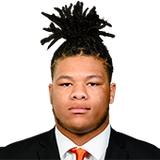
Peter Woods looks the part and has impressive traits, but he didn’t have the season many expected. He still shows good power and leverage against double-teams and flashes quickness on stunts and games.


Oregon
• Jr
• 6’3″
/ 245 lbs
Projected Team
|
PROSPECT RNK
|
POSITION RNK
|
REC
|
REYDS
|
YDS/REC
|
TDS
|
Kenyon Sadiq is a fluid mover who runs like a big wide receiver. He catches naturally away from his body, finds soft spots in coverage and is a dependable target you can count on. He offers big-play ability after the catch and is a solid blocker.

South Carolina
• Jr
• 6’0″
/ 190 lbs
Projected Team
|
PROSPECT RNK
|
POSITION RNK
|
Brandon Cisse is a sticky corner with good hips and change-of-direction. He pattern-matches well, contests throws with strong hands and has the recovery ability when slightly beaten. He should look even better behind the Rams’ pass rush.


Washington
• Jr
• 6’4″
/ 210 lbs
Projected Team
|
PROSPECT RNK
|
POSITION RNK
|
REC
|
REYDS
|
YDS/REC
|
TDS
|
Denzel Boston is a big-bodied possession receiver who can body up defenders and become a contested-catch and red-zone nightmare. He works the middle and sidelines well and had only one drop all season.


Miami (Fla.)
• Sr
• 6’3″
/ 265 lbs
Projected Team
|
PROSPECT RNK
|
POSITION RNK
|
Akheem Mesidor has excellent bend and motor, playing with flawless technique as a pass rusher. He uses his hands and hips to finish and has a great first step off the ball. He lacks ideal measurables, but the film doesn’t lie — he’s an absolute game-wrecker and one of the most NFL-ready rushers in the class.


Oregon
• Sr
• 6’5″
/ 318 lbs
Projected Team
|
PROSPECT RNK
|
POSITION RNK
|
Emmanuel Pregnon is physical at the point with excellent strength and leverage, and he’s also effective as a puller. He can maul defenders and has held up well in pass protection with good hands and a strong anchor. Pregnon put together his best season in his lone year at Oregon.


