More Teens Are Getting Vaccines


August 18, 2025
3 Min read
More adolescents receive vaccines
Cut national trends in infantile vaccination rates, more adolescents are recommended, including for measles and darling
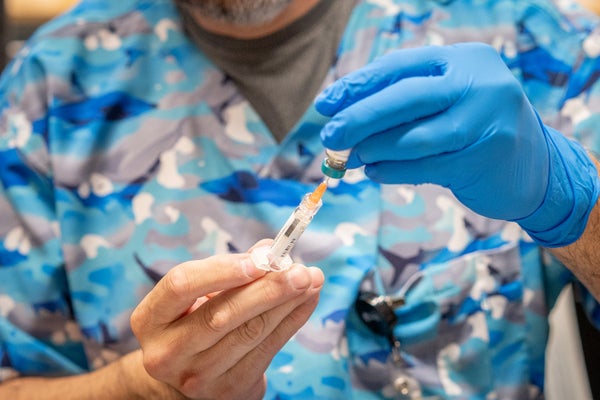
A health worker fills a Ror vaccine syringe in a vaccination clinic put by the Lubbock public health service on March 1, 2025 in Lubbock, Texas.
Jan Sonnenmair / Getty Images
American adolescents rebel.
More adolescents were recommended vaccinations in 2024 than in 2023. This trend is the opposite of what is happening in young children: vaccine rates in the United States continue to fall among children who enter kindergarten. The figures come from the most recent report on the infantile vaccinations of the centers for Disease Control and Prevention.
The rise in adolescents is a victory for public health because the framework of vaccines in the United States is attacked. Robert F. Kennedy, Jr., head of the Ministry of Health and Social Services, has placed anti -live defenders within the CDC advisory committee which makes vaccine recommendations. The federal government has ended subsidies for the development of mRNA vaccines despite the security and success of the cocovable shots. Since January, there have been 32 measles epidemics, largely in children and adolescents who have not obtained photos of measles.
On the support of scientific journalism
If you appreciate this article, plan to support our award -winning journalism by subscription. By buying a subscription, you help to ensure the future of striking stories about discoveries and ideas that shape our world today.
But the new results suggest that communication between providers and parents can lead to greater absorption of vaccines. In 2024, the percentage of adolescents aged 13 to 17 who obtained two doses or more from combined measles, mumps and rubella (MMR) increased from the part in 2023, from 91.3% to 92.6%. The percentage of adolescents who obtained the combined tetanus, diphtheria and whooping vaccine (TDAP) rose from 89% in 2023 to 91.3% last year. And the number of adolescents who obtained at least one dose of four -stretch of meningococcal (MENACWY) shot increased by 88.4% in 2023 to 90.1% in 2024. (The MENACWY vaccine sparkles an immune response to four versions of a bacteria that causes meninger.)
The results were published last Friday in CDCs Weekly ratio of morbidity and mortality. The authors analyzed the data collected from the national survey on the immunization of 2024, a two -phase survey which asked the parents and providers of their children on the use of vaccines.
But not all trends were on the rise. In 2024, for the third consecutive year, the absorption of adolescents of the HPV vaccine – which protects from the human papillomavirus cancer – remained the same. The national average of adolescents who had at least one dose of the vaccine against HPV was stable at 78%, although there was a great variability from one state to another. The researchers reported that in 2024, less than 40% of Mississippi adolescents obtained at least a blow, but almost 80% in the Massachusetts did.
And communication was essential: parents who said they had talked about the vaccine with a supplier were more likely to have adolescents who obtained it. In metropolitan statistical areas (which may include urban, suburban and rural communities), the percentage of adolescents who obtained the vaccine was approximately 18.8 percentage points on average when their supplier recommended that when the supplier did not.
And in addition to the variability between states, there were other differences. In general, urban areas had higher vaccination rates than rural areas and, in some cases, suburban rates. This type of difference has long been the case in the United States, where transportation, insurance coverage and availability of service providers have created large rural-urban disparities in access to health care.
For some of the diseases targeted by vaccines in the CDC vaccination calendar, even the increase in adolescents who gets firing does not mean that the United States is at a level of herd immunity, the moment when the population as a whole is more generally protected against a disease. For example, to reach the immunity of the herd for darling, 92 to 94% of the population must be vaccinated. The vaccination rate for kindergarten children in 2024-2025 was 92.1%. Adolescents were 91.3%, putting the United States just below the lower threshold for the immunity of the herd. In 2024, there were more than 35,000 cases of darling in the United States in 2023, there were about 7,000.


