U.S. attacks Iranian tankers trying to skirt naval blockade : NPR

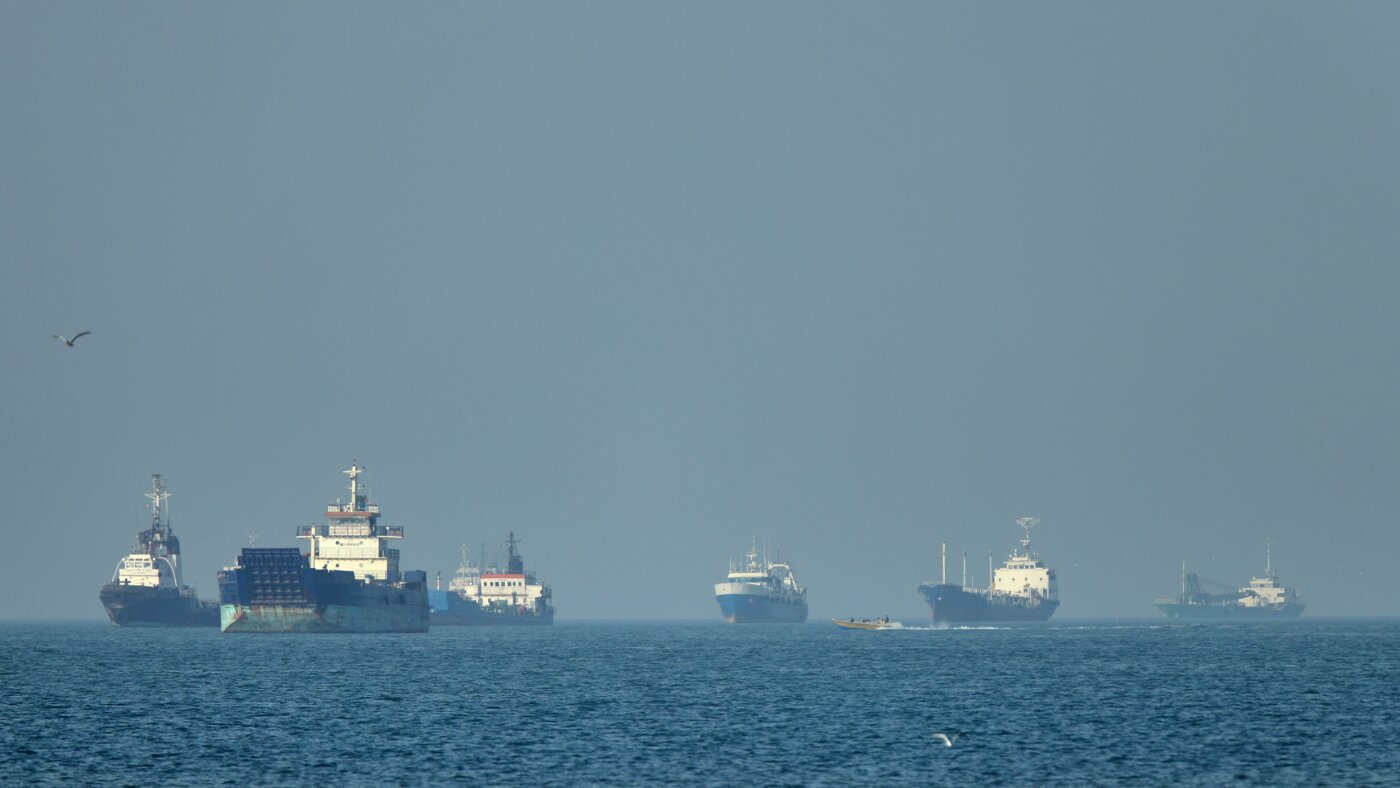

Cargo ships, including bulk carriers and general cargo ships, are anchored offshore as a small motorboat passes in the foreground, in the Strait of Hormuz off the coast of Bandar Abbas, Iran, May 4.
Amirhosein Khorgooi/ISNA via AP
hide caption
toggle caption
Amirhosein Khorgooi/ISNA via AP
DUBAI, United Arab Emirates — The United Arab Emirates said Friday it responded to another barrage of Iranian missiles, hours after the United States said it exchanged fire with Iranian forces in the Strait of Hormuz, in the latest blows to a fragile, month-old ceasefire.
The UAE Defense Ministry said three people were injured after air defenses attacked two ballistic missiles and three drones launched by Iran. It was unclear whether all were successfully intercepted. Authorities asked people to stay away from fallen debris.
The United States said it had foiled attacks on three navy ships and struck Iranian military installations in the strait. Iran has virtually blocked the waterway crucial to global energy supplies since the United States and Israel launched war on Feb. 28, sparking a global surge in fuel prices and roiling global markets.

The U.S. military said Friday its forces fired on and neutralized two more Iranian oil tankers that were trying to break the U.S. blockade of Iranian ports.
U.S. President Donald Trump downplayed the firefight Thursday, calling the U.S. strikes a “love shot” in a phone call with ABC. But he reiterated threats to resume large-scale bombing if Iran does not agree to a deal on reopening the strait and scaling back its nuclear program.
Iran’s Foreign Ministry said the US strikes were a “blatant violation” of the ceasefire.
The violence came as Washington awaited a response from Tehran in negotiations aimed at ending the war. US Secretary of State Marco Rubio told reporters he expects to hear from Iran later on Friday.
“I hope it’s a serious offer,” Rubio told reporters. “Really.”
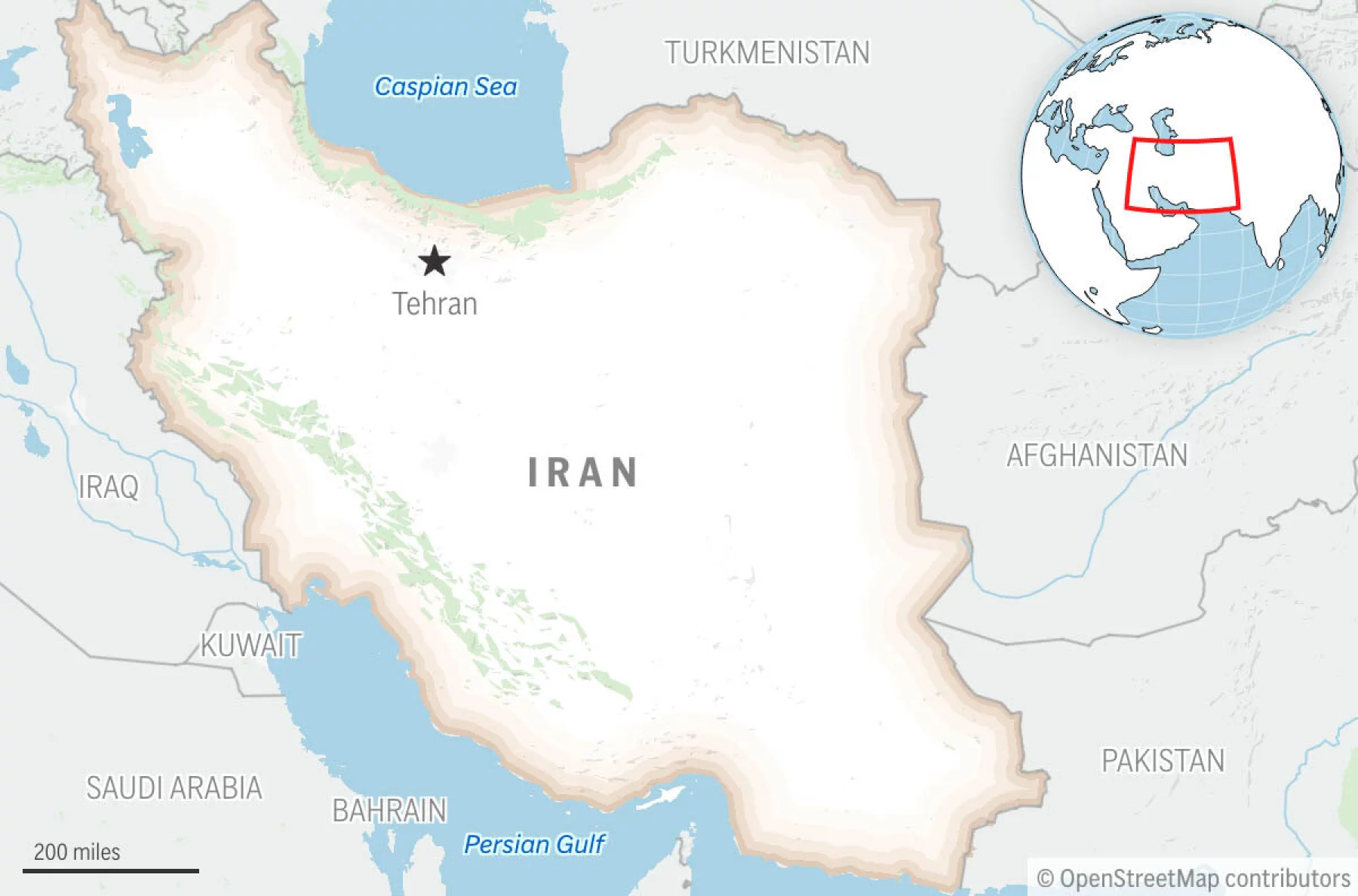
This is a location map of Iran with its capital Tehran.
P.A.
hide caption
toggle caption
P.A.
US says it responded to attack in strait
The US military said it intercepted Iranian attacks on three naval vessels in the Strait of Hormuz on Thursday evening and “targeted Iranian military installations responsible for attacks by US forces.” The US military said none of its ships were hit.
“They are threatening Americans, they are going to explode,” Rubio told reporters Friday.
Iranian state media said the country’s forces exchanged fire with the “enemy” on the island of Qeshm in the strait. It also reported loud noises and continuous defensive fire in western Tehran on Thursday evening.
Iran’s Foreign Ministry issued a statement condemning what it called “hostile” US military action against two Iranian oil tankers near the Iranian port of Jask and the strait, as well as strikes on nearby coastal areas.
Pakistani Prime Minister Shehbaz Sharif said his country was in contact with the United States and Iran “day and night” in a bid to extend the ceasefire and reach a peace deal.
Meanwhile, direct negotiations between Israel and Lebanon are expected to resume next week in Washington, according to a U.S. official who spoke on condition of anonymity to discuss plans for closed-door meetings. The official said the talks would take place on May 14-15.
A theoretical ceasefire between Israel and the Iran-backed Hezbollah militant group has also been repeatedly challenged, including by ongoing fighting in southern Lebanon.
Images show apparent oil slick off Iranian terminal
Satellite images reviewed by The Associated Press show what appears to be an oil spill in the Persian Gulf emanating from the west coast of Kharg Island, Iran’s main crude export terminal.
Images taken Wednesday show the slick covering about 95 square kilometers (36 square miles). Windward AI, a maritime intelligence company, said it first detected the spill in satellite images taken Tuesday and that the slick was spreading southwest with the wind at a speed of about 2 kilometers per hour.
“If the slick continues to drift south, there could also be risks for protected and ecologically sensitive marine areas in the Gulf,” said Nina Noelle, international crisis operations expert at Greenpeace Germany.
The Pentagon declined to say whether the U.S. military was tracking the leak or whether recent strikes had taken place on the Iranian island. According to footage taken earlier this week, the spill occurred before the latest round of US strikes.
US says it is unacceptable for an Iranian agency to control the strait
Rubio said Friday it was “unacceptable” that Iran has a government agency that monitors and taxes ships seeking to pass through the strait.
Lloyd’s List Intelligence, a maritime data company, reported Thursday that Iran had established the Persian Gulf Straits Authority, an agency that “positions itself as the only valid authority to grant permission to ships transiting the strait.”
Iranian efforts to formalize control of the canal have raised new concerns about international shipping, with hundreds of commercial ships stuck in the Persian Gulf and unable to reach the open sea.
“Will the world accept that Iran now controls an international waterway?” Rubio said. “What is the world prepared to do about it?”
Iran has effectively closed the strait, a vital waterway for the transport of oil, gas, fertilizer and other petroleum products, while the United States blocks Iranian ports.
A Chinese crewed tanker was attacked near the strait. China continued to import oil from Iran despite the waterway being effectively closed.
China’s Foreign Ministry expressed concern, saying the tanker was registered in the Marshall Islands with a Chinese crew on board. No casualties have been reported.
An oil tanker that passed through the Strait of Hormuz in mid-April arrived off the coast of South Korea on Friday with 1 million barrels of crude. South Korea, which imported more than 60% of its crude through the strait last year, has capped the prices of gasoline and other petroleum products.


