Mosquitos Carrying West Nile Virus Detected in Massachusetts, Putting Communities at Risk


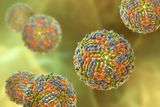
Public health officials have upgraded 10 communities across Massachusetts to a “high-risk” status for West Nile virus. The report also identified a dozen towns as being at moderate risk of the rarer eastern equine encephalitis — also known as EEE — this year.
The areas flagged for risk of the mosquito-borne viruses include Boston. There are no vaccines for either infection.
The upgraded risk comes after a summer where over 150 mosquito samples positive for West Nile virus have been recorded across the state. To date, there have been no human cases reported in 2025.
The Massachusetts Department of Public Health listed Acton, Bedford, Billerica, Boston, Brookline, Carlisle, Chelmsford, Dracut, Lowell, and Newton as high-risk areas for West Nile virus. There were 19 cases of the condition reported in Massachusetts last year.
Read More: Chikungunya Virus Cases Swell in China — Here’s What to Know About the Mosquito-Borne Disease
How Mosquito-Borne Viruses Affect Humans
The mosquitoes transmitting West Nile virus in Massachusetts are from the genus Culex. They spread the infection when they bite humans to drink blood. The disease is variable — most cases are asymptomatic, while roughly a quarter of patients develop a fever.
One in every 200 cases is more severe — if the virus invades the nervous system, it can result in a syndrome that includes seizures and paralysis. This neuroinvasive form has a high mortality rate. There have been 188 cases of this form of the condition reported in 2025 across 33 states. In Massachusetts, there have been eight deaths from West Nile Virus reported between 2014 and 2023.
EEE is rarer than West Nile virus, and only a few cases in humans are reported in the U.S. each year, mainly on the East Coast or the Gulf Coast. It’s also more deadly than West Nile virus — nearly one in three cases of EEE are fatal. Severe cases of EEE also involve neurological symptoms — particularly encephalitis and seizures. The towns reported to be at moderate risk of EEE include Bridgewater, Carver, East Bridgewater, Easton, Halifax, Hanson, Lakeville, Middleboro, Plympton, Raynham, Taunton, and West Bridgewater.
Climate Change Brings Mosquito Threats North
Mosquito-borne illness is increasing across the U.S. Mosquitoes remain active until temperatures drop and frost kills them. As global temperatures rise due to the climate crisis, mosquito season is lasting longer each year. Warmer and wetter climates during the mosquito months will make it easier for the bug to breed in standing water. The country’s epidemiology bodies will also have to reckon with the slow northward march of invasive species of mosquitoes.
The bugs currently spreading disease in New England prefer to chow down on birds rather than humans. However, species like Aedes aegypti and Aedes albopictus, which prefer biting humans and are currently found primarily in the Southeastern U.S., are on the move. They are forecast to reach the West Coast and the Canadian border by 2080. These species can carry West Nile virus and EEE, as well as the exotic diseases Zika, Chikungunya, and Dengue fever.
For now, government advice remains to repel the bugs with sprays, deter them with long clothing, and to avoid them altogether by staying indoors during dawn and dusk when they are most active. But our changing climate may require authorities to innovate and address the growing threat of mosquitoes sooner rather than later.
This article is not offering medical advice and should be used for informational purposes only.
Read More: One Small Genetic Tweak May Stop Mosquitoes from Spreading Malaria
Article Sources
Our writers at Discovermagazine.com use peer-reviewed studies and high-quality sources for our articles, and our editors review for scientific accuracy and editorial standards. Review the sources used below for this article: