Mum describes period pain agony before endometriosis diagnosis


Kirsen O’Sullivan, Windsor

 Bbc
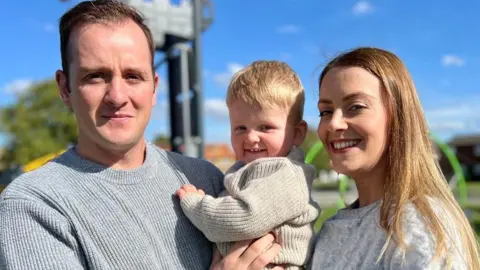
BbcA mother spoke of the fight against severe period pain for two decades before finally being diagnosed with endometriosis.
Reah Steer, 34, of Windsor in Berkshire, described lasting years of agony and prescribing the contraceptive pill, which has only disguised the disease.
The condition prevented him from becoming pregnant, which led her and her husband to undergo IVF treatment.
“Doctors must listen to women suffering from severe period pain,” she said.
Endometriosis means that the tissues, similar to the lining of the uterus, develop elsewhere in the body, including the ovaries, the pelvis, the bladder and the intestine.
It can cause extreme pelvic pain and can make pregnancy difficult.
According to the UK endometriosis caritative association, it affects 1 in 10 women.
Steer said she had first experienced the symptoms when she was a teenager.
“I used to have heavy and painful periods. I should go back from school because of this,” she said.
“I went to the contraceptive pill and it tended to hide a lot of my symptoms.”
She said it was only when she started trying a baby and could not get pregnant that her endometriosis, who had caused a cyst on her ovary, was discovered.
“I had heard it previously, but I did not fully understand it at that time,” she said.
“It was good that he had a name but boring that it prevented us from having a baby.”
“ No more education ”
Ms. Steer and her husband Jono suffered an IVF treatment and finally received the good news they hoped, welcoming their baby son last year.
She said that she still couldn’t understand why it took so long to discover what had caused her pelvic pain.
“Nowadays, it is always shocking for me that we have to go through it,” she said.
“I think we need more education there, starting in schools.
“We must have these discussions with the young generation, so that they understand that it is not normal to have such painful rules that you cannot continue with your daily life.”
Ms. Steer believes that many women are not listened to and prescribe the pill for their pain, instead of health professionals investigating the cause.
She encourages women to be persistent until they listen.
“Doctors must listen to more and not only say” right away, on the pill, everything will be well “,” she said.
“We must have more available treatments, not just the pill or surgery. It’s not good enough.”