N.C. primary in 4th district could be a crystal ball for Democrats : NPR

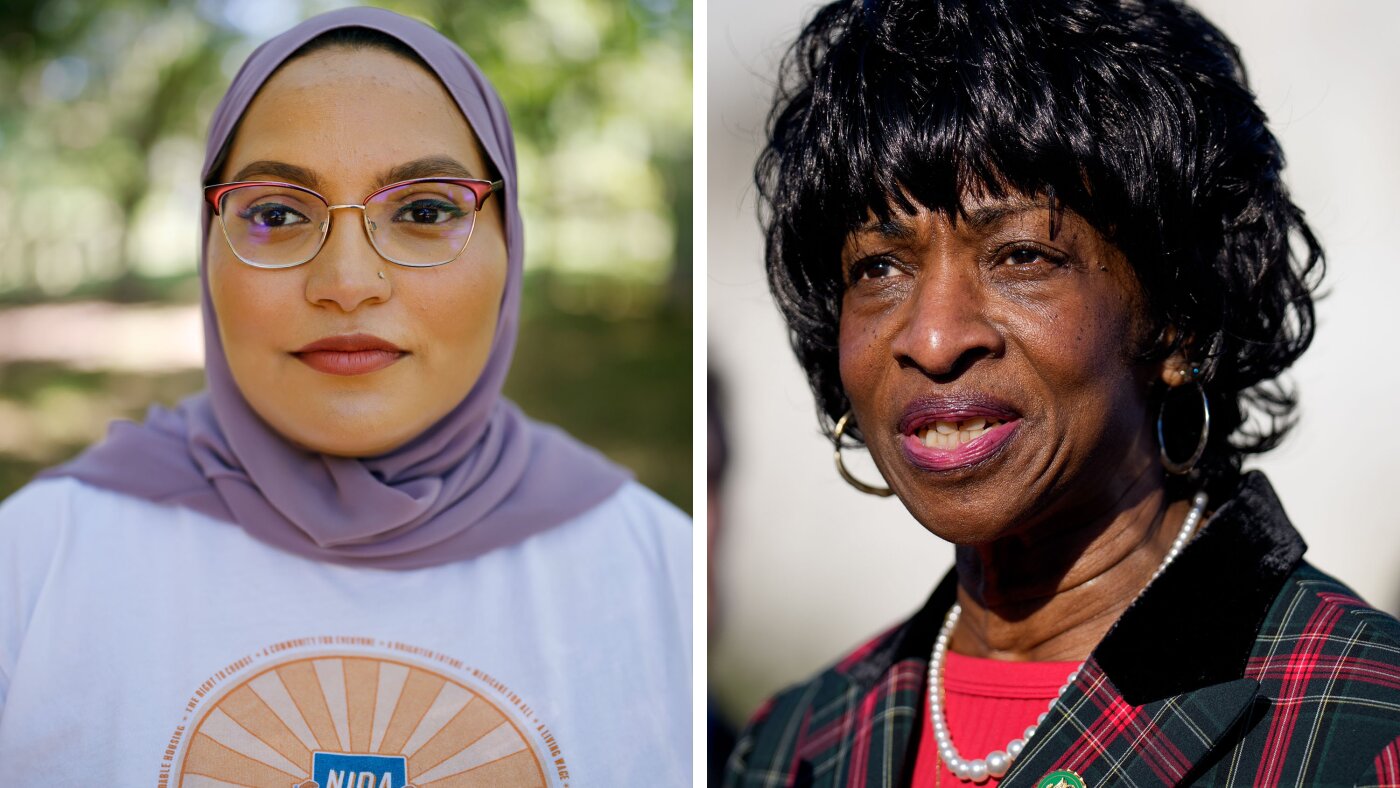

Nida Allam in 2022; Rep. Valerie Foushee (D-NC) in 2025.
Jonathan Drake/Reuters; Andrew Harnik/Getty Images
hide caption
toggle caption
Jonathan Drake/Reuters; Andrew Harnik/Getty Images
Stay informed with our Politics newsletter, sent every week.
DURHAM, N.C. — North Carolina voters will head to the polls Tuesday for one of the first statewide primaries of the year.
Since the election of President Trump in 2024, when Democratic primary voters chose the type of candidate they want to represent in the second half of Trump’s term, there have been a handful of upset victories.

A similar contest is playing out between an incumbent president and a challenger with more progressive views in North Carolina’s Fourth Congressional District. Democratic voters in the Raleigh-Durham district will choose between incumbent Rep. Valerie Foushee or Durham County Commissioner Nida Allam.
Foushee is seeking a third term, but Allam is backed by independent Vermont Sen. Bernie Sanders and several other national groups who want to replace Foushee with a younger, more outspoken and more left-leaning leader. Allam says Democrats need to take stronger positions to oppose immigration controls and Israel’s war in Gaza.
The race has attracted outside spending from PACs and donors across the country, seeking to shape the Democratic caucus in Congress. The March 3 primary comes weeks after a similar special election primary in New Jersey, where activist Analilia Mejia won against former Rep. Tom Malinowski for an open seat.
Both Mejia and Allam worked on Sen. Bernie Sanders’ presidential campaigns and have the support of the Sanders-aligned Justice Democrats group in their primaries. Sanders recently joined Allam at a rally in Durham.
“Nida is a proven fighter who has the courage to take on corporate power, to take on billionaires, to take on billionaire-funded Super PACs like crypto and AIPAC and all these special interest groups that think they can buy American democracy,” Sanders said at the event.
Like Mejia, Allam’s campaign benefits from outside advertising spending. But unlike Mejia, Allam faces a two-term incumbent backed by dozens of Democratic elected officials, including Gov. Josh Stein.
An Allam victory could signal an even bigger shift in the Democratic primary electorate this year — a strong sign of dissatisfaction with the party’s current leadership in Congress.
After attending Sanders’ rally in Durham, Kyle Barber said Allam’s campaign energized him for politics.
“It’s been so long since I’ve been this excited to vote,” he said. “I haven’t been this excited to vote since 2020, and that was just because it was the first year I could vote. I’m so tired of voting for the lesser of two evils.”
But many Democrats have no problem with Foushee’s record and are reluctant to change their congressional leader. “I love Nida personally,” Melissa McCullough said. “But Valerie Foushee has credibility among her peers, good committee assignments…and she brings in federal money. Now is not the time to send in someone who has to start from scratch.”

The Fourth District leans heavily to the left, so whoever wins the primary is virtually guaranteed victory in November.
Allam argues that Foushee has not been forceful enough to oppose the Trump administration’s immigration enforcement actions in North Carolina, Minnesota and elsewhere. When ICE and Border Patrol agents arrived in the state in November, Allam was among the protesters who filmed and yelled at them.
Foushee says she sponsored and supported legislation to hold ICE accountable for what she calls a “profound abuse of power.” Allam wants to abolish ICE completely, while Foushee wants to defund the agency and push for major reforms to federal immigration enforcement.
External money seeks to influence
Gaza is also a major issue in the race. Allam is North Carolina’s first elected Muslim woman, and she says Foushee has been too supportive of Israel. The congresswoman has taken trips to Israel funded by the bipartisan advocacy group AIPAC, and the pro-Israel group has donated to her past campaigns. But last year, Foushee said she wouldn’t accept any of their contributions this time around.
Last August, Foushee co-sponsored the “Block the Bombs Act” which would ban the sale of offensive weapons to Israel.
Meanwhile, a new PAC called “American Priorities” has so far invested more than $500,000 in the race to support Allam. American Priorities said in a press release that this is the first of a dozen primaries it is involved in, and that one of its key issues is cutting military aid to Israel. Another Allam supporter is Leaders We Deserve, a group led by gun control advocate David Hogg. He spent more than $270,000 on pro-Allam advertising.

The massive data centers needed to make AI work have also become a controversy in the race, as they have across the country. Allam calls for a national moratorium on new building construction. Foushee said she thinks it’s best to leave decisions to local leaders in communities where data centers are proposed.
A new group linked to artificial intelligence company Anthropic is investing more than $1 million behind Foushee. She co-chairs a committee on AI for House Democrats.
Approvals could also play a role in the outcome. Dozens of North Carolina Democratic elected officials lined up to support Foushee, including Gov. Josh Stein and former Gov. Roy Cooper, as well as the state’s other Democrats in Congress and leaders of the Democratic caucuses in the Legislature.
Establishment figures like Cooper are likely looking toward the general election, where Republicans will likely try to tie Allam to Cooper’s U.S. Senate campaign if she wins the primary.


:max_bytes(150000):strip_icc()/Health-GettyImages-2230781421-bc1a65c8a3af4701a8b1b9e3658e9fab.jpg?w=390&resize=390,220&ssl=1 "4 Best Foods for Pancreatitis—Plus Foods To Avoid")
