Smuggler who called migrants ‘chickens’ jailed

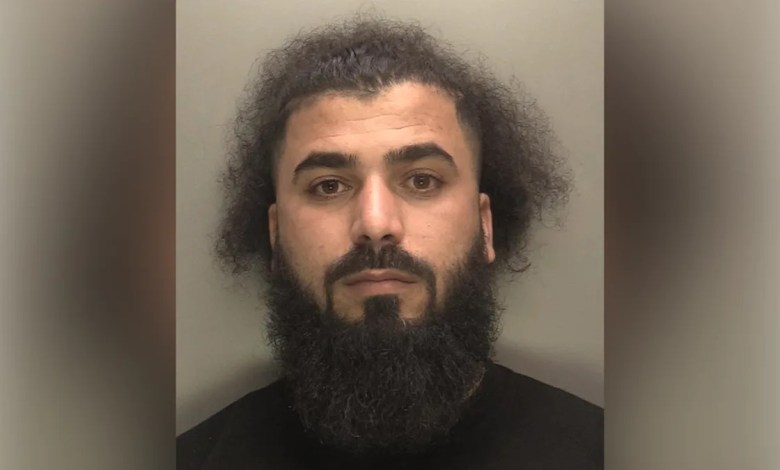
A smuggler who referred to migrants as “chickens” has been jailed for just over 10 years for his role in organizing illegal crossings to the UK.
Ramal Briem worked with other gang members to transport people, including six who were brought to Burton upon Trent in Staffordshire on the back of a truck in March 2024.
The 33-year-old Iraqi national arrived in the UK illegally by small boat in 2020, after which he applied for asylum. He became involved in the people smuggling network following financial difficulties, the National Crime Agency said.
Briem pleaded guilty to conspiracy to facilitate illegal immigration at Wolverhampton Crown Court in October 2024.
Judge Andrew Lockhart KC, who sentenced him earlier at Worcester Crown Court, suggested that Briem, who lived in Wolverhampton, be deported once his sentence was completed.
The judge said it was difficult to imagine “a more serious example of a human trafficker.”
“You were part of an organized crime group that attracted significant numbers of immigrants from around the world,” he said.
“The victims found themselves threatened, abused and put at enormous risk… you and the people you work with would be preyed upon.” »

Briem and his associates were described in court as ‘preying’ on their victims [NCA]
The main evidence in the case came from seized cell phones, with messages between Briem and another gang member known as “Kevin”.
They spoke of the movements of people they described as “chickens” waiting for illegal crossings in the north of France.
“Boat” emoji used in smugglers’ texts
In one exchange, they discussed “chickens” as costing £1,500 and that Kevin had “30 chickens in Dunkirk”.
In another conversation, Briem said that if he received “20 chickens, two of them were free.”
Prosecutor Cathlyn Orchard told the court Briem also used a boat emoji in the messages.
“Kevin” was one of four members of the criminal group arrested by the National Crime Agency and is subject to extradition proceedings as he is wanted in France. The other three were charged in the United Kingdom.
Briem claimed “Kevin” had shown interest in how he came to the UK because he wanted to bring relatives from Germany.
The court heard that Briem admitted collecting £16,000 from “Kevin” but claimed it was money for cigarettes and not people.

Briem was arrested at his home in Wolverhampton in July 2024 [NCA]
Orchard told the court the plot aimed to bring Vietnamese nationals from Romania to the UK and transfer them to migrant hotels run by the Home Office. They would then blend into the local Vietnamese community.
The gang was paid by the migrants themselves, but part of the profits would be donated to other organized crime groups, Orchard said.
Staffordshire Police, who dealt with the incident in Burton, arrested one person, but six men fled from the back of the truck, registered in the Netherlands, the court heard.
It is possible that the truck driver was also a migrant and had fled, the prosecutor’s office said.
Briem was arrested at his home in Wolverhampton in July 2024.
Searches of property at Trinity Court on Crawford Road, Wolverhampton, showed Briem had been in contact with others involved in transporting illegal migrants.
A register found by police contained information on around 1,000 Vietnamese nationals.
Around 250 of them had thousands of pounds to their name.
The investigation showed that Briem’s phone contacted a French number, which was previously located in France.
This same number attempted to contact Briem when the Dutch-registered truck involved in the Staffordshire incident was intercepted.
“Contempt for human life”
NCA senior investigator Saju Sasikumar said: “The language used by Ramal Briem to describe people illustrates his complete disregard for human life.
“For him, migrants were nothing more than a commodity to be exchanged,” he added.
Sasikumar said that while the migrants may have wanted to come to the UK to establish a better life, the fact that they chose smugglers like Briem put them at “much greater risk”.
Border Security and Asylum Minister Alex Norris said the Government was “crackling down on vile people smugglers who abuse Britain’s borders”.
“This Government is strengthening law enforcement powers so officers can intercept, detain and arrest people smugglers more quickly and restore order and control to our borders.”
Follow BBC Wolverhampton and Black Country on BBC Sounds, Facebook, X And Instagram.
Learn more about this story
Related web links


