NASA, Army National Guard Partner on Flight Training for Moon Landing


By Corinne Beckinger
When Artemis astronauts land on the southern pole of the moon in a commercial human landing system, they will meet a landscape marked with deep craters, sloping connection ridges and severe lighting conditions. The lack of contrast of the moon, combined with its hilly terrain, will also make a challenge, which makes it difficult for astronauts to overcome visual illusions on the lunar surface.
In the mountains of Northern Colorado, NASA and the National Guard of the American Army use military helicopters to develop a fundamental Lunar flight training course to help astronauts practice flights and landing procedures for the Moon.
For decades, the military helicopter pilots have trained in the Haats (aviation site for the National Guard of the High Altitude Army) in Gypsum, Colorado. In 2021, NASA and the Colorado Army National Guard began working together to develop a course specifically for the next generation of lunar explorers.
This specific course to NASA should be finalized in August 2025, marking an important step for training efforts at the Artemis crew.
“NASA uses a three -part approach with a movement -based simulation, an analog training in the lunar landing in flight and a lunar simulation in flight to build its fundamental training for the landings of Artemis Moon,” said NASA astronaut, Doug Wheelock, who helped coordinate the training program. “Helicopters at 10,000 feet upper or higher are not really effective in the thin air, forcing us to operate with very thin power margins similar to Apollo astronauts to manage energy and momentum to land safely. Lunar environment. »»
NASA human landing systems which will safely transport astronauts to and from the surface of the moon will be provided by SpaceX and Blue Origin.
The NASA Artemis III mission will be based on previous test flights and will add new capacities, including the Human SpaceX Sportship landing system and advanced space combinations, to send the first astronauts to explore the lunar South Pole and prepare humanity to go to Mars.
While each supplier of the industry is responsible for the training of artemis astronauts on its specific, NASA establishes fundamental training to help prepare astronauts for crew flights.
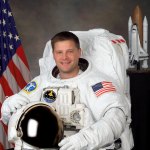
Doug Wheelock
Nasa astronaut
“In recent years, NASA and the National Army Guard have worked closely to assess training procedures and landing areas, incorporating accounts from Apollo astronauts,” said Wheelock. “During the flight training in Haats, astronauts can live visual illusions,, Communication with cockpit and degraded visibility that they may experience to navigate in their landing area near the southern pole of Lunar. Flight training opportunities like this are essential for the success of the mission and the safety of crews. »»
Associated with qualified instructors of the National Army Guard, astronauts are headed for mountain peaks and valleys in a range of planes, including Luh-72 Lakotas, CH-47 Chinooks and UH-60 Black Hawks.
While an astronaut is piloting the plane, an astronaut on the back tracks down the landing area, marking key landmarks, identifying potential dangers and helping to follow the flight trajectory. Throughout the course of a week, landing areas and situations become more difficult, allowing astronauts to experience the team’s dynamics and practicing the communication skills they will need to land on the moon.
“Our full -time colorado army National Guard pilots have thousands of flight hours that sail in the rocky mountains at altitudes ranging from 6,500 to 14,200 feet, and we reach new peaks by providing realistic and relevant training with NASA for Artemis,” said the first sergeant Joshua Smith of the Haats program. “Our pilots of the National Guard of the Colorado Army may not fly around the Moon, but we carry our motto, of Monitbus AD Astra – Stars mountains – With pride. “”
- On the southern pole of the moon, the sun is never more than 1.5 degrees above or below the horizon. With the sun at such a low angle and with only a thin exosphere, the shadows are austere and astronauts can have trouble determining the distances and heights.
- The atmosphere of the moon is extremely thin, with few particles, and is called exosphere.
- The exosphere of the moon is slim enough to shine in the sun, which was observed by the spaceship and some of Apollo’s astronauts.
- The surface of the moon is difficult to land. There are inactive volcanoes, limits, large basins, craters and cracks in the crust of the moon, caused by earthly gravity pulling on the moon.
- Moon dust can also mask the view from the windows of a commercial human landing system and affect sensors that relay important information, such as altitude and speed, to astronauts.
Thanks to the Artemis campaign, NASA will send astronauts to explore the moon for scientific discovery, economic advantages and to build the bases of the first missions equipped with Mars – for the benefit of all.
For more information on Artemis Visit:
https://www.nasa.gov/artemis


.jpg.png?w=390&resize=390,220&ssl=1 "Your Weekly Horoscope: January 25 to 31, 2026")
:max_bytes(150000):strip_icc()/Health-GettyImages-2246731170-90b26388531248b38aec8a04a8fb4242.jpg?w=390&resize=390,220&ssl=1 "The Best Time To Eat Dates for Energy and Digestion")
