NASA shuffles Artemis program for a faster return to the moon : NPR

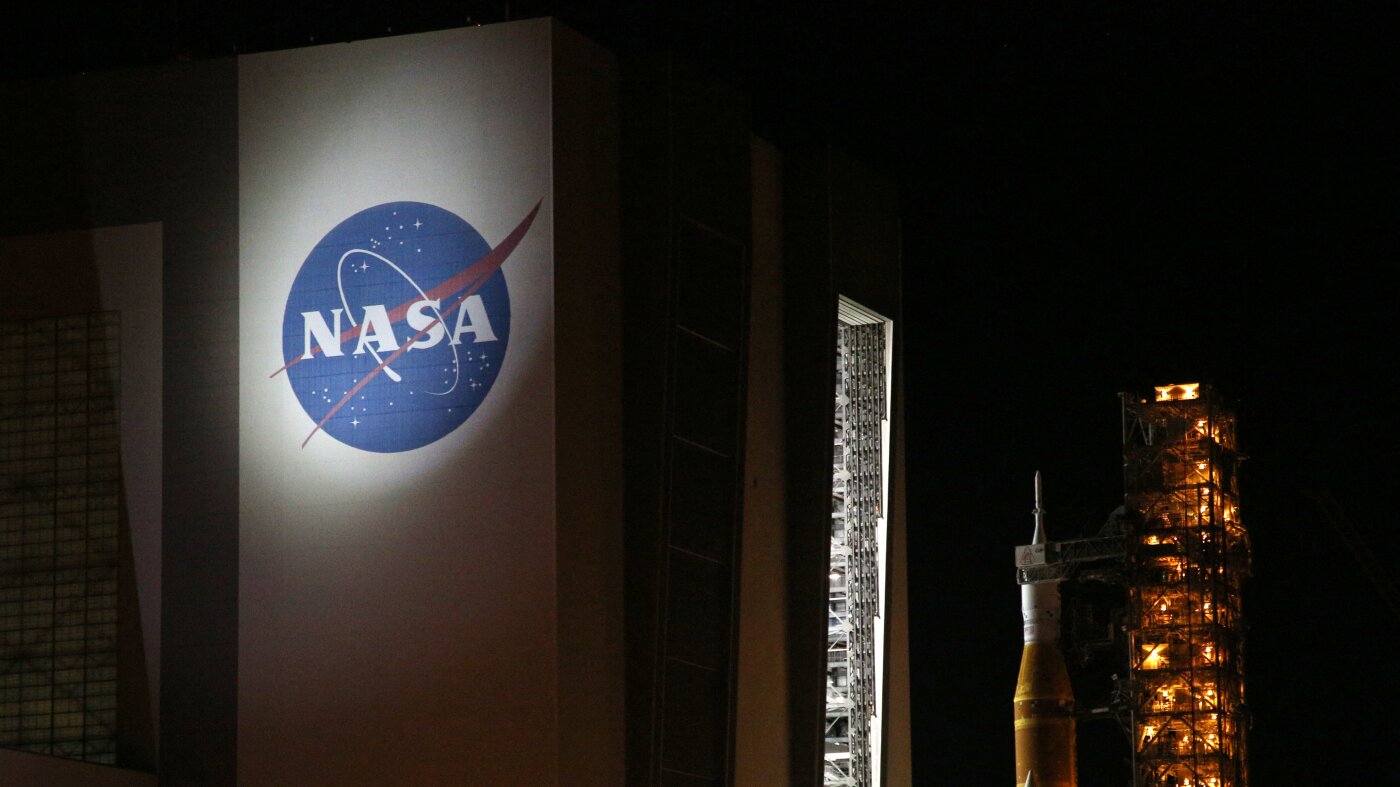

The mobile launcher containing the Artemis II Space Launch System rocket and the Orion spacecraft arrives at the Vehicle Assembly Building after a rollback that lasted more than ten hours at the Kennedy Space Center in Cape Canaveral, Florida, February 25, 2026. NASA teams detected problems with the helium flow and removed the rocket from the launch pad.
Gregg Newton/AFP via Getty Images
hide caption
toggle caption
Gregg Newton/AFP via Getty Images
ORLANDO, Fla. — NASA’s plan to return humans to the Moon is changing course.

The space agency has charted a new path for its Artemis lunar mission, designed to return humans to the Moon using the SLS rocket and NASA’s Orion spacecraft for the first time since the last Apollo lunar mission in 1972.
The previous Artemis program brought humans to the surface of the moon after three missions – with additional trips planned afterward.
This process was already underway. NASA’s Artemis I mission launched in November 2022, sending an uncrewed Orion space capsule on a round trip around the Moon. A crewed Artemis II flight is expected to launch a crew of four astronauts as early as April. The next mission was planned to take humans to the lunar surface.
“This is just not the right way to go,” NASA Administrator Jared Isaacman said Friday at a news conference at the Kennedy Space Center in Florida.
He said the time between the Artemis I and II missions – more than three years – partly led to his decision. Artemis II remains grounded at Kennedy Space Center due to a problem with the SLS rocket’s helium pressurization system. There was also a leak of liquid hydrogen, which serves as a propellant.
Artemis I experienced the same issues before launch.
“When you’re experiencing the same issues between launches, you probably need to take a hard look at your resolution process,” Isaacman said.

NASA Administrator Jared Isaacman speaks during a news conference Friday to discuss the Artemis II mission at the Kennedy Space Center in Cape Canaveral, Florida. NASA has announced that it will revise its Artemis lunar program, which has suffered numerous delays in recent years, to ensure that Americans can return to the surface of the Moon by 2028.
Miguel J. Rodriguez Carrillo/AFP via Getty Images
hide caption
toggle caption
Miguel J. Rodriguez Carrillo/AFP via Getty Images
To accelerate the launch schedule, NASA will now keep the Artemis III mission closer to home. It will launch into space and remain in Earth’s orbit – not that of the Moon – and train to rendezvous with the program’s lunar landing system.
Artemis IV and V would then take astronauts to the surface of the Moon, using lunar landers designed and developed by commercial space companies SpaceX and Blue Origin.
“It’s not about slowing the momentum. It’s about increasing it, making sure we’re focused on the right things in terms of program execution,” said NASA Associate Administrator Amit Kshatriya.
The new approach is similar to the architecture of the Apollo mission, which successfully landed the first astronauts on the Moon in 1969.
“No one at NASA has forgotten their history books,” Issacman said. “They knew how to do this. They’ve had plans like this for a long time now. We’re putting them into practice.”
Isaacman wants Artemis mission launches to take place every ten months. According to NASA, the average time between Apollo launches was five months. At times, shuttle missions took place almost every three months.
To do this, NASA is standardizing the design of its SLS rocket, limiting changes to its upper stage starting in 2028. Isaacman said NASA plans to increase its workforce and shift contractors to federal workers. And the agency is asking SpaceX and Blue Origin to accelerate the development of their lunar landers.
As Isaacman charts a new path for the agency’s lunar missions, its next Artemis mission remains delayed. The rocket and space capsule were returned to the Vehicle Assembly Building this week as engineers work to resolve the helium problem.
If all goes well, NASA could attempt a launch as early as April 1, but it has not officially announced a target date.


