NASA’s Jared Isaacman on “Face the Nation with Margaret Brennan,” April 5, 2026

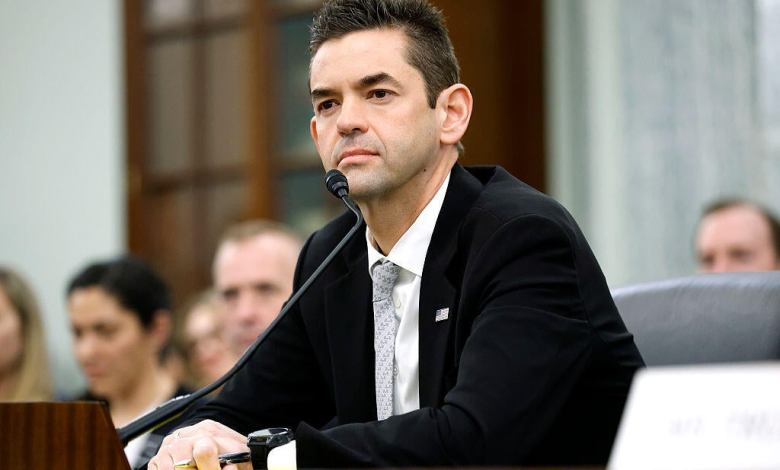
The following is the full transcript of an interview with NASA Administrator Jared Isaacman that aired on “Face the Nation with Margaret Brennan” on April 5, 2026, moderated this week by Ed O’Keefe, senior White House political correspondent.
ED O’KEEFE: This morning, the Artemis II crew is closer than ever to the moon. Here’s a look at the exterior of the Orion capsule this morning. The four astronauts inside are preparing for a six-hour flight around the far side of the Moon tomorrow. For an update, we now turn to NASA Administrator Jared Isaacman, who is with Mission Control in Houston. Administrator, thank you very much for being here with us. The four astronauts on board are now approximately halfway through their mission. What do you think is the most critical moment in the next 24 to 48 hours?
JARED ISAACMAN, NASA ADMINISTRATOR: Well, I would say, and first of all hello, Happy Easter, Ed. The main objective of this phase of the mission is to continue to collect data from the ECLSS system, the life support system of the Orion spacecraft. This is the first time we have had humans aboard the Orion spacecraft. We want to collect as much data as possible for this. Of course, there are various scientific experiments, there are lunar observations, but learning as much as possible about Orion is critically important, because Artemis III is a year away. That’s where we’re going to test the same spacecraft with our lunar landers, followed in 2028 by Artemis IV, where we’re going to use this spacecraft transfer crew to the landers and put American astronauts back on the surface of the moon.
ED O’KEEFE: You make a good point. This is a test mission, and it tests as much the ship they’re in as what they’re looking for, but they’re going to have to spend some time on Monday, mostly looking out windows and looking for parts of the moon that we essentially haven’t really seen before. What are they specifically looking for?
ISAACMAN: Well, I have to say that after a 250,000 mile journey from Earth to the far side of the Moon, it would be quite difficult to keep them away from those windows, but they
ED O’KEEFE: Absolutely…
ISAACMAN: – I absolutely have observation responsibilities on this subject. They have a series of different cameras. They will definitely get data from it. They actually had the opportunity for three and a half years to train for this mission, to work with our scientists on the information they would most like to gather about the far side of the Moon. But all of this comes together to inform later missions like Artemis III, but especially now Artemis IV, where we’re actually going to bring these astronauts back to the surface.
ED O’KEEFE: Yes, to your point, you want to do one and maybe two missions to the moon in just two years, NASA has hired SpaceX and Blue Origin to build the lunar landers that will bring astronauts to the surface of the moon. What are you doing to make sure that at least one of these two companies will be ready to do this?
ISAACMAN: Well, I’ll tell you, we’ve done a lot of different things over the last couple of months, right? I mean, President Trump gave me a national space policy that called for America to return to the Moon frequently, to establish a lasting presence, to build the moon base and do other exciting things, like nuclear power and propulsion. And we got $10 billion in resources from the One Big, Beautiful Bill, the Working Families Tax Cut Act. Now we’re actually going to work. We bring in NASA experts and we integrate them throughout the supply chain, every prime contractor, every subcontractor, every component on the critical path, from the rocket itself to the landers to the suits that the astronauts will have to wear on the surface of the moon. And we’re getting results, we’re not going to be passive anymore. We’re not going to let budgets – you know, go over budget or fall behind schedule, not when the stakes are so high when it comes to getting America back to the Moon. So we’re getting results, and that certainly includes lunar landers.
ED O’KEEFE: Quickly, how might a proposed budget cut of more than 20% affect these plans?
ISAACMAN: Yes, so I certainly support President Trump and his 2027 budget request. Look, we have 20 to 26 votes. We have $10 billion in additional funding from President Trump’s signature legislation, the Working Families Tax Cuts Act. I mean, this is the largest additional investment, you know, in NASA since the Kennedy era. These resources are the only reason we can ramp up production to go to the Moon, add a mission in 2027 which is Artemis III, build the lunar base and do all the other things, like launch the first nuclear-powered interplanetary spacecraft in 2028 which will pass beyond Mars, release a bunch of helicopters and a whole bunch of other science missions. I think the American public and taxpayers should judge NASA based on its results, not how quickly we can spend money each year.
ED O’KEEFE: In 20 seconds or less as they pass to the far side of the moon tomorrow for about 40 minutes. What are you going to think about while the astronauts do this?
ISAACMAN: Well, I have to tell you, people ask me about, you know, the loss of communication as we go around the moon. This is something we are very accustomed to in space mission control. As you said, astronauts are used to this when they go through their training. So less on the loss of communication on the far side of the Moon. I will always think about the vehicle’s life support systems, as this is a testing mission. But I tell you, I’m mainly thinking about the thermal protection systems, and the moment when these astronauts will be parachuted safely into the water so that we can bring them back to their families.
ED O’KEEFE: Administrator Jared Isaacman in Houston, thank you very much for joining us this Easter Sunday. We appreciate it. And that’s it for us today. Thanks for watching, Margaret, will be back next Sunday until the end for Face the Nation. My name is Ed O’Keefe.
Lawmakers react to White House’s massive defense spending proposal
FBI Arrests Suspected Unabomber in Montana (1996)
Former CIA Director David Petraeus hails Ukraine’s ‘extraordinary innovation’ in war against Russia


