NASA’s Mars Sample Return is dead, leaving China to retrieve signs of life from the Red Planet


NASA’s Mars Sample Return program has been effectively canceled, meaning the best evidence of life on Mars could be trapped in rock samples that NASA no longer has the budget to collect.
Monday January 15, the US Senate approved a spending bill it reverses the Trump administration’s decision to cut federal science spending in half and cut NASA’s budget by nearly a quarter.
“The agreement does not support the existing Mars Sample Return (MSR) program,” the lawmakers wrote in an accompanying statement. report published on January 6.
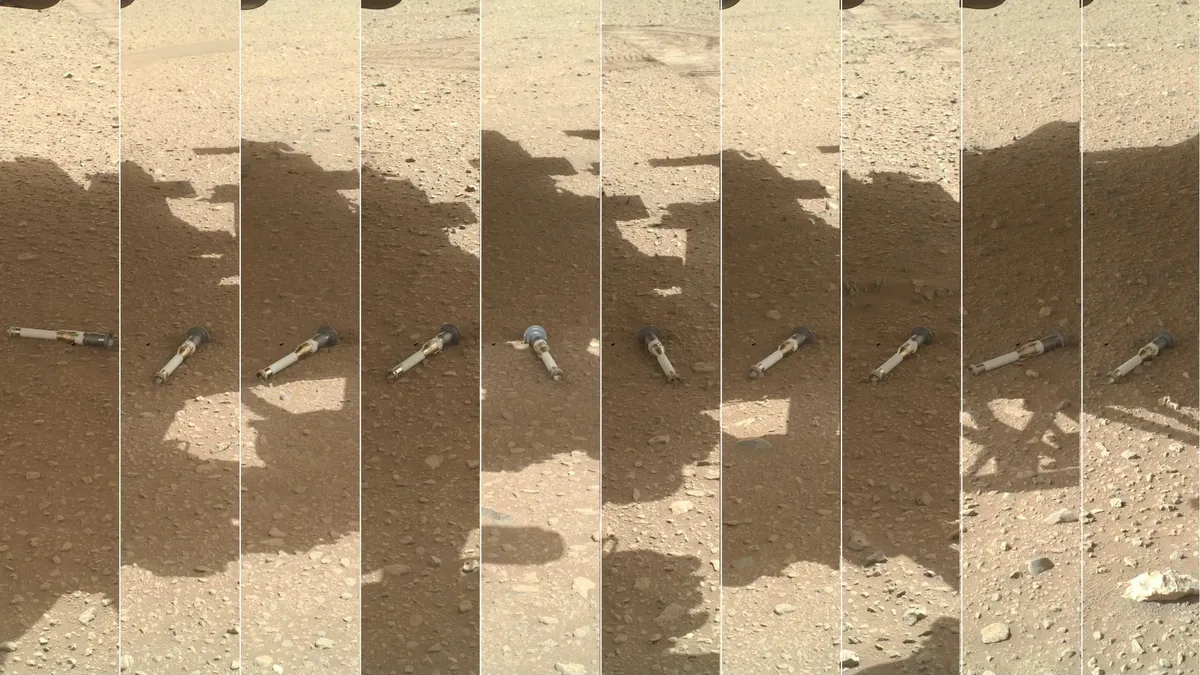
There’s no guarantee that life ever existed on Mars, but if it did, then the Perseverance rover might already have proof. That makes the new bill a blow to those hoping to examine the transportation of more than 30 geological samples from Perseverance, which includes a sample described by NASA as “the clearest sign of life“never found on Mars.
But bringing Mars samples back to Earth was always going to be an expensive endeavor, and the MRS program was riddled with delays and mounting costs. In January 2025, an independent review committee calculated that the price could reach $11 billion, with samples not expected on Earth until 2040.
In a major overhaul of the programNASA announced that it would pursue two different strategies to retrieve the samples: a proven landing system that deployed a rocket-propelled aerial crane for a total cost estimated between $6.6 and $7.7 billion, and a commercial option priced between $5.8 and $7.1 billion. NASA planned to announce a decision between these options in the second half of 2026.
Yet even though the Senate’s decision ostensibly supports the The White House’s attempt to kill the programthe funding bill could leave NASA open to restart the MSR. The bill, which recognizes that technologies developed under the MSR program were critical to the success of future space missions and human exploration of the Moon and Mars, allocates $110 million to the Mars Future Missions program, including existing MSR efforts for “radar, spectroscopy, entry, descent and landing systems, and translational precursor technologies.”
In other words, there is funding for some of the technologies the program was working to develop, while remaining well below the total estimated cost of the mission. The $110 million allocation nevertheless gives hope for the future of sample returns, according to The Planetary Societywho campaigned against proposed deeper cuts to NASA’s science program.
The new bill promises $24.4 billion to NASA, $7.25 billion of which will be allocated to direct the space agency’s science missions. This means that Congress has reduced the science portion of NASA’s budget by only 1 percent from last year – a significantly more modest reduction than the 47% off proposed by the Trump administration.
Lawmakers also committed funds to other NASA science projects as part of the bill. The agreement provides $500 million for Dragonfly mission to Saturn’s moon Titan, $208 million for assets James Webb Space Telescope and $300 million for the recently completed project Nancy Grace Roman Space Telescopewhich is intended to hunt alien worlds and search for the true nature of dark matter when it launches this fall.
The funding bill now awaits President Trump’s signature to become law.
If the United States abandons its dream of repatriating samples from Mars, it will leave China. without competition. China’s Tianwen-3 sample return mission aims to collect fewer samples from a more accessible and less promising site than where Perseverance searched for potential signs of life. However, the launch of the Tianwen-3 mission is planned for 2028 and the return of the rocks in 2031. If the return of the samples is a race, then China could be about to win.
“It is difficult to understand how the cancellation of the MSR is anything other than an admission that returning samples from Mars is too difficult for the United States,” Victoria Hamiltonleading space scientist at the Southwest Research Institute and chair of the Mars Exploration Program Analysis Group (MEPAG), told Live Science’s sister site Espace.com on January 12. “How can we hope to succeed in a project an order of magnitude more ambitious and more expensive than the Moon to Mars program, where human lives are at stake?”