I don’t trust my Apple Watch’s Sleep Score, and neither should you


During its iPhone 17 launch event, Apple announced a new watchOS 26 feature called Sleep Score. As the name suggests, the tool assesses your sleep quality based on several factors, distilling the result into a simple number.
I was initially excited to try Sleep Score because the company has made such a big deal out of it, making it, in effect, a headliner in the key segment. But after a month of active use, it became clear to me that Sleep Score is essentially the same old Apple Watch sleep tracker with a new coat of paint. It does not collect any new sleep data or analyze other relevant health metrics in depth.
But the Sleep Score can be recorded. Here’s what Apple needs to do to really elevate it.
How Sleep Score Works
Before pointing out Sleep Score’s flaws, let’s take a closer, objective look at how it works. To get started, you’ll need an Apple Watch with sleep monitoring enabled or a similar third-party tracker that collects the same types of data. Once you update your iPhone to iOS 26, you will be able to check your sleep score in the built-in Apple Health app.
Sleep Score is a 100-point system that takes into account three main elements. The duration of your sleep, the regularity of your bedtime and your sleep interruptions count for 50, 30 and 20 points respectively.
To get the 50 points in the duration factor, it seems you need to get at least 8 hours of sleep in any given night. Meanwhile, the rating for bedtime consistency depends on whether you slept around the same time each night. Finally, you can earn 20 points for sleep interruptions if you don’t wake up for extended periods at night. Although you probably won’t get full marks every night, it is possible to claim all 100 points, as I have done several times.
Since Sleep Score doesn’t collect any new measurements, you can actually check scores from previous months, assuming the sleep tracking feature is turned on. This only proves that Sleep Score is just a new way of displaying existing data and doesn’t do much else.
Mahmoud Itani / Foundry
The missing ingredients
I was hoping for a significant upgrade to the classic sleep tracking feature, but Sleep Score is, at best, a UI overhaul with a note attached. We have long been able to check the duration, timing and interruptions of nighttime sleep. While assigning a score can reflect the consistency of a person’s sleep habits, the number itself can be a bit misleading.
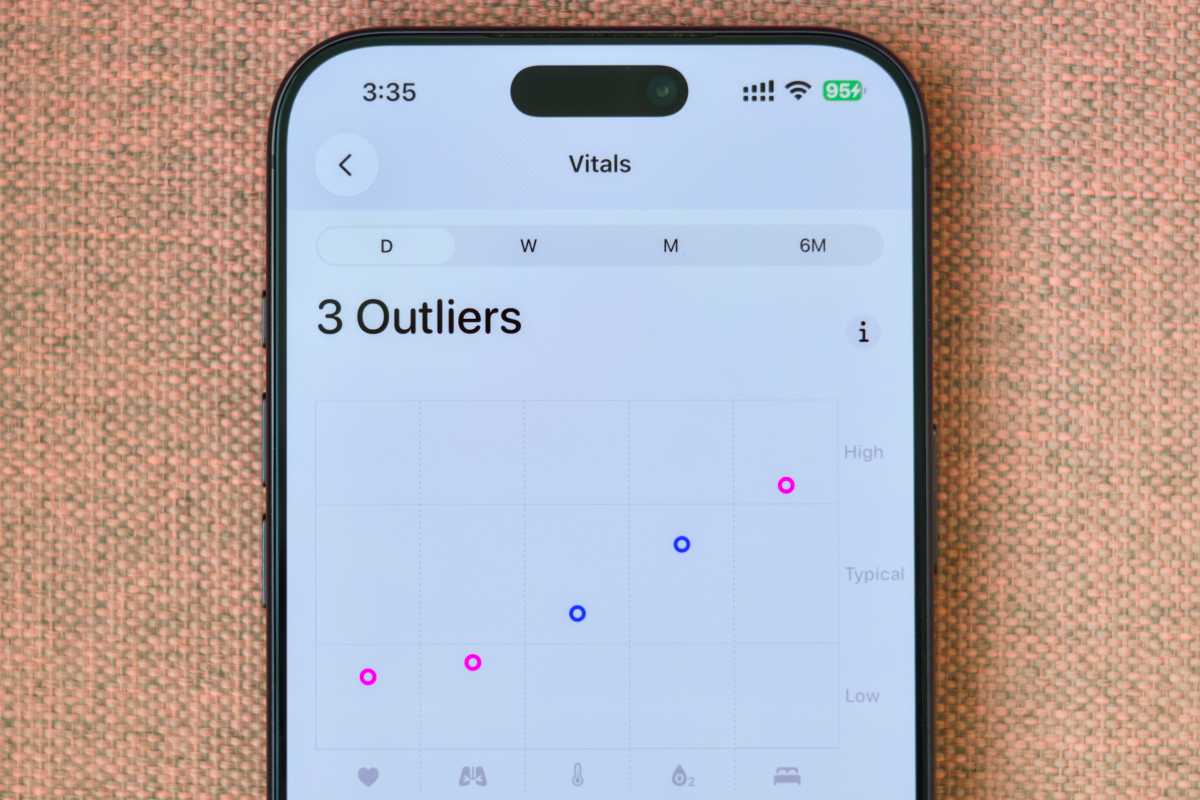
Earning 100 points doesn’t necessarily equate to a perfect, or even good, night’s sleep. For example, if you’re sick and taking painkillers, you could realistically get full marks, even if you wake up exhausted and have outliers in the Vitals section of the Health app. Sleep Score does not take into account your resting heart rate or heart rate variability, which can be good indicators of sleep quality and overall health.
Likewise, it completely ignores recorded workouts from previous days and calories burned, even though they could impact how well a user sleeps and feels the next morning. The same could be said about recorded respiratory rate, wrist temperature, and blood oxygen levels, which Sleep Score excludes completely.
Given its name, Sleep Score delivers on its promise; it assesses your main sleeping conditions. The problem, however, is that it fails to significantly innovate or improve sleep tracking on watchOS. If Apple is unable to significantly upgrade the feature, the company should have rolled it out quietly as it is a mostly cosmetic update.
Mahmoud Itani / Foundry
A simple patch
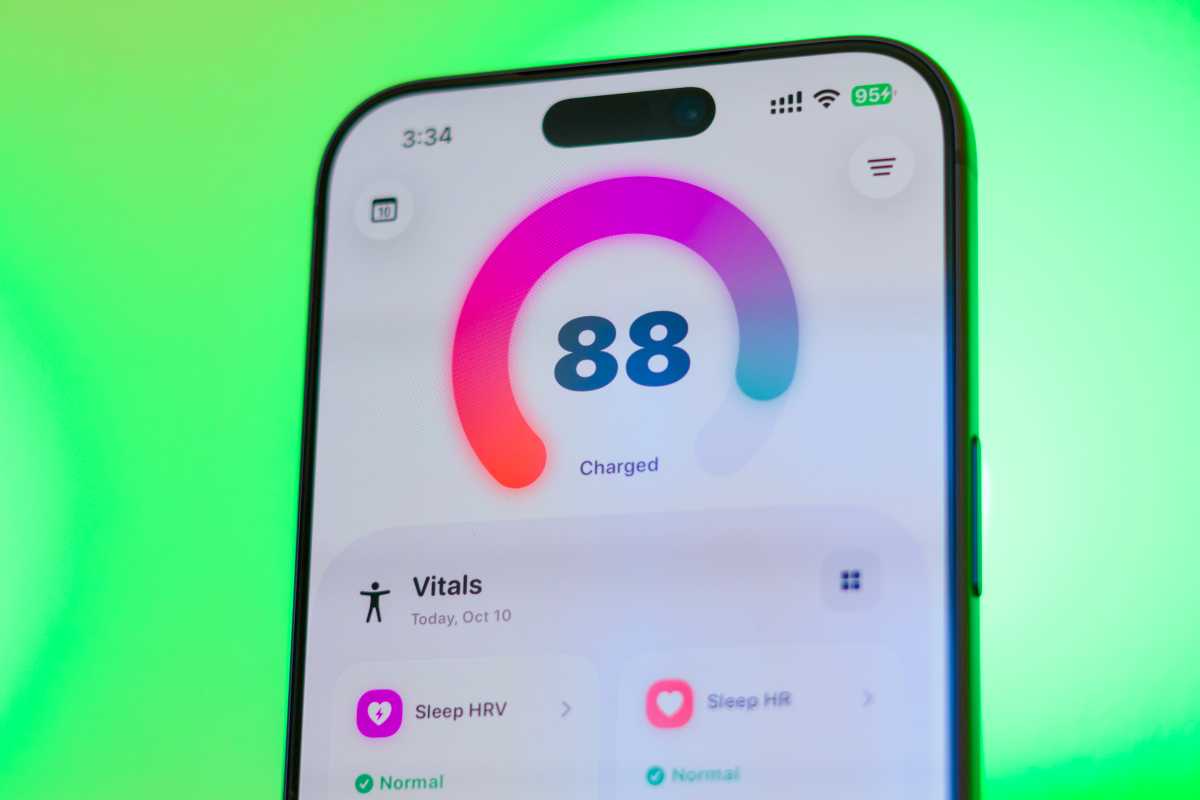
A more useful approach would have been to estimate users’ overall energy levels throughout the day. I use a third-party HealthKit-compatible app that accesses relevant metrics to display an overall “body battery” score. These include my workouts, active energy, heart rate readings, wrist temperature, mindfulness minutes, sleep data, and more.
The app analyzes my sleep duration, heart rate, vital signs, and more. to determine how recharged I am when I wake up. Recharged energy is also reflected through a 100-point rating system. As the day goes on, my score decreases based on logged workouts, heart rate, physical activity, etc.
Beyond the overall body battery assessment, the app estimates fatigue and stress levels. The readings tend to be accurate because they take into account health data from the past few weeks and are not limited to measurements from a single day. The body battery route helps me get a realistic representation of my state in real time, instead of being limited to a static score formed from incomplete sleep measurements.
Given that Apple reportedly plans to launch a Health+ service next year with AI coaching, I’m still hopeful. The company could potentially bundle a tool that reads a user’s entire Health app log and presents a meaningful report that dynamically changes each day. In the meantime, I press snooze on the Sleep Score feature.


