We Have Breath Again: Black Americans on Leaving the US for Mexico


World
/
November 14, 2025
The Americans recently relocating to San Miguel de Allende are a new kind of “expat,” a word they refuse to call themselves.
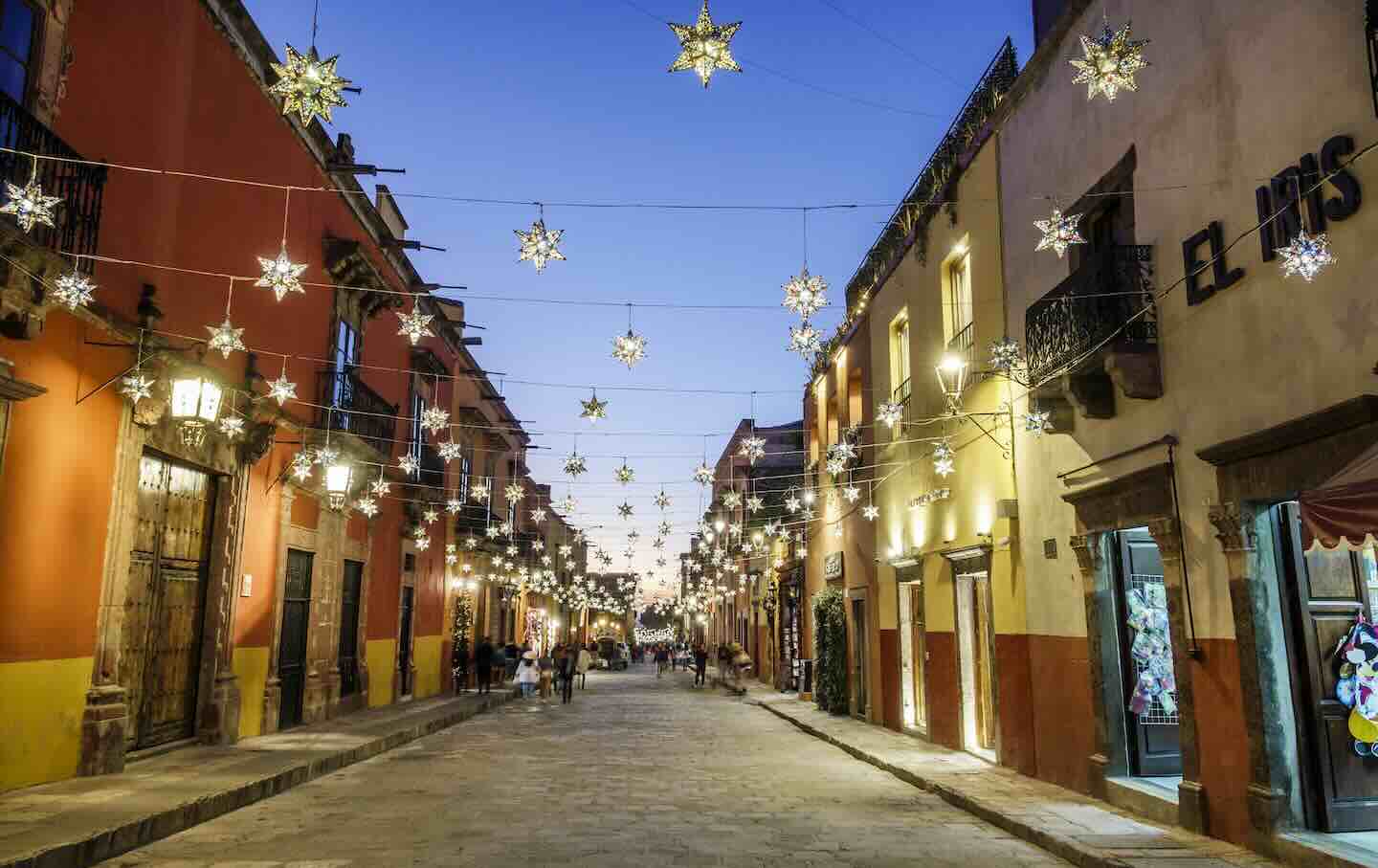
Newcomers to San Miguel consider themselves immigrants, eschewing the term “expat” as it is both a colonized word and doesn’t accurately reflect the literal meaning: someone relocated out of the country by their jobs.
In the colorful town of San Miguel de Allende, Mexico, with its temperate weather and stunning architecture, people spend their days relaxing on park benches that front La Parroquía, a towering neo-Gothic church of pink stone, which sits in El Centro, the center of town. People lose themselves strolling along the famed cobblestone sidewalks or grabbing a taco streetside and popping into a café. In the last few years, since Trump’s first term, a growing number of these people have been American immigrants.
The Americans who’ve recently relocated to this breathtakingly beautiful city are not the typical white retirees drawn to this magical place in the 1930s and after World War II. Today, they are a Blacker, queerer, politically left-of-liberal group who say they moved to free themselves from an American idealism they no longer agree with or, in some cases, feel afraid of.
Rozella Floranz Kennedy, 62, was in Seattle, Washington, working in the diversity, equity, and inclusion office at a consulting firm. She says that after Trump’s reelection, it was clear DEI wasn’t coming back, and in June 2024, her job was gone.
Not long after, Kennedy’s husband, John, a musician and composer of classical music and opera, had gone to his brother-in-law’s funeral in Papua New Guinea. When John came back, he told his wife he’d witnessed people living normal, beautiful, easy, dignified, and happy lives outside of the United States. The decision was made then and there to leave.
The couple sold their house in Seattle, got in their car on July 17, and drove to San Miguel with their 40-pound mutt, Pippa. Kennedy says their rent is a third of what their mortgage was.
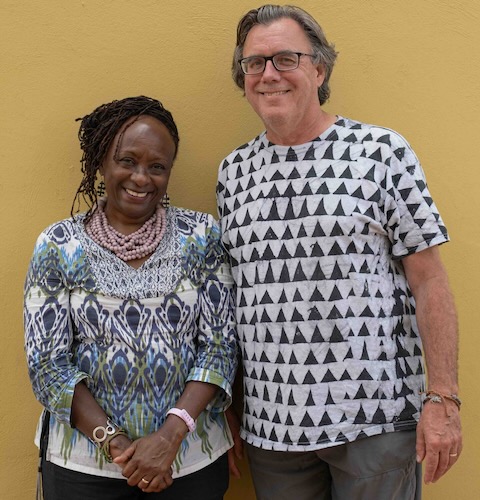
“It’s like suddenly we have breath again. He’s composing again.… I’m writing a new book,” she says, referring to her project, called “World Brave Sis,” which focuses on 100 BIPOC women in history from around the world. “I’m…taking the stories of these BIPOC women and using them as points of reference, departure, reflection, journaling, and action for [socially-engaged white women].… I’m just going for it full out.”
Although many Americans have been driven to migrate in response to Trump and the MAGA movement, immigrants from the US began moving to San Miguel in 1938, around the time that wealthy American artist Stirling Dickinson moved there. Not long after came the World War II veterans, who used the GI Bill to study art. In 2008, the city and the Sanctuary Jesús Nazareno de Atotonilco were designated as UNESCO World Heritage sites.
Current Issue

But the story of Africans in Mexico stretches back even further, to the time of Spanish rule, when enslaved people were dragged across the ocean and forced into the mines, fields, and ranches of New Spain. They were brought in to replace the Indigenous communities that the Spanish had decimated through violence and epidemics.
Decades later, in 1829, Mexico outlawed slavery, over a quarter of a century after the US did. That decision opened a door to freedom, and enslaved people from states such as Louisiana, Oklahoma, and Texas risked everything to cross the Rio Grande, following a lesser-known southern route of the Underground Railroad. Once they were on the other side, the Mexican government offered them protection from US slave catchers and the chance to build new lives, weaving themselves into the fabric of Mexican society.
Now Black immigrants are once again turning to San Miguel to carve out new lives. Black women in particular have relocated to escape the relentless pressures and indignities of simply being Black women in America.
Tonya Melendez, 54, an award-winning psychic medium who moved to San Miguel in May, says Black women are uncomfortable in the US and have the feeling of being watched and “constantly being under the white gaze.”
Melendez was just one of four Black students at her Kenosha, Wisconsin, high school, and it was there that she learned what being under the white gaze meant. “I really learned that condition in high school, and then, at work, and even in my higher education, when I was studying to become a librarian,” Melendez said. “All of my classmates were older white women, and it was very difficult. It was extremely difficult, because here I was, a young Black single mother in this library school program,” adding, “It affects the nervous system, because it keeps you under a feeling of and microscope, under surveillance.”
Newcomers to San Miguel consider themselves immigrants, eschewing the term “expat” as it is both a colonized word and doesn’t accurately reflect the literal meaning: someone relocated out of the country by their jobs. And, in fact, over 300,000 Black women in the US left or were pushed out of the job market between February and April, according to the US Bureau of Labor Statistics.
The immigrants in San Miguel who aren’t retired have found ways to make money using their expertise after years in their respective fields. They’re consultants or have found work that directly relates to other Americans who need help relocating to Mexico.
Michelle Wedderburn, 56, has been in San Miguel for seven years, in a job she created to help bring other Black women to the city.
She says she knew she didn’t want to raise her son in the US, so in 2018, she and her then-6-year-old left Florida and relocated to Mexico.
“The bigger reason, really, for me was a fear of raising him in the United States based on the violence, based on racial profiling. Black boys just have a bigger struggle. And as a single parent, I just felt that it would be a lot more difficult,” she says.
During the Covid-19 pandemic, Wedderburn launched a private Facebook group called “Black SMA: San Miguel de Allende.” The group offers a resource for information on everything from the best dentists to housing rentals to where to shop, and a list of ongoing events.
Today, the group has about 1,800 members, and those who live in San Miguel often get together for brunches, to listen to music, dance, and just be joyful together.
A year after creating the Facebook group, Wedderburn launched a relocation tour company called Casa Elm, a business she refers to as a “soft landing experience in San Miguel.”
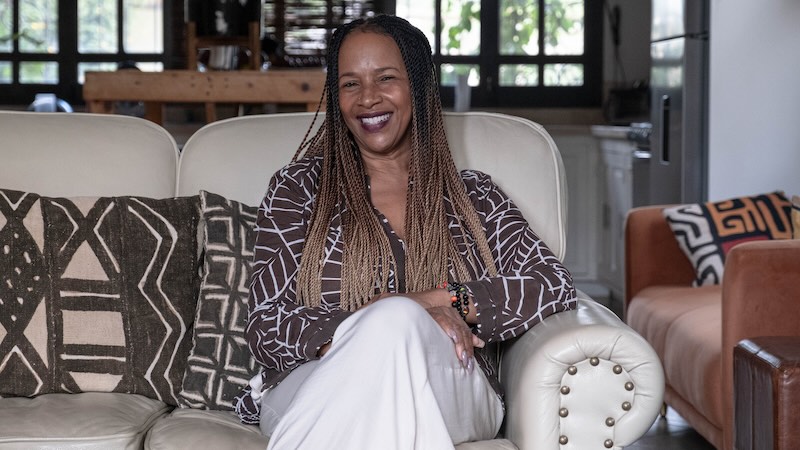
Tours include a dinner, hosted at Wedderburn’s four-bedroom house, where her guests stay; information on healthcare in Mexico, real estate tips; tours of local hospitals and vineyards, and a cultural walking tour with someone born and raised in San Miguel.
About 90 percent of the people who use Wedderburn’s services are Black women, some older and some young, some single, and some in relationships. About 60 percent of them end up moving to San Miguel, Wedderburn says.
But the immigrant community in San Miguel, particularly the Black folks who are there, is still relatively small, making up just 10 percent of the overall population of about 174,000, and the Black and LGBTQ community is likely a fraction of that 10 percent.
DevKirn Khalsa, 71, and her wife, Shakti Khalsa, 77, resettled to San Miguel from Austin, Texas, in June. The couple owned an organic vegetarian bed and breakfast for 30 years before they chose to hand it over to a management company and walk away.
“We had a very easy life, so we could have stayed there. We owned a big piece of property in Austin. We could’ve stayed right there—big garden. I had to rehome my chickens,” DevKirn says. “But for us, we knew it was time to go, and if we didn’t go, we didn’t know what would happen next.”
The couple, who’ve been together for over 50 years, say they knew they would leave the US the day President Donald Trump was reelected in November 2024. Shakti, who is Jewish, says moving out of the US was their last form of activism and an escape from a fascist takeover of the government.
“For me, it felt like the Jews must have felt in the 1930s in Germany. Some of them knew they needed to go. Some of them couldn’t quite figure out how to go,” Shakti says. She adds, “Some of them went. Some couldn’t get out. I mean, my grandfather’s whole family came when he was quite young at the turn of the century to the United States. The rest of his family stayed in Lithuania. All of his brothers and sisters died in the Holocaust.”
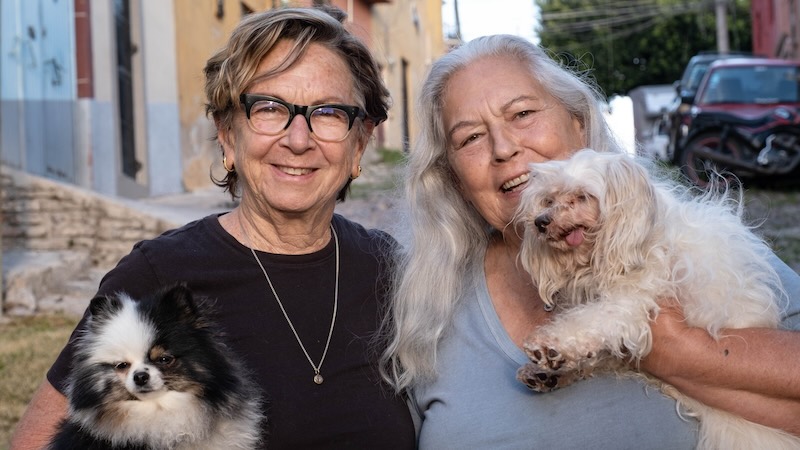
The Khalsas, who adopted the shared spiritual surname after their time at an Ashram in Washington, DC, in the 1970s, purchased their three-story home in San Antonio colonia the day after arriving in the city. From their rooftop terrace, they look out over a patchwork of houses. They’ve grown used to the chorus of barking dogs and the splash of the fountains tucked inside lushly landscaped courtyards. They know the “tamale lady” by name, and the local bus driver even lets Shakti ride to the market with the elder of their two dogs, a spry 16-year-old Havanese named Olevia.
Jaimes McNeal and his husband, Douglas Saboe, also decided to leave their home in La Mesa, California, and head to San Miguel after Trump was elected.
“Being out of the pressure cooker that is ‘Amerik-k-ka,’ has been the best gift ever,” McNeal says. “I think that this shit’s about to hit the fan, and it’s about to hit the fan really in a way that I never thought I’d see in my lifetime. I thought we only read about that in history books. We’re seeing Gestapo shit.”
McNeal is Black, a clarinetist, a professor of statistics, and a volunteer at a prison teaching a class titled “Restorative Justice Outside.” Saboe is Jewish and owns a hair salon in San Diego. The couple decided in August to cash out, sell their home, and move to San Miguel in January 2026.
“I have procedures that I should follow if ICE walks into my classroom. That’s not a world that I really want to support,” McNeal, 59, says. “I know it feels like a little bit of escapism. I get to leave because not everybody gets to leave. But I don’t think I’m concerned about that anymore. I can do much better. I can contribute to the world by putting on my mask first and then helping others. And all I can say is that it feels easy to breathe here.”
To address the elephant in the room… New immigrants to San Miguel explain that most start their process with a Temporary Resident Visa, which they can use to stay in the country for a maximum of 4 years. All immigrants must qualify financially; they use the cost of homes they’ve sold in the US or purchased in Mexico, their pensions, savings, or Social Security to qualify.
Kennedy says the most difficult part of getting her temporary visa was getting the appointment at the consulate in Seattle. “It’s a six-month wait now. Every consulate has a different set of rules, a different financial threshold you need in savings to qualify. It was insane, but we got it on June 3,” she says.
A Permanent Resident Visa (only issued at a Mexican consulate in the US) can be issued after four years without a temporary visa or in two years after receiving a temporary. Few of the immigrants ever become Mexican citizens with a passport.
In this otherwise tranquil town, where leafy parks add to its charm, many locals describe a sense of a “gringo takeover.” It’s not unusual to overhear white Texan couples chatting in English about the houses they’re building or insisting they don’t need to learn Spanish when translation apps can do the work for them.
Maria Ruiz is a journalist from San Miguel. She works for the Mexico News Daily, an English-language outlet. She recently wrote an op-ed about her hometown and its decades of gentrification.
“I have mixed feelings about the foreign community living in the city. On the one hand, I believe that having foreigners live in San Miguel has enriched the community enormously. But I also feel deep sadness at not being able to imagine the house of my dreams in San Miguel because the costs are extremely high,” Ruiz wrote.
By US standards, a homebuyer’s dollar may stretch further in San Miguel, but an influx of wealthy, predominantly white foreigners has driven up property prices in recent years. The city’s narrow sidewalks, hand-carved doors, and brightly painted façades have become a backdrop for rising demand and rising costs.
Popular
“swipe left below to view more authors”Swipe →
When I spoke with Ruiz, she said she wished the Mexican government would create a program that would make rental and sale prices for homes in San Miguel more affordable for locals who are from the city.
“There are some places like La Esmeralda, but it’s 15 kilometers from town, and the houses aren’t very good,” Ruiz says. “The idea is to send Mexican people to that place so they can’t be in Centro, and houses in Centro can be for the foreigners and rich people. I don’t like La Esmeralda because it’s for poor people and it’s far away from Centro.”
Ruiz says that 10 years ago, it was uncommon to see Black immigrants in San Miguel. Today, there are many, and she says she’s happy about that, but they tend to stay to themselves.
“I think both Mexican and Afro-descendants are not sharing too much. They live in their world and their groups. We need to create, I don’t know, maybe some artistic thing or a concert or program to share things because I think we have so much in common, maybe in food or dancing or culture,” Ruiz says.
Noí Brooks, 62, says ultimately it would be foolish to think that being Black in San Miguel is drastically different than being Black in the United States. And many of the Black and gay immigrants interviewed say that, although it’s better in terms of bias, it’s certainly not perfect.
“I think it’s nuanced here, particularly in San Miguel, because there are so many white Americans here. So there’s some legacy of what one would feel as a Black American.… But I do feel happy to be here,” said Brooks, who moved to the city in September 2024. “I feel that it is a better way of life for me. But I think if people are leaving America in the hopes of finding a utopia, they need to let me know where they go. Because San Miguel has its own issues, and Mexico has its own issues.”
More from The Nation

The international community must decide which principle will prevail: the right of self-determination or the right of conquest.
Stephen Zunes

How a globe-trotting attorney is trying to win the release of the famed Hong Kong publisher.
Feature
/
Liam Scott

They stripped us naked, deprived us of sleep, food, and sanitary facilities, arbitrarily threatened us with guns, and physically attacked us.
Thomas Becker

The systematic violence of American militarism has shaped all our lives, including the soldiers who have come to realize that they were used to perpetrate it.
Kelly Denton-Borhaug

“The administration doesn’t want me. I personally don’t feel safe [in the United States]. I know I’m not the only person who feels that way.”
Feature
/
Rebekah Sager

The new film Nuremberg may tell us as much about the present as about the past.
Elizabeth Borgwardt


