Netanyahu says starvation claims in Gaza are exaggerated as backlash mounts over plans for new Israeli offensive


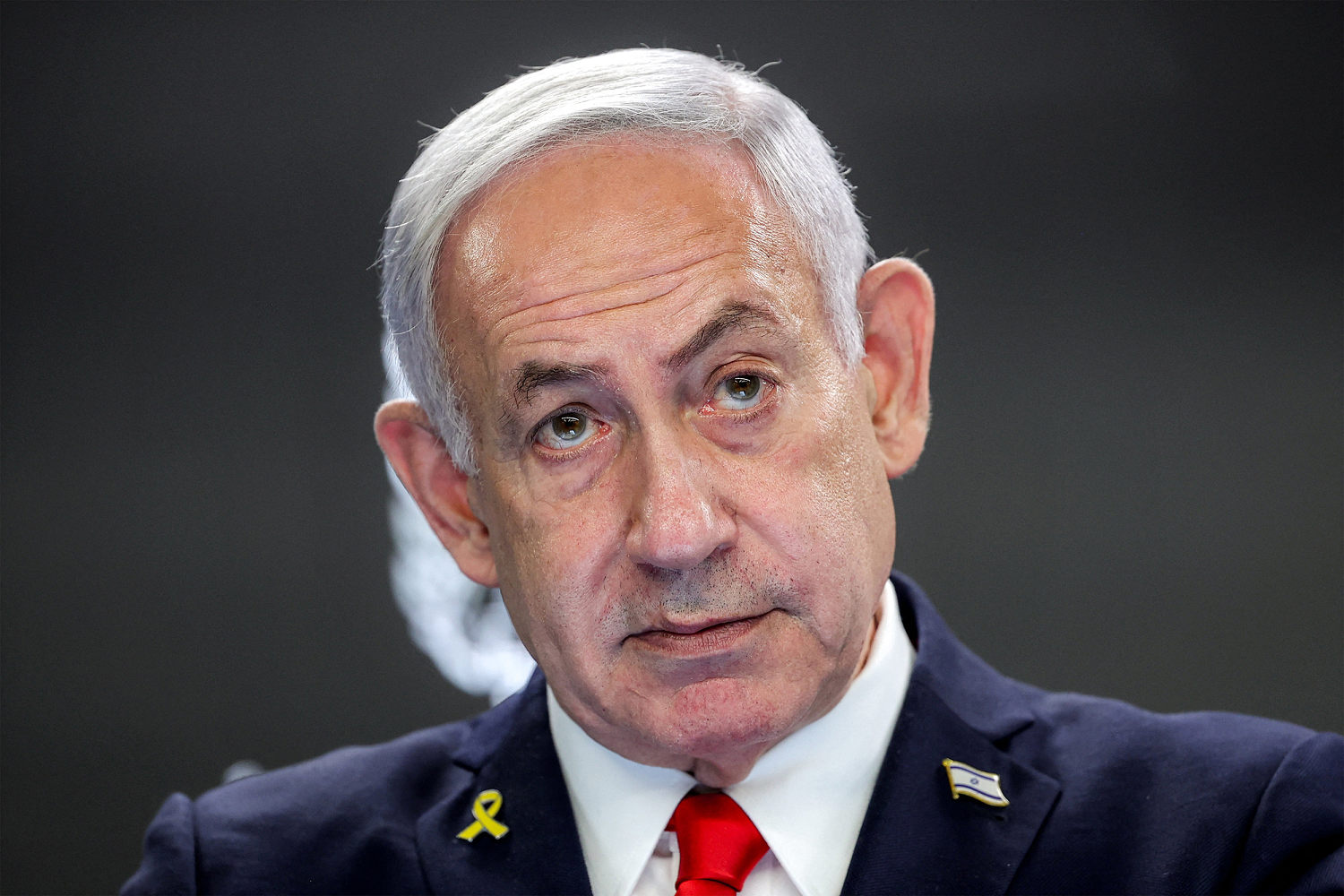
Israeli Prime Minister Benjamin Netanyahu did the pressure on all sides on Sunday while his controversial plan to grasp Gaza City attracted the counterpouss inside his government and in the streets of Israel, while the deaths of malnutrition in the Gaza Strip continued to climb.
On Sunday, at a press conference, a principal from Netanyahu continued to deny that there is famine in Gaza and said that the situation was exaggerated. Netanyahu only conceded that there was a “deprivation” in Gaza, but said that “no one in Gaza would have survived after two years of war” if Israel was implementing a “famine policy”.
Netanyahu then defended the new military offensive, saying that Israel “has no choice” only to “finish work” and “defeat Hamas”, while saying that “hundreds of aid trucks went to Gaza”.
But his detractors on the left say that his new military offensive is likely to worsen the humanitarian crisis in Gaza and to put more in danger of the hostages still held by Hamas. Demonstrations calling for an immediate ceasefire attracted thousands of people on Saturday evening in Jerusalem, such as Aviv and other Israeli cities.
And for some far -right members of the Netanyahu coalition government, the plan is not difficult enough.
The Minister of Foreign Affairs, Bezalel Smotrich, who pushed Israel to impose sovereignty on Gaza, called this half “stupid”, saying in a video message on Saturday evening that he did not support him.
Smotrich said that the proposed offensive aimed at putting Hamas to accept a temporary cease-fire, and that instead, Israel needed a “net and clear path” for Victal on Hamas.
The dissatisfaction expressed by Smotrich, who said that he had “lost confidence” to the Prime Minister, threatens to destabilize the fragile coalition of Netanyahu.
Israeli opposition chief Yair Lapid took the opportunity, calling on Smotrich to join him to advance a bill to dissolve Parliament and organize new elections.
“In your own words, you have admitted that the Prime Minister’s policy does not lead to a decisive result in Gaza, does not return our hostages and does not win war,” said Lapid in a statement, according to the Times of Israel. “You have also added that you can no longer stay behind the Prime Minister and support him.”
The United Nations Security Council held an emergency meeting Sunday later Sunday to discuss the offensive proposed by Israel, which was condemned by Great Britain, France, Australia and other Western governments.
James Kariuki, the assistant permanent representative of the United Kingdom to the UN, called on Israel to cancel his decision, saying that the plan “will only like the suffering of Palestinian civilians in Gaza”.
He arrived in the midst of an aggravation of the hunger crisis in Gaza, where humanitarian aid has been limited since Israel raised a blockade of two and a half months in May.
The Gaza Ministry of Health said on Sunday that five other people, including two children, died of malnutrition and famine in the past 24 hours, bringing the total to 217, including 100 children.
Tedros Adhanom Ghebreyesus, Director General of the World Health Organization, said Thursday that at least 99 people in Gaza, including 29 children under the age of 5, died from malnutrition this year, noting that the real toll was most likely higher.
The UN and other international organizations say that humanitarian aid arriving in Gaza by aerial drops and on a small number of trucks is far from sufficient to feed the enclosure population of 2 million people.
On Saturday, a 14 -year -old boy named Muhannad Eid died after being struck by a help package that was broadcast on Gaza, said his brother Muhammad Eid.
“It is an air humiliation, not aid,” said Eid. “We need protection. We want international protection. “
With the last death, 23 people were now killed during the Airdrops since the start of the War of Israel-Hamas 22 months ago, according to the Gaza government media office.
“We have repeatedly warned the danger of these inhuman methods and have repeatedly called for the safe and adequate entrance to the aid through crossing,” he said in a statement.
According to local health officials, more than 61,000 Palestinians, including thousands of children, have been killed since the start of the war on October 7, 2023, with Hamas’ terrorist attack against Israel. During this attack, activists led by Hamas killed around 1,200 people and removed 251 others.
Of the 50 hostages still held by Hamas, Israel thinks that 20 years are alive. The hostage defenders and the Netanyahu’s own army chief warned that extended military operations could endanger their lives.
The plan, which the government of Netanyahu announced on Friday, describes five goals to end the war: disarm Hamas, return all hostages, demilitate Gaza, take control of the region’s security and establish “an alternative of civil administration which is neither Hamas nor the Palestinian authority”.
These preparations should take weeks or months, a delay that the Israeli government’s backgrounds are afraid of giving way to a diplomatic solution that would undermine their objectives.
Experts also wondered if the plan would protect the Israelis or work at all.
Michael Mulshtein, head of the Palestinian Study Forum at the Dayan Center at Tel Aviv University, said the plan was full of “hollow slogans”.
“There is a very common slogan:” We will release the hostages and defeat Hamas at the same time “,” he said. “You can’t do both simultaneously. Hamas will execute them, or the FDI itself could in the attack. ”
Netanyahu said on Sunday that his goal was to get the hostages out and recover the remains of those who died.
“If we do nothing, we are not going to get them out,” he said. “The move I talk about has the opportunity to get them out.”
There are also questions about who directs Gaza in the long term. Netanyahu said he intended to control the territory of “Arab forces”, adding on Sunday that “several candidates” are examined for the creation of a new “transitional authority”.
He did not specify who could be, apart from saying that it would not be Hamas or the Palestinian authority.
“This leaves no one,” said Ha Helyer, principal associate researcher at the Royal United Services Institute in London. “No Arab country will be the application of Israel in the field.”