A fiber optic cable spied on Greenland’s glaciers. It found an alarming problem


One of the most buzzing technologies in modern science can take place under your feet. Fiber optic cables bring you the Internet as light impulses rich in data, but they also detect surrounding environment signals: researchers can analyze dispersed light when a volcanic rash or tsunami shakes up the wiring. Known as the distributed acoustic detection name, or DAS, the technique is so sensitive that it can follow your traces when you walk on a cable, and can one day warn you of an imminent earthquake.
Now, the researchers have laid a fiber optic cable on the seabed near a Greenland glacier, revealing by unprecedented details what is happening during a calving event, when pieces of ice fall into the ocean. This, in turn, could help to solve a long -standing puzzle and better understand the hidden processes resulting in the rapid deterioration of the island’s ice cap, which would add 23 feet at sea level if it disappeared.
Even before humans are starting to change the climate, Greenland glaciers were naturally worth. The island is covered with glaciers which flow slowly to the ocean, decomposing in icebergs which float towards the sea. When the temperatures were lower, the ice cap also regenerates as the snow fell.
As the temperatures have climbed, however, more cast iron creates more melting water, which flows under the glaciers, lifting them and lubricating them. “This can actually affect the speed at which ice flows,” said Michalea King, principal researcher at the Polar Science Center at Washington University, who was not involved in the new research. “So, not only do you have the loss of mass of the fusion directly on the surface, but you also have an impact on the speed with which these large ice cream belts – these large exit glaciers – flow.”
As a result, Greenland is now losing much more ice than it regenerates. “It is as if you are most depicted from your current account, and therefore the balance of your account has fallen for a few decades,” said Paul Bierman, geoscientist at the University of Vermont and author of When the ice is left: what a core of Greenland ice reveals on the tumultuous history of the earth and a perilous future. (Bierman was not involved in the new research.) “This document is a great step forward in that it gives us some of the details of the process in places where we have really not had it before.”
The challenge is that the models mainly underestimate the amount of melting ice where Greenland glaciers touch the sea, which suggests that they do not represent a process that amplifies this net loss. This is not due to the lack of efforts of glaciologists – it is simply extremely dangerous to get closer to massive pieces of ice cream to collect data.
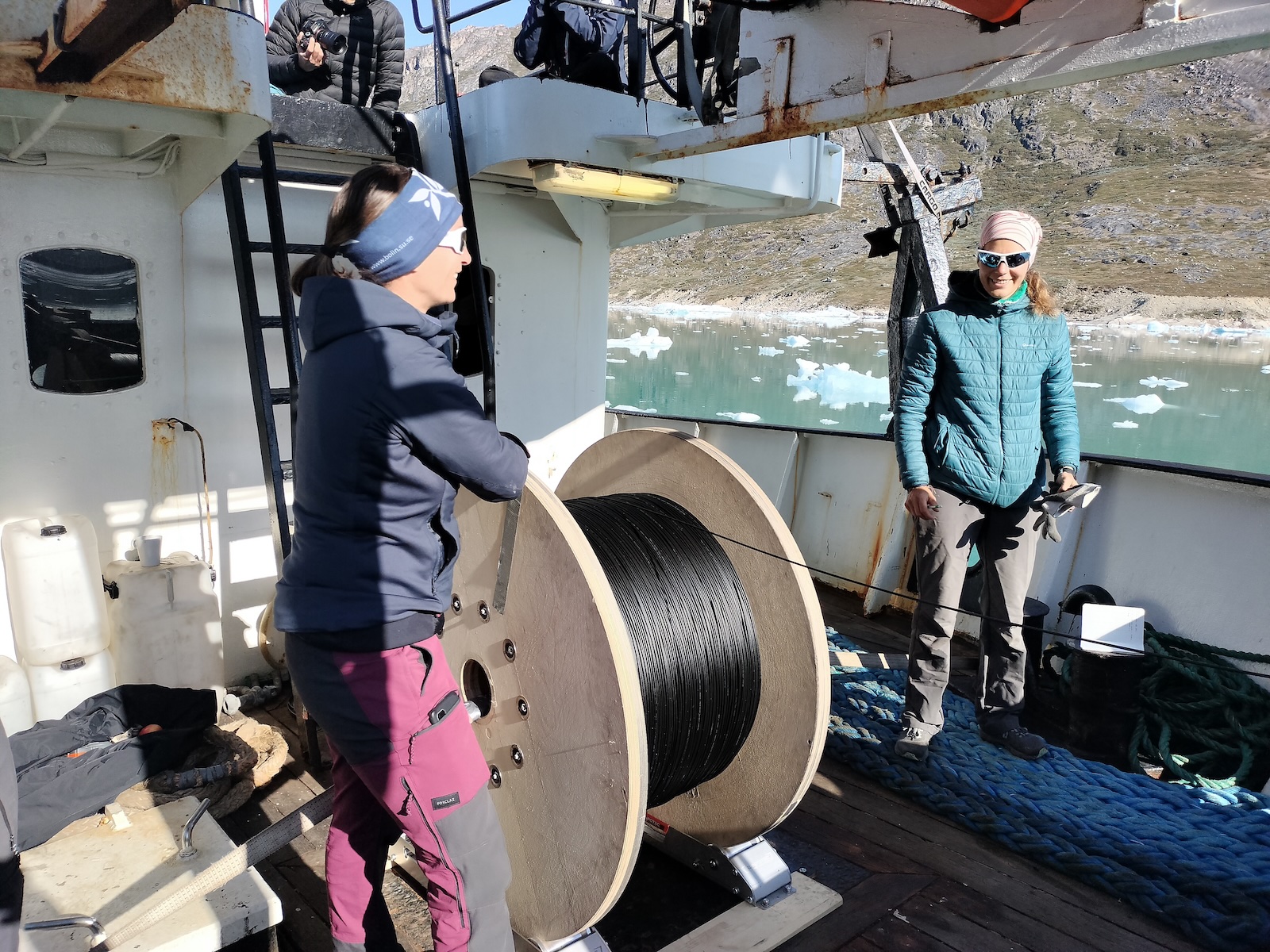
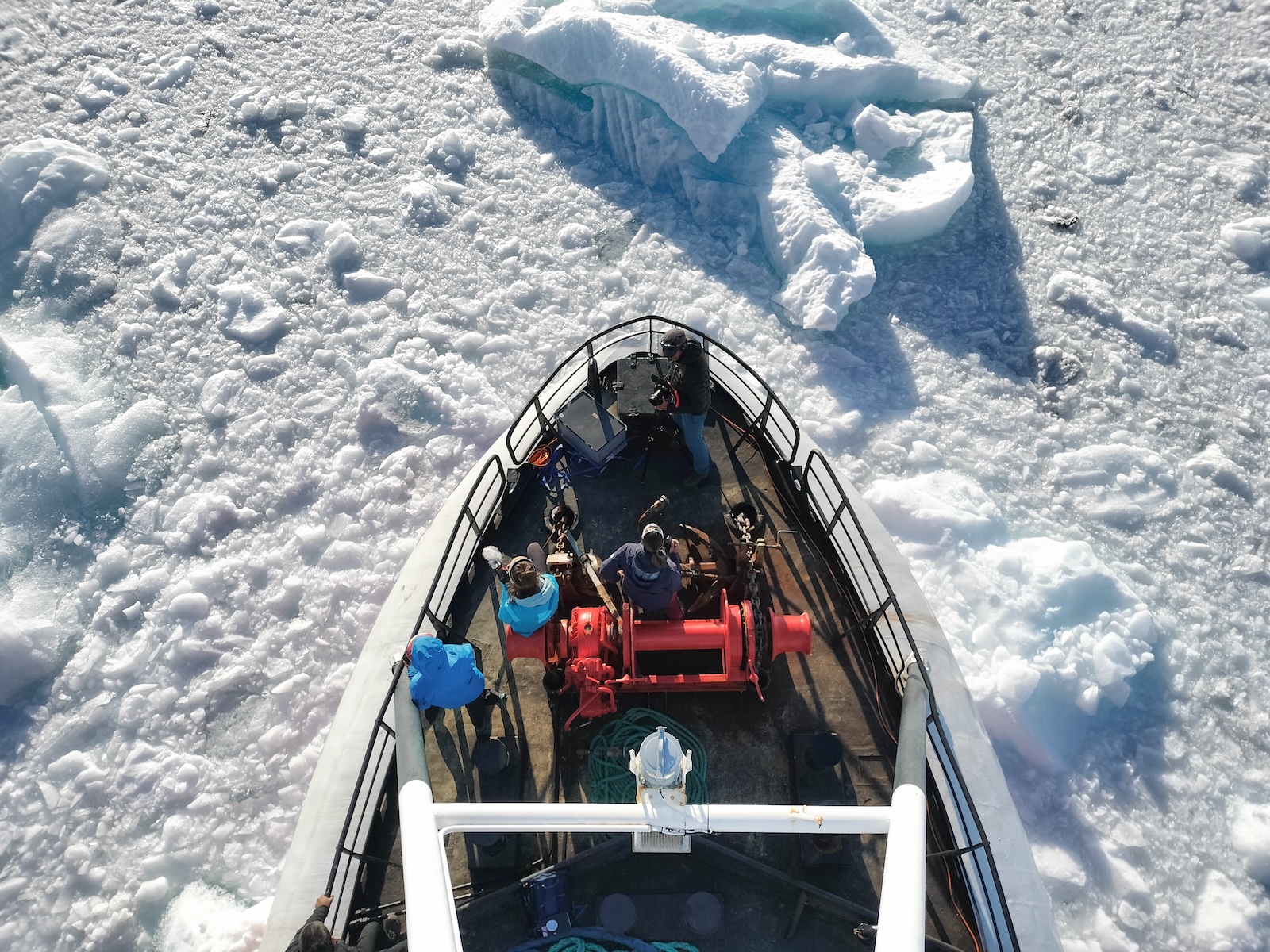
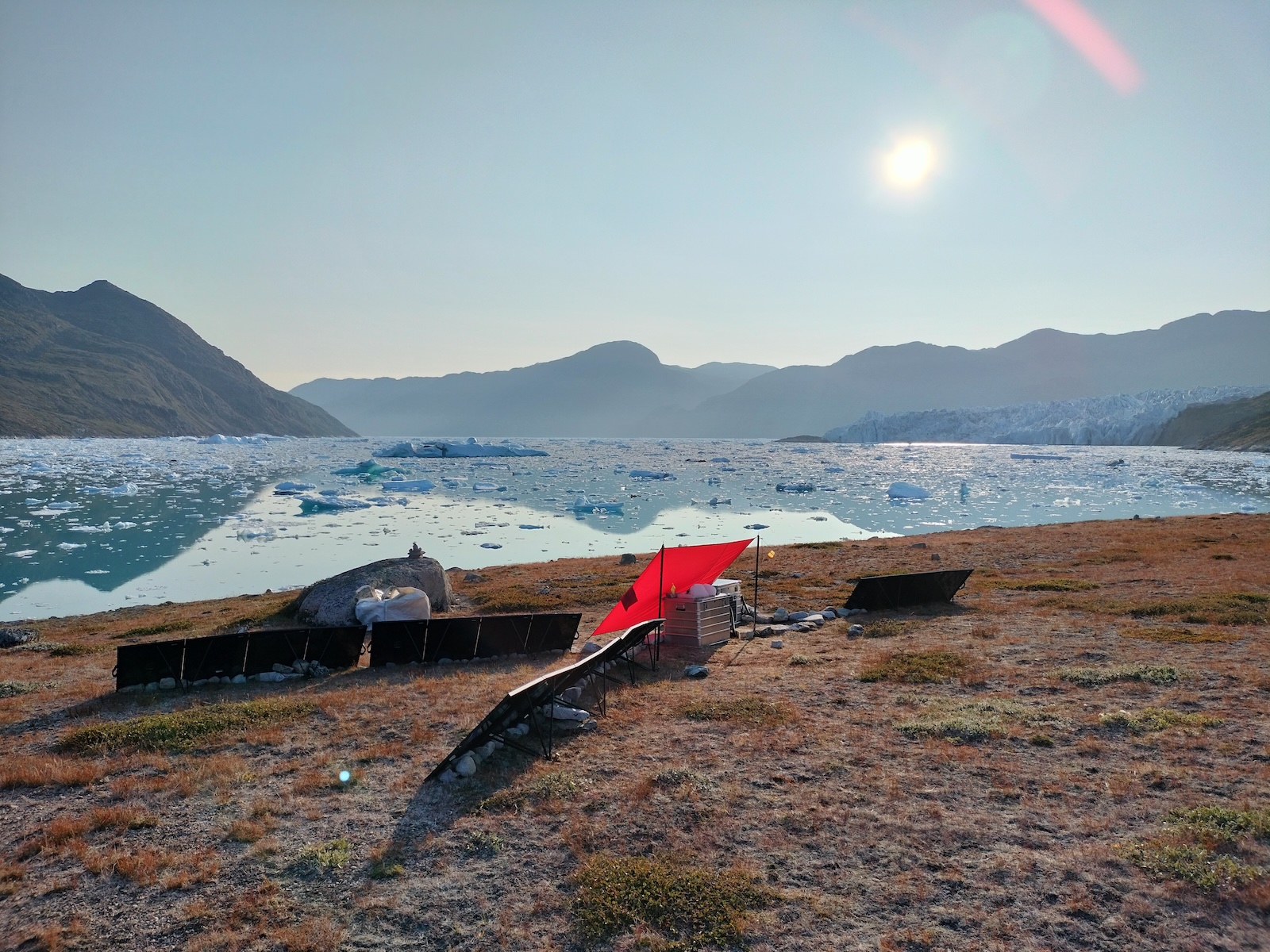
Taking a different accent in a fjord in southern Greenland, the researchers suspended 6 miles of cable parallel to the “calving front” of a glacier. Whenever the glacier was fracturing or fell from the ice in the water, he “torn” the cable, like a guitarist picking a string. These dispersed vibrations The light in the fiber optics date back to two “interrogators” devices, supplied by solar panels and batteries, on earth. One of them managed the DAS data, or the acoustics spreading in the water, while the other determined the temperature changes in the fjord. “If you fracture wood, you see the fracture spread, but you also hear it,” said Dominik Gräff, environment scientist at Washington University and the main author of a new article describing the work in the journal Nature. “This is exactly what Das does.”
These glacial fractures seem distinct in the data from a more catastrophic ice loss in the fjord, the calving of the ice front. “These blocks of ice can be as large as a stadium,” said Gräff. “When they plunge, they excite these waves.”
If you have seen a video of a calving event, you know how dramatic this excitement can be, because a wall of water rushes far from the ice. (It is technically classified as a tsunami, although much smaller than those who move through the whole oceans after earthquakes.) But the DAS system has also picked up a hidden movement of water under the surface, like waves – certain as high as the skyscrapers – pulsed through the cable of the sea, increasing and lowering the interface between cold surface and hot surface water.
As a rule, the warmer and more salty water flows to the bottom because it is denser, while the colder and cooler water from the ice melting is on the surface. The latter also forms a kind of insulating layer by the glacier, preventing more cast iron. But the fiber optic cable showed that as Iceberg fell into the fjord, it stirred these warmer waters on the surface and disturbed the insulating layer, thus encouraging more cast iron from the glacier. And while the iceberg moved away from the glacier, it sparked even more water, like a boat creating its own wake, but invisible below the surface.
This could be the missing part of this scientific puzzle, because the models do not represent this large -scale agitation, which could encourage more calving, which produces more agitation, which encourages more calving. “Perhaps this study is the key for why, in practice, in real life, we have much higher melting rates than what we expect,” said Mathieu Morlighhem, glaciologist at Dartmouth College who was not involved in research. “They are able to capture a large part of the physics that we did not even know.”
Unlike scientists who sail around a calving front, cheap fiber optic cables, safely and collectively collected data. These researchers were unable to use their cable only for three weeks, but they plan to do other studies that use readings from much longer deadlines, monitoring how calving changes throughout the year. If they are capable of deploying more cables near the coastal cities of Greenland, they could even be able to design an ON system of ON of overview for the tsunamis induced by ice, like the other scientists try to do with the DAS for earthquakes.
Now it is a race against time to better understand the ice of Greenland while it falls in danger deeper, because the calving generates more calving. “This is the kind of thing that scares geoscientists like me,” said Bierman. “That if you have these reinforcement feedback loops and start on a way to lose Greenland ice cream, this could speed up the rate of this loss.”