15 features to make your Apple devices work in perfect harmony


Summary created by Smart Answers AI
In summary:
- Macworld explores 15 features across the Apple ecosystem that enable seamless device integration, from Apple Watch unlocking capabilities to Universal Control functionality.
- These features are important for Apple users looking for improved productivity through cross-device workflows, including Handoff for task transitions and AirDrop for instant file sharing.
- Key integrations include Focus Mode sync, iCloud data consistency, iPad capability as a Sidecar monitor, and use of Apple devices as Apple TV remotes with built-in keyboards.
“It just works” is one of Steve Jobs’ most famous quotes, but it’s much more than that: it’s the fundamental principle behind Apple’s product strategy. From unboxing and setup to exploring features, the experience of every Apple device is designed to be simple, welcoming, and intuitive for beginners and techies alike.
What’s even more impressive is how Apple products combine so harmoniously. If you’ve invested in a Mac, an iPhone, an iPad, an Apple TV, and an Apple Watch, but haven’t discovered the features that bring them together so effectively… well, you’re missing out. Master the smart integrations of Apple’s ecosystem and you’ll feel like the borders on every screen simply disappear. Rather than managing multiple devices, you’ll work with a single interoperable system that accomplishes everyday tasks in the most useful format.
Not sure how to group your Apple devices into one seamless entity? Here are 15 ecosystem benefits you should familiarize yourself with.
1. Simple Setups
As long as you own an Apple device, setting up new ones will always be relatively simple. For example, your iPhone will automatically detect the presence of a brand new iPad, Apple TV, or HomePod nearby. You can then quickly sign in with your Apple account and transfer some data by scanning a code.
The process also makes upgrading to a new iPhone easier because you can wirelessly move all your apps, photos, text, and preferences, even if you haven’t backed up your old device.
2. Easy unlocks
Currently, all major Apple products support Face ID, Touch ID, or Optic ID (the iris recognition technology on Vision Pro). But biometric authentication is not 100% reliable; Sometimes it will fail because you have wet fingers, a mask, or any other reason. Fortunately, owners of multiple Apple devices have other easy unlocking options.
Your Apple Watch can unlock your Mac every time you wake its screen. It can also help you bypass Face ID on iPhone when you are hidden. And the feature works the other way around, too: You can unlock your Apple Watch by unlocking your iPhone, saving you the hassle of typing the passcode on the small screen.
Mahmoud Itani / Foundry
3. Transfer
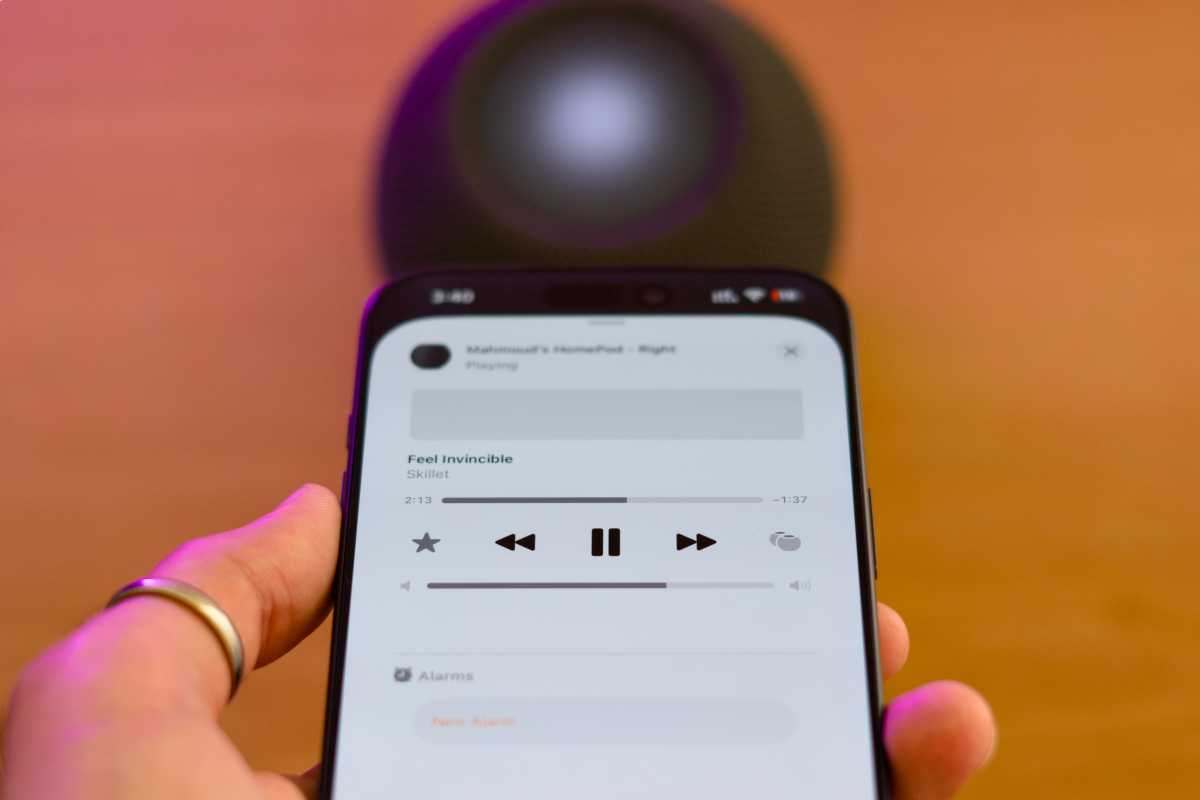
I love Handoff. When you get home, you can move your music queue from your iPhone to your HomePod (or vice versa, when you leave) by moving them closer together. The feature also works with phone calls, allowing you to truly “put someone on speakerphone.”
The transfer is not limited to iPhone and HomePod, however. When you’re working on a task in a compatible app, your other Apple devices will let you pick up where you left off with just the press of a button. So if you type an email on iOS, the macOS dock will show a shortcut to continue typing there.
4. Universal clipboard
When you copy an item on an Apple operating system, the Universal Clipboard means you can paste it directly onto another if it’s nearby. It’s priceless.
The feature works with both text and images, allowing you to quickly borrow files and content from different Apple products. To make the experience even more magical, you can use the three-finger pinch gesture to copy (pinch) and paste (pinch) on touchscreen devices. It’s complicated, but SO impressive.
5. Universal and sidecar control
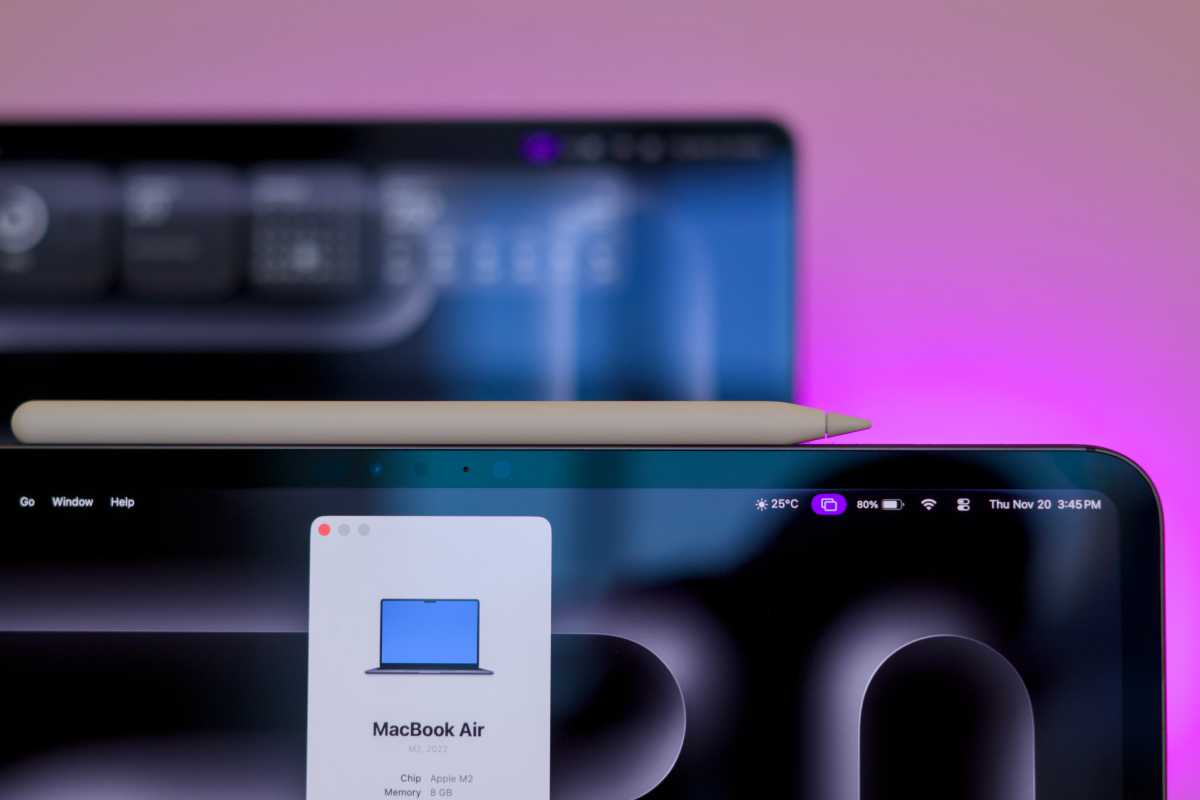
Speaking of magic, if you’ve placed a Mac and an iPad side by side, dragging the former’s cursor beyond the screen frame will move it to iPadOS. This allows you to use your desktop mouse and keyboard to interact with your tablet. You can also drag and drop files between the two devices using the same Universal Control benefit.
Likewise, you can use your iPad as an external wireless monitor for your Mac using the Sidecar feature. This lets you leverage touch typing and Apple Pencil for relevant office tasks.
Mahmoud Itani / Foundry
6. Fast authentication
If your Mac doesn’t have Touch ID, entering your password every time you need to purchase a digital product or approve a system dialog box can be a pain. Luckily, you can double-click the side button on your Apple Watch to avoid the hassle and authenticate faster. Apple TV will also allow you to approve certain actions using your iPhone’s Face ID sensor to save you from wonky TV controls.
7. Data transfer
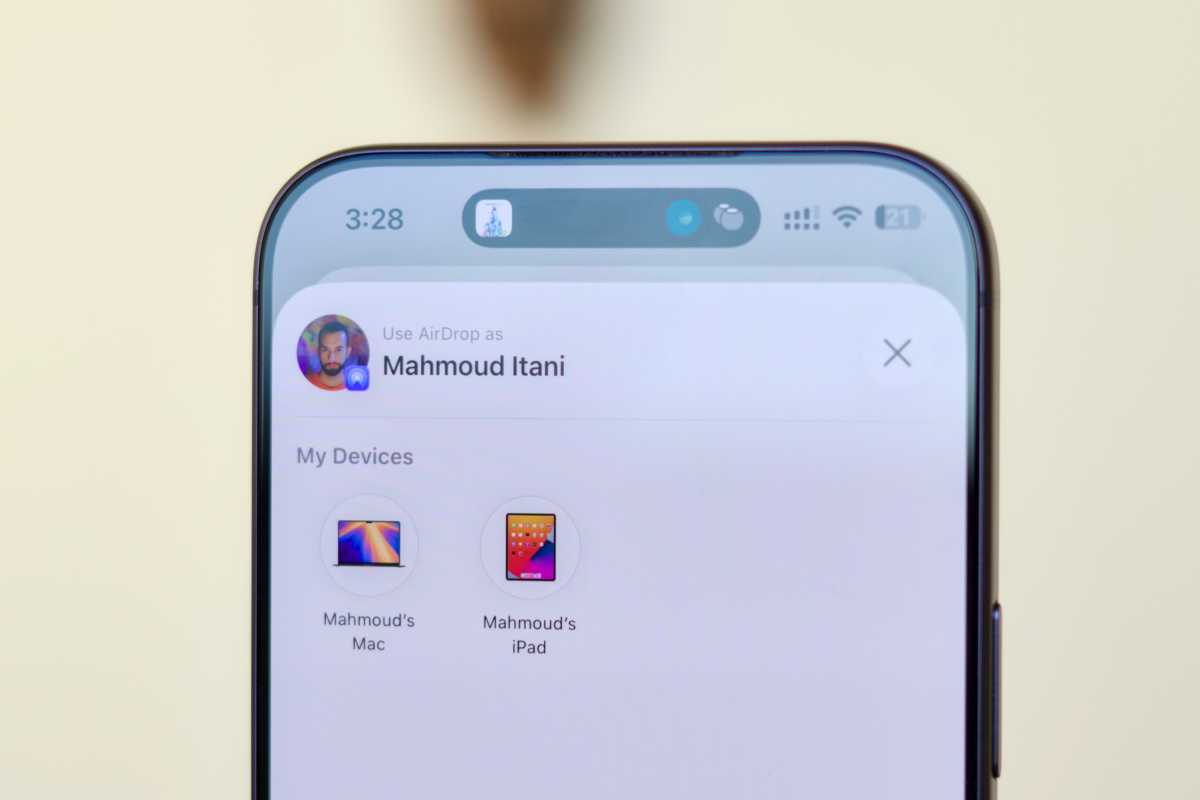
AirDrop is potentially the most popular Apple ecosystem feature, allowing you to instantly share files between your devices. The technology relies on Bluetooth and Wi-Fi Direct connectivity, saving you the need to rely on iCloud or third-party wireless transfer solutions, which can be slow for moving large files.
Speaking of iCloud, this is also one of the best benefits of investing in an Apple-only setup. Photos, notes, messages, contacts, Wi-Fi and account passwords, files and other types of data stay up to date at all times on every device. Say it with me. It works.
Mahmoud Itani / Foundry
8. Forwarding Calls and SMS
Whether you receive a phone call through FaceTime or your carrier, all your nearby Apple devices will (eventually) ring, including your watch, tablet, desktop, and TV. This makes it easier to take a call, no matter what room you’re in or what you’re doing. Likewise, you can send and receive SMS/RCS and iMessages from any of your connected devices.
If you’re worried that this feature might make your life difficult (being constantly available for a call or video chat no matter where you go to escape), remember that you can configure Focus modes to limit notifications and distractions. The best part? Focus modes will also be synced across your devices, so you won’t have to manually enable them multiple times for your fleet of devices.
9. Practical markings
Since Macs still don’t have touchscreens, some tasks, like signing electronic documents, can be difficult. Nevermind. Instead of struggling to sign your name using a mouse, you can grab a nearby iPhone or iPad and sign or scribble directly on the same file you manage on macOS.
10. Camera Remotes
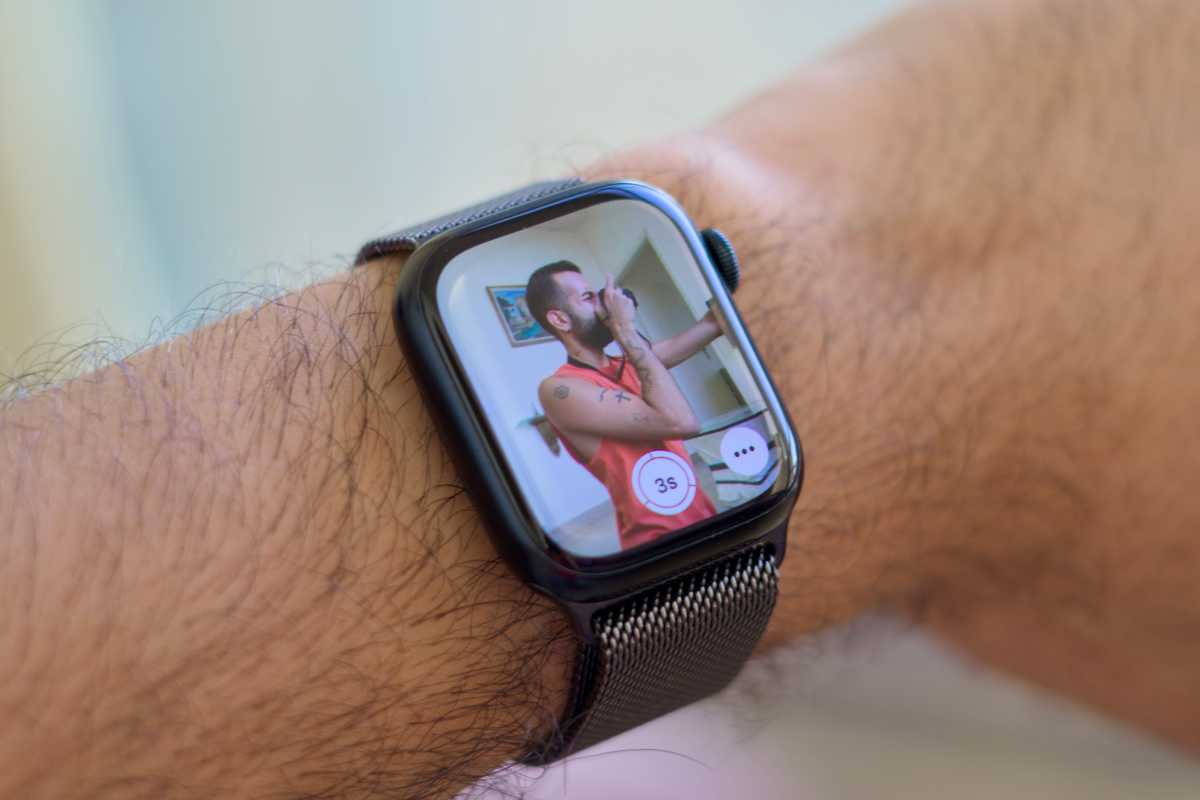
If you want to take a good photo of yourself (as opposed to a selfie) and there’s no one to help you, Apple’s ecosystem can step in. Simply position your iPhone as needed, move away from it and pose. You can then launch the built-in Camera Remote app on watchOS to check the viewfinder and take the photo. You can also click the stem of a compatible AirPod if you don’t have a watch.
Mahmoud Itani / Foundry
11. Selecting the audio source
Speaking of AirPods, one interoperability benefit you should know about is automatic device switching. If you use your AirPods to listen to music on your Mac and then start a call on your iPhone, the earbuds will automatically disconnect from macOS and connect to iOS. After the call, if you start watching the latest Pluribus episode on your iPad, AirPods will similarly switch to the new audio source.
12. Continuity Camera
Newer MacBooks now have decent webcams with Center Stage and virtual background support. However, not all Macs are MacBooks and not all MacBooks are new. If your Apple computer has a bad camera or no camera at all, try the Continuity Camera feature, which uses your iPhone’s superior lenses and microphones. The technology also powers video calling on tvOS, as the Apple TV has yet to adopt a webcam.
13. Device Mirroring
If you work on your Mac, you may notice that iOS notifications and Live Activities now appear on macOS. This recent integration can also mirror your entire iPhone, allowing you to interact with apps without picking up your iPhone. iOS can also mirror your Apple Watch when you’re unable to interact with the small screen.
14. TV remote control
The Apple TV’s sleek Siri Remote is a beautiful object that too often disappears onto the couch. If this has happened to you or you just don’t like the Siri Remote, use your iPhone, iPad, and Apple Watch instead. They all have built-in tvOS remotes that let you control volume, switch apps, turn on/off, skip media and much more. Additionally, when you encounter a text field on tvOS or watchOS, you can use a nearby iPhone or iPad to type with a suitable keyboard.
If the iPhone app you use to stream media doesn’t offer a native Apple TV client, you can also stream content from iOS to tvOS in most cases.
15. Audio/video calibration
Finally, you can use your iPhone’s camera and microphone to calibrate the Apple TV’s audio and video output. This tool ensures that the content you watch appears as it should.


