Ancient humans butchered giant elephants with thumb-sized tools


Mammoths weren’t the only enormous beasts hunted by ancient humans. Elephant ancestors were also on the menu. By analyzing more than 300 skeletal remains discovered in northwest Rome, a team of paleontologists discovered that the bones belonged to a gigantic ancestor of today’s elephant. Based on the condition of the remains and the stone tools found nearby, early hunters likely knew that it was in their best interest to use as much prey as possible, regardless of size.
Today’s elephants are large animals, but their Pleistocene relatives made them seem modest in comparison. The largest known examples belong to the Paleoloxodon genus, which contains some of the largest land mammals to ever walk the planet. These include Ancient Paleoloxodonalso known as the straight-tusked elephant, which stood up to 13 feet at the shoulder and weighed up to 29,000 pounds. Ancient P. roamed Europe and western Asia as recently as 28,000 years ago, meaning they were no strangers to early humans. But despite their enormous stature, Ancient P. did not necessarily frighten hominid hunting groups.
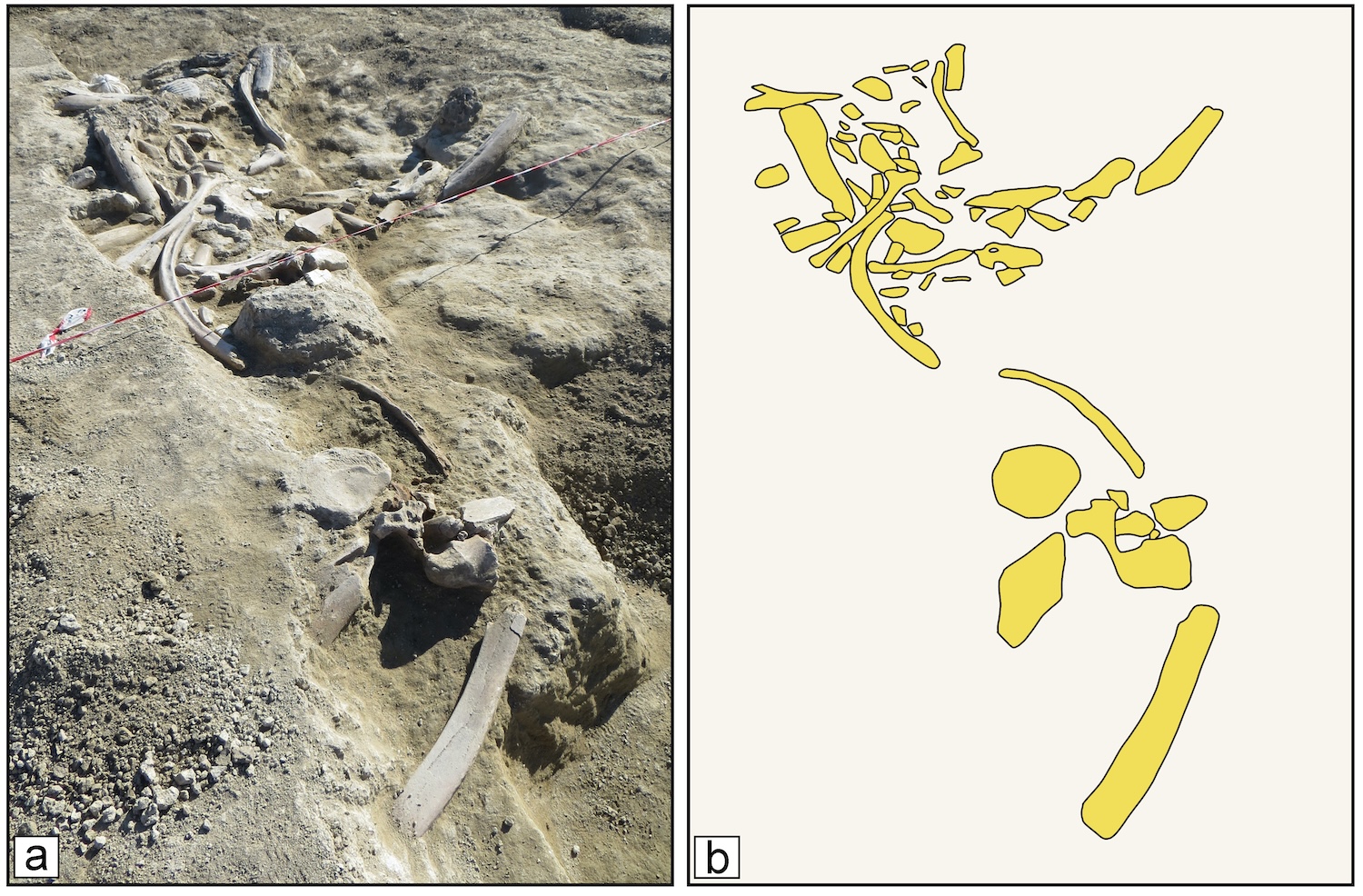
At a fossil site in Rome, Italian paleontologists have discovered a set of straight-tusked elephant remains dating back 404,000 years, a relatively warm period in the Middle Pleistocene. Near the bones, researchers also identified more than 500 small stone tools. Most of these tools were less than 1.2 inches long, probably due to the lack of larger stones in the area.
However, the miniature props didn’t seem to stop a group of humans from shooting and slaughtering the elephant. Several bones had fractures that were inflicted shortly after death, each consistent with blunt impact marks. However, the absence of cutting and shredding marks on the bones implies that the hunters used their stone tools to cut the animal’s soft tissues.
That said, the group knew a good resource when they saw one. According to the team’s study published today in the journal PLOS Oneseveral bones were later modified to function as larger tools. The team added that it is not the only such site in the region. Several other locations in central Italy contain remains of butchered elephants, small stone tools, and larger modified bones.
“Our study shows how, 400,000 years ago, in the region of Rome, human groups were able to exploit an extraordinary resource like the elephant, not only for food, but also by transforming its bones into tools,” explain the authors in a press release.
They added that by reconstructing these scenes, experts can better describe and understand ancient ecosystems and the roles our distant ancestors played in them.

Shop Amazon’s Prime Day Sale