New 183 Million-Year-Old Marine Reptile Identified in Germany Is Oldest Known in the Area


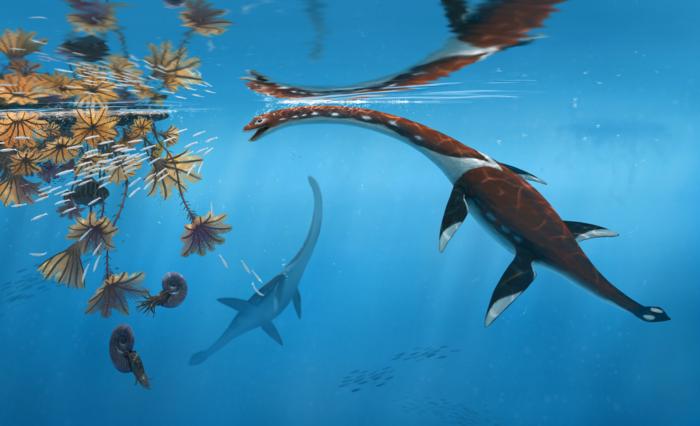
A new species of plesiosauroid – a group of long -neck marine reptiles – has just rises to the surface in the fossil beds of Posidonia shale in Germany.
This plesiosauroid aged $ 183 million lived at the age of dinosaurs (252 million years to 66 million years), and experts searched the remains in 1978 in Holzmaden, southwest of Germany. It was not until 2025 that he finally had a name – Longicollum Plésionectes.
Learn more:: Plesiosaur shed light on the evolution of marine reptiles during the Jurassic period
A well -preserved fossil
Skeleton of Plesionectes at the Staatliches Museum Für Naturkund Stuttgart (Image Credit: Staatliches Museum Für Naturkunde Stuttgart)
According to a new study in Paleontology and evolutionary science,, THE P. Longicollum (that is to say a long neck corridor almost) Fossil is almost complete, offering paleontologists a better look and a better understanding of marine ecosystems of the time.
The specimen not only offers fossilized bones but also fossilized soft fabrics.
“This specimen has been in collections for decades, but previous studies have never fully explored its distinctive anatomy,” said Sven Sachs of the Bielefeld of the study, author of the study, in a press release. “Our detailed examination has revealed an unusual combination of skeletal characteristics which clearly distinguish it from all the plesiosaurs previously known.”
The oldest known plesiosaur in Holzmaden
Posidonia shale fossil beds are home to many paleontological discoveries, including Ichthyosaur skin. The bed is an ideal place for well -preserved fossils, so it is not surprising that P. Longicollum is so intact.
With the identification of this fossil, the researchers now know that the region was even richer in biodiversity than that previously. In addition, this P. Longicollum The fossil is the oldest known plesiosaur in the Holzmaden region.
According to the press release, the researchers found five other species of plesiosaurs in the fossil beds of Schist in Posidonia, including individuals from three major Plesiosaur lines.
See in the past
According to the research team, this individual was a juvenile, and despite this, he was sufficiently developed for the researchers to say that he came from a completely new genus and species.
“This discovery adds another piece to the puzzle of the evolution of marine ecosystems during a critical period of the history of the earth,” said the co-author of the study Daniel Madzia in a press release. “The early toarcian period, when this animal has lived, was marked by significant environmental changes, including a major anoxic event that affected marine life in the world.”
Learn more:: Ichthyosaur species are the largest marine reptile known 80 feet long
Article Sources
Our writers at Discovermagazine.com Use studies evaluated by high -quality peers and sources for our articles, and our publishers examine scientific precision and editorial standards. Review the sources used below for this article:
A graduate of Uw-Whitewater, Monica Cull wrote for several organizations, including a focus on bees and the natural world, before coming to Discover Magazine. His current work also appears on his travel blog and his Common State magazine. His love of science came to watch PBS shows like a child with his mother and spend too much time at Binging Doctor who.


