New autism group meets to counter MAHA’s ‘ideological agenda’ : NPR

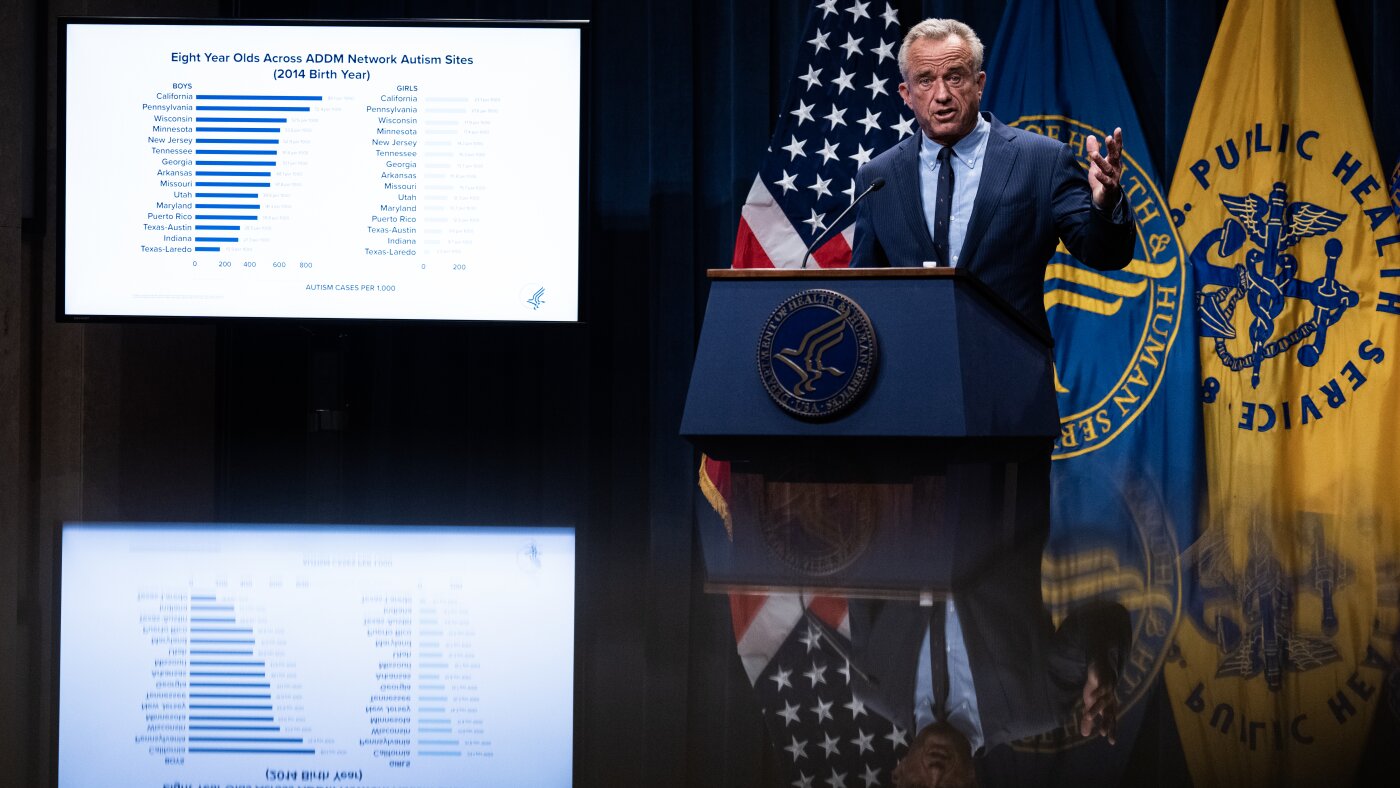

In an effort to challenge the Trump administration’s views on autism spectrum disorder, a new independent panel plans to meet just weeks after Health and Human Services Secretary Robert F. Kennedy Jr. named 21 new members to the federal panel.
Tom Williams/CQ-Roll Call, Inc/Getty Images
hide caption
toggle caption
Tom Williams/CQ-Roll Call, Inc/Getty Images
An independent group of autism experts plans to meet Thursday in Washington, D.C., to challenge the Trump administration’s views on autism spectrum disorder.
The newly formed Independent Autism Coordination Committee presents itself as a scientific alternative to an existing federal entity called the Interagency Coordinating Committee on Autism.
The new group’s first meeting comes just weeks after Health and Human Services Secretary Robert F. Kennedy Jr. named 21 new members to the federal panel.

These choices support Kennedy’s Make America Healthy Again initiative. Many also share his belief that autism can be caused by vaccines – a belief that has been widely demonstrated. demystified.
“We in the autism science and advocacy community were simply appalled by the way he went about selecting members,” said Helen Tager-Flusbergindependent committee member, professor emeritus at Boston University and director of the Center for Autism Research Excellence.
“The current committee has been hijacked by a narrow ideological agenda that reflects neither the broader community nor the state of autism science,” says Alison Singerindependent committee member and president of the Autism Science Foundation.

In a press release In announcing the federal panel’s new list, Kennedy described its picks as “the most qualified experts” who will “pursue rigorous science.”
The independent committee, announcement The March 3 panel includes five former members of the federal panel, two former directors of the National Institute of Mental Health, prominent scientists, representatives of autism advocacy organizations and a person who identifies as autistic.
“I wish there was more representation of autistic people,” says Eric Garciathe author of We are not broken: changing the conversation about autism. “I feel like they’re being pushed aside again.”
Despite this, Garcia shares the group’s concerns about Kennedy’s committee members and supports its efforts to combat unscientific claims about autism.
A shadow committee
Singer, whose adult daughter has profound autism, led the effort to form the new committee.
The group will focus on the latest ideas about the causes of the condition and how to support people with autism, she says.
“Every dollar spent on determining whether autism is caused by vaccines is a dollar we don’t need to research the actual causes of,” Singer says.
Thursday’s session was to coincide with a scheduled meeting of the federal group. But after the independent group’s intentions were made public, HHS postponed its own event without explanation.
The new group decided to get together anyway.
Singer plans to speak about the need for more research on profound autism, which includes people who are nonverbal and require high levels of support.
“We need to go back and determine whether existing interventions are even appropriate for people with profound autism,” says Singer, “because they have never been tested on people with profound autism.”
Tager-Flusberg hopes to talk about the future of language and communication research in autism.
As part of her talk, she plans to discuss ways to “leverage technology” to make it easier for some autistic people to communicate without speaking.
Scientists push back
The decision to create an independent committee on autism echoes a similar decision made last year by scientists concerned about the Trump administration’s vaccine policies.
THE Vaccine Integrity Project was created at the University of Minnesota after Kennedy began making changes to the CDC. Advisory Committee on Immunization Practices. The project has since collaborated with groups such as the American Academy of Pediatrics and the American Medical Association to produce its own recommended vaccination schedules.
In many ways, the independent committee on autism will emulate its federal counterpart, which advises the government on autism research and services.
“We plan to prepare reports that we will send to Congress,” says Tager-Flusberg.
The group also hopes to interact with the National Institutes of Health and the Centers for Disease Control and Prevention, two major funders of autism research.
But one of the main focuses of the independent committee will be research funded by non-governmental organizations.
The committee’s impact will likely be limited by its independent status, Garcia said.
“Nothing replaces the official imprimatur of the U.S. federal government,” he says, “and no one can spend as much money as the U.S. federal government.”
Private funding for autism research, however, is increasing, committee members say. And they want to make sure the money is spent wisely.


